Seaweed farm asian
1344×768 · AVIF · CC BY 4.0
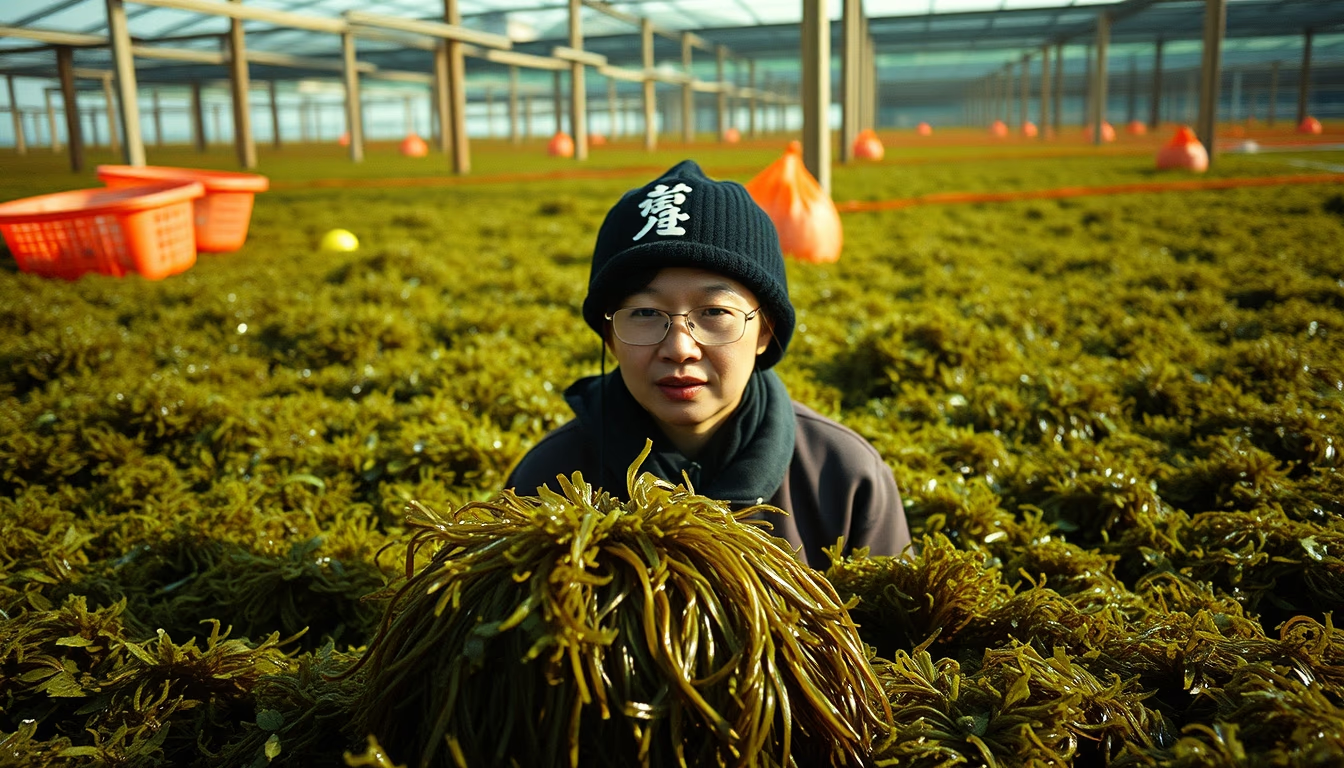
Seaweed farming in Asia is a centuries-old practice that generates billions of dollars and supports coastal communities.
About this subject
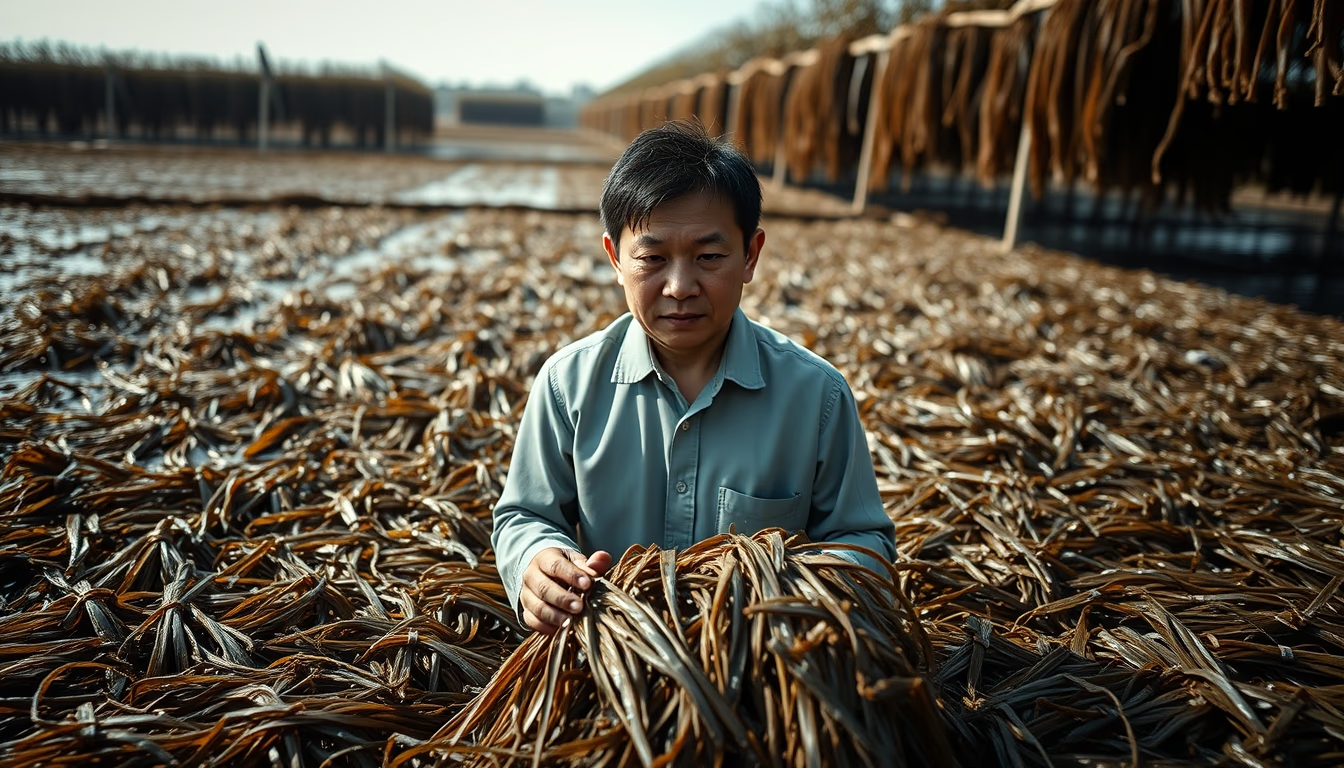
Seaweed farming, also known as algaculture, is a traditional practice in several Asian countries, including China, Indonesia, the Philippines, and South Korea. China is the world's largest producer, accounting for over 50% of global output. Seaweeds are cultivated in sheltered coastal areas using methods that range from floating bamboo rafts to nylon nets attached to buoys. Common species include kombu (Saccharina japonica), nori (Porphyra spp.), and wakame (Undaria pinnatifida), widely used in East Asian cuisine.
The economic and social importance of seaweed farming in Asia is immense. In Indonesia, for instance, the sector employs more than 1 million people, many from low-income fishing communities. Growing seaweed requires little investment in feed or fertilizers, making it an accessible livelihood for smallholders. Moreover, seaweeds have a rapid growth cycle, harvestable within 30 to 45 days, providing frequent income.
Applications of seaweed extend far beyond food. They are sources of thickeners such as agar and carrageenan, used in cosmetics, pharmaceuticals, and bioplastics. Recent research highlights their potential for carbon capture and reducing ocean acidification, positioning algaculture as a climate change mitigation tool. Countries like Japan are developing open‑ocean farming techniques to expand production without competing with other coastal activities.
Interestingly, South Korea holds an annual Seaweed Festival (Gim Jukjeon) to celebrate the nori harvest, a staple in kimbap. Seaweed has also been used in traditional medicine, such as treating goiter and thyroid disorders, thanks to its high iodine content. The current challenge for the industry is managing diseases caused by bacteria and water temperature changes, driving research into more resilient seaweed varieties.
Frequently Asked Questions
Which are the main seaweed‑producing countries in Asia?
The top producers are China, Indonesia, the Philippines, South Korea, and Japan. China alone accounts for more than half of global output.
How is seaweed cultivated?
Seaweed is grown on ropes or nets attached to floating buoys, typically in shallow, calm coastal waters. Methods include bamboo stakes and raft systems.
What are the uses of seaweed beyond food?
It provides thickeners like agar and carrageenan for the food, cosmetic, and pharmaceutical industries. It is also used in bioplastics, fertilizers, and even biofuel.
Direct URL
https://pub-c7d6a6ea828543ac903a74a341ccb2e1.r2.dev/imagens/seaweed-farm-asian-lo-fi-disposable-camera-fresh6.avifHow to credit
Include a visible link back to UtilizAí. Copy one of the snippets below:
<a href="https://xn--utiliza-eza.com/en/midia/imagens/seaweed-farm-asian-lo-fi-disposable-camera-fresh6">Seaweed farm asian</a> by <a href="https://xn--utiliza-eza.com">UtilizAí</a>, licensed under <a href="https://creativecommons.org/licenses/by/4.0/">CC BY 4.0</a>.
[Seaweed farm asian](https://xn--utiliza-eza.com/en/midia/imagens/seaweed-farm-asian-lo-fi-disposable-camera-fresh6) by [UtilizAí](https://xn--utiliza-eza.com), CC BY 4.0
License: CC-BY-4.0