Seaweed farm asian
1344×768 · AVIF · CC BY 4.0
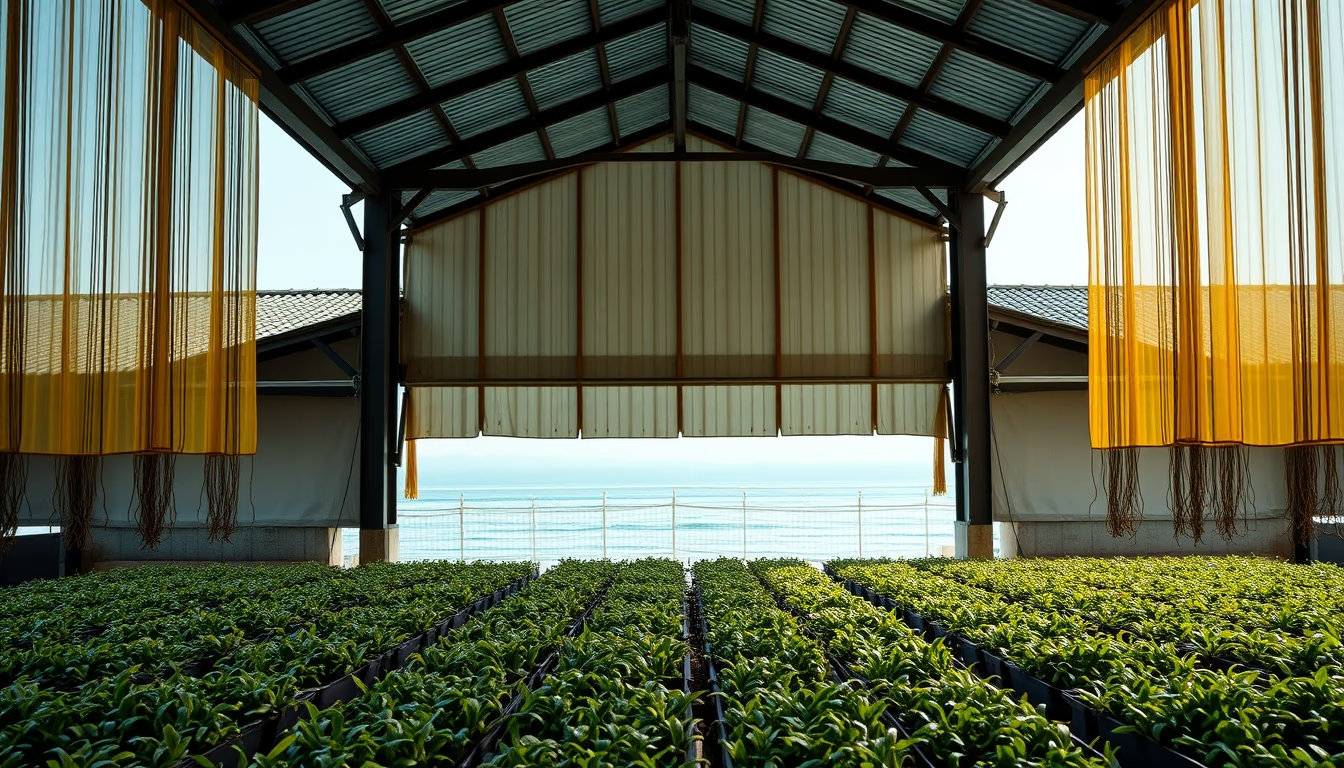
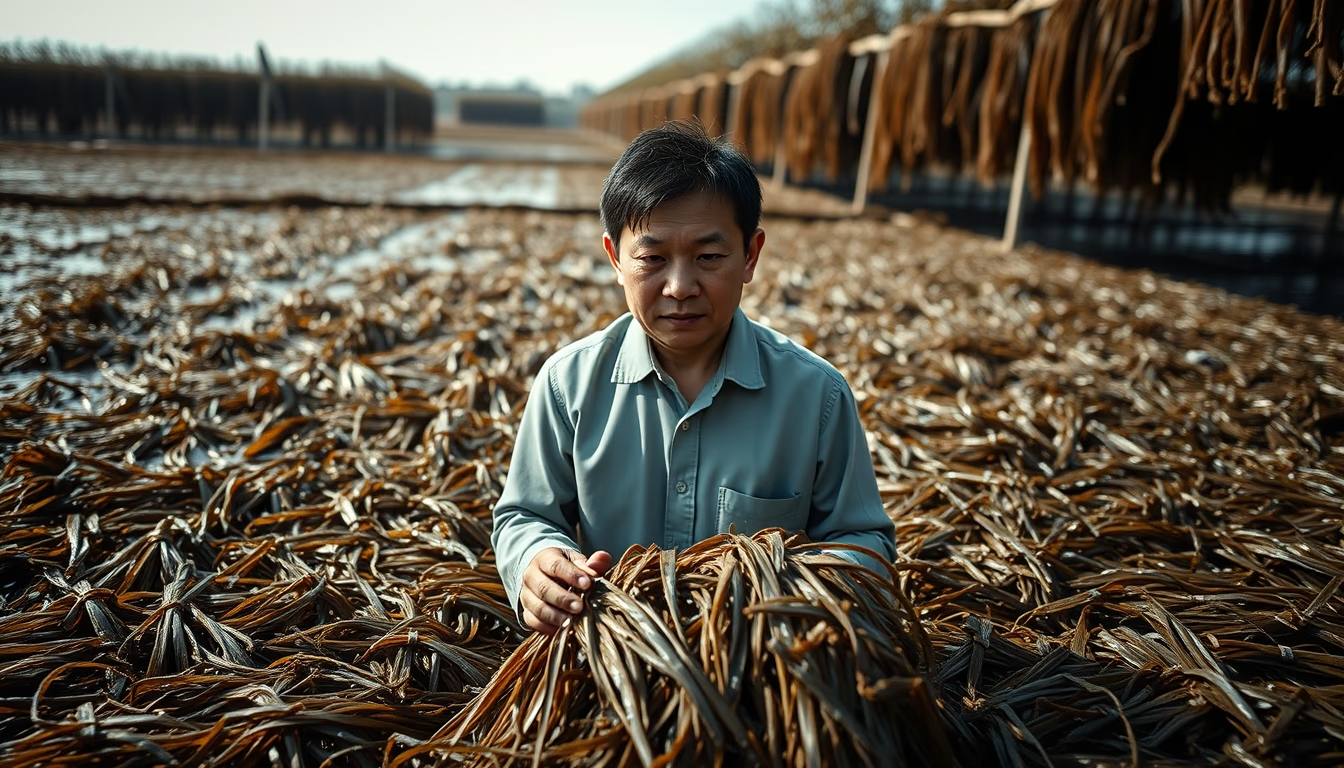
Seaweed farming in Asia is a centuries-old practice that supports millions of people and drives coastal economies.
About this subject
Seaweed farming is a cornerstone of food security and economic development in several Asian countries, including China, Indonesia, the Philippines, South Korea, and Japan. These nations account for over 95% of global seaweed production, with China as the largest producer, followed by Indonesia. The most cultivated species include nori (Porphyra), used for sushi, kombu (Saccharina japonica), a staple for broths and salads, and wakame (Undaria pinnatifida), common in soups and salads.
The industry employs hundreds of thousands of coastal families, many in low-income rural communities. In Indonesia and the Philippines, smallholder farmers grow seaweed on floating bamboo rafts or rope lines near the coast. The cultivation is labor-intensive but requires relatively low startup costs. Beyond food, seaweeds are processed to extract carrageenan, agar, and alginate, essential ingredients in cosmetics, pharmaceuticals, and industrial thickeners.
Environmentally, seaweed farms offer notable benefits. They act as carbon sinks, absorbing carbon dioxide from the water and helping to mitigate ocean acidification. They also provide habitat for fish and invertebrates, boosting local biodiversity. In South Korea, marine ecosystem restoration projects include seaweed cultivation to rehabilitate degraded areas. However, challenges such as diseases (e.g., ice-ice), bleaching due to rising temperatures, and competition from invasive species threaten the sector’s sustainability.
The global seaweed market exceeded US$15 billion in 2023, with rapid growth expected due to demand for alternative proteins and bioplastics. China is investing in biorefineries to produce biofuels from seaweed. Innovation includes heat-resistant cultivars and open-ocean farming techniques. Despite progress, most production remains artisanal, and traceability remains a bottleneck for exports, especially to demanding markets like Europe and North America.
Frequently Asked Questions
What are the main seaweed species farmed in Asia?
The main species are nori (Porphyra) for sushi, kombu (Saccharina japonica) for broths, and wakame (Undaria pinnatifida) for salads. Carrageenan- and agar-producing seaweeds like Kappaphycus and Gracilaria are also widely cultivated.
What are the environmental benefits of seaweed farms?
They sequester carbon, reduce ocean acidification, provide habitat for marine life, and can help restore degraded ecosystems. Studies show that farming areas boost local biodiversity.
What are the main challenges for seaweed farmers in Asia?
Diseases like ice-ice, bleaching from high temperatures, coastal pollution, competition from invasive species, and volatile market prices. Climate change is the biggest long-term threat.
Direct URL
https://pub-c7d6a6ea828543ac903a74a341ccb2e1.r2.dev/imagens/seaweed-farm-asian-architectural-photography-fresh4.avifHow to credit
Include a visible link back to UtilizAí. Copy one of the snippets below:
<a href="https://xn--utiliza-eza.com/en/midia/imagens/seaweed-farm-asian-architectural-photography-fresh4">Seaweed farm asian</a> by <a href="https://xn--utiliza-eza.com">UtilizAí</a>, licensed under <a href="https://creativecommons.org/licenses/by/4.0/">CC BY 4.0</a>.
[Seaweed farm asian](https://xn--utiliza-eza.com/en/midia/imagens/seaweed-farm-asian-architectural-photography-fresh4) by [UtilizAí](https://xn--utiliza-eza.com), CC BY 4.0
License: CC-BY-4.0