Sanskrit ancient scroll
1344×768 · AVIF · CC BY 4.0
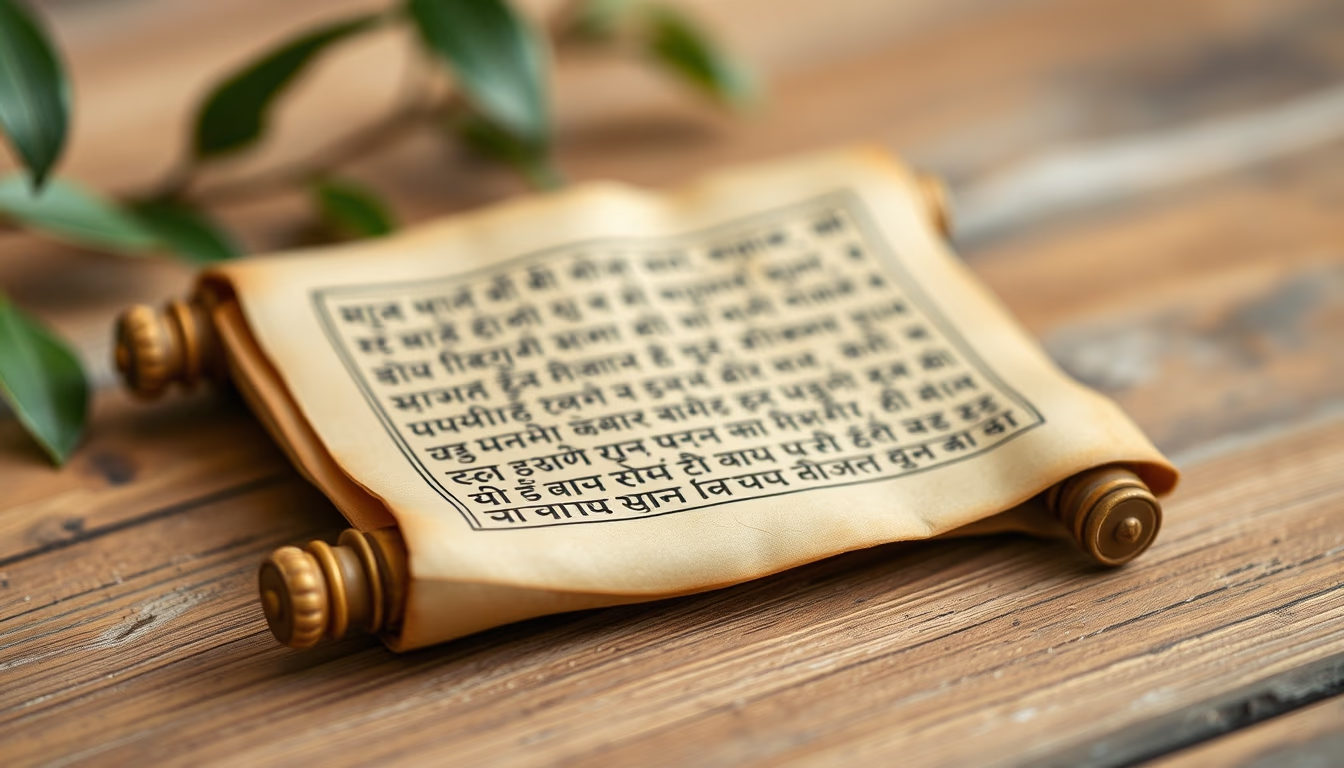
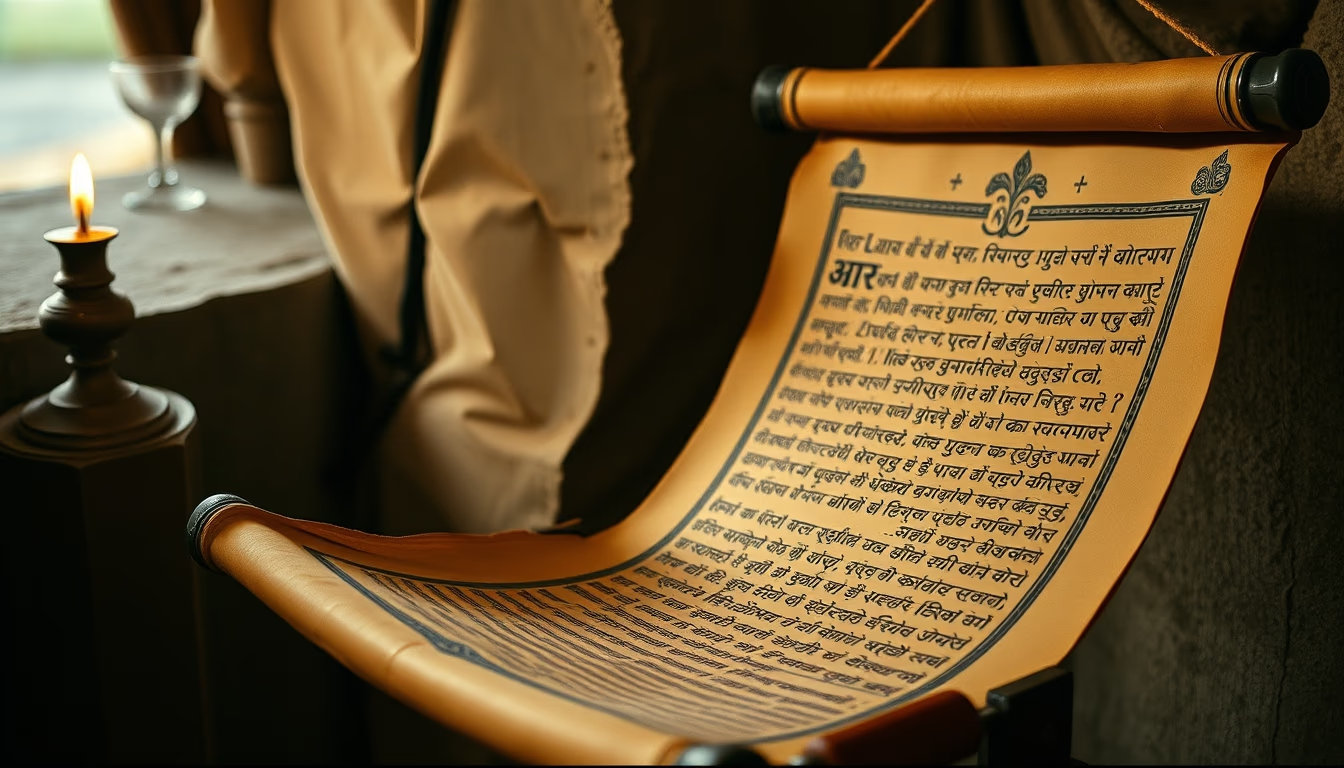
Sanskrit manuscripts on palm leaf or birch bark scrolls bear witness to the rich literary and philosophical tradition of ancient India, preserving texts that date back millennia.
About this subject
Sanskrit, the classical language of India, is one of the oldest Indo-European languages. Its earliest written records appear around the 1st century BCE, though oral tradition goes back over 3000 years. Texts were often inscribed on palm leaves (talapatra) or birch bark (bhurjapatra), organic materials requiring careful preservation in tropical climates. These scrolls, bound with strings and protected by wooden covers, contained foundational works such as the Vedas, Upanishads, epics (Mahabharata, Ramayana), and treatises on grammar, mathematics, and astronomy.
Sanskrit calligraphy varies by region and period: from the Brahmi script, mother of many South Asian systems, to the Devanagari used today. Each character was carved with a stylus, producing both angular and fluid letters. The technique demanded precision, as a mistake could alter the meaning of mantras or ritual formulas considered sacred. Many manuscripts survived in Buddhist monasteries, royal libraries, and temples, especially in Nepal, Tibet, and Kerala.
Nalanda University in India once housed one of the largest collections of Sanskrit scrolls, but invasions and climate degraded much of it. Today, digitization projects, such as those by the Institute of Tibetan Studies in Sarnath, are preserving these documents. Sanskrit is still used in Hindu ceremonies and the study of yoga and Ayurveda, keeping alive a cultural heritage that spans centuries.
Frequently Asked Questions
Why are Sanskrit manuscripts important for history?
They preserve religious, philosophical, scientific, and literary texts from ancient India, essential for understanding the development of Hinduism, Buddhism, mathematics, astronomy, and grammar.
How were Sanskrit scrolls made and preserved?
They were engraved on palm leaves or birch bark with a stylus, then tied with strings between wooden boards. Preservation required dry environments protected from insects, often stored in temples and libraries.
What role does Sanskrit calligraphy play in Indian culture?
Calligraphy was considered a sacred art, as precise characters were crucial for mantras and ritual texts. It also reflects the evolution of scripts in India and influenced other writing systems.
Direct URL
https://pub-c7d6a6ea828543ac903a74a341ccb2e1.r2.dev/imagens/sanskrit-ancient-scroll-tilt-shift-miniature-fresh4.avifHow to credit
Include a visible link back to UtilizAí. Copy one of the snippets below:
<a href="https://xn--utiliza-eza.com/en/midia/imagens/sanskrit-ancient-scroll-tilt-shift-miniature-fresh4">Sanskrit ancient scroll</a> by <a href="https://xn--utiliza-eza.com">UtilizAí</a>, licensed under <a href="https://creativecommons.org/licenses/by/4.0/">CC BY 4.0</a>.
[Sanskrit ancient scroll](https://xn--utiliza-eza.com/en/midia/imagens/sanskrit-ancient-scroll-tilt-shift-miniature-fresh4) by [UtilizAí](https://xn--utiliza-eza.com), CC BY 4.0
License: CC-BY-4.0