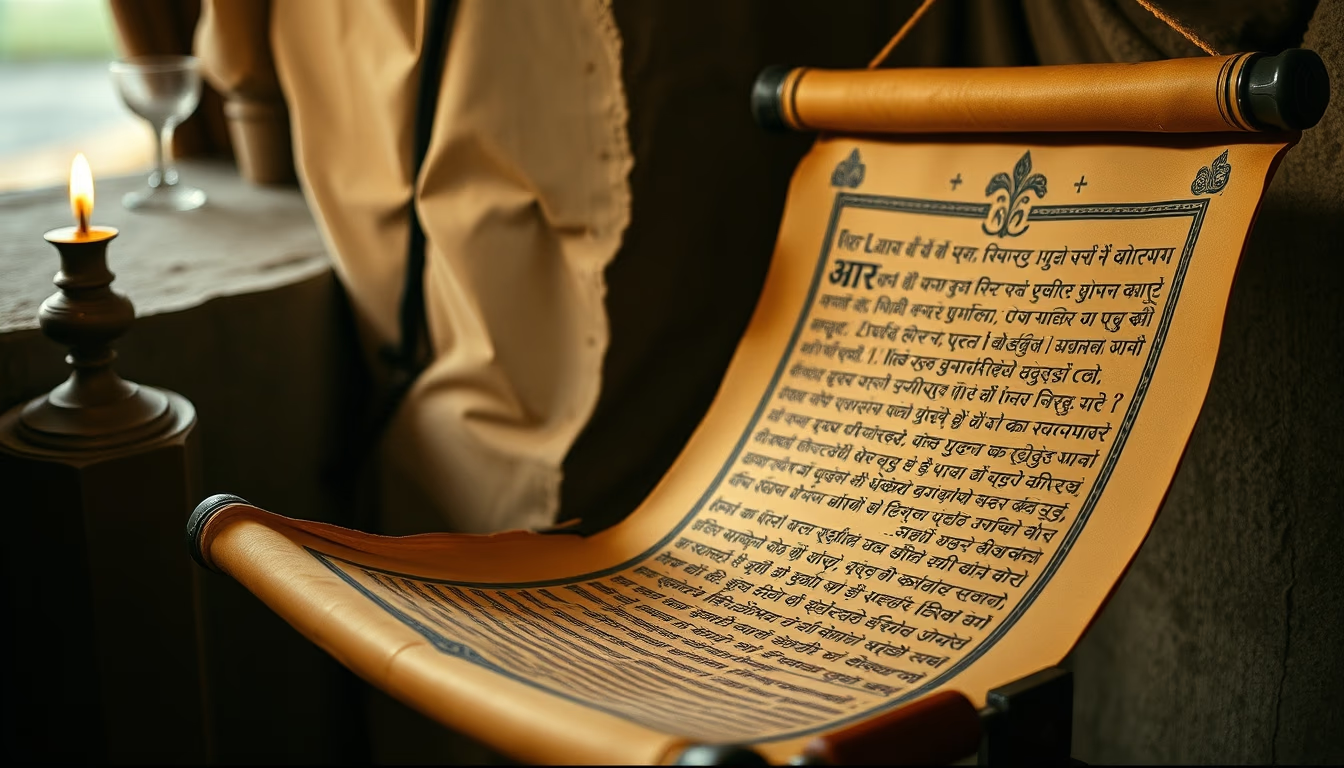
Sanskrit ancient scroll
1344×768 · AVIF · CC BY 4.0
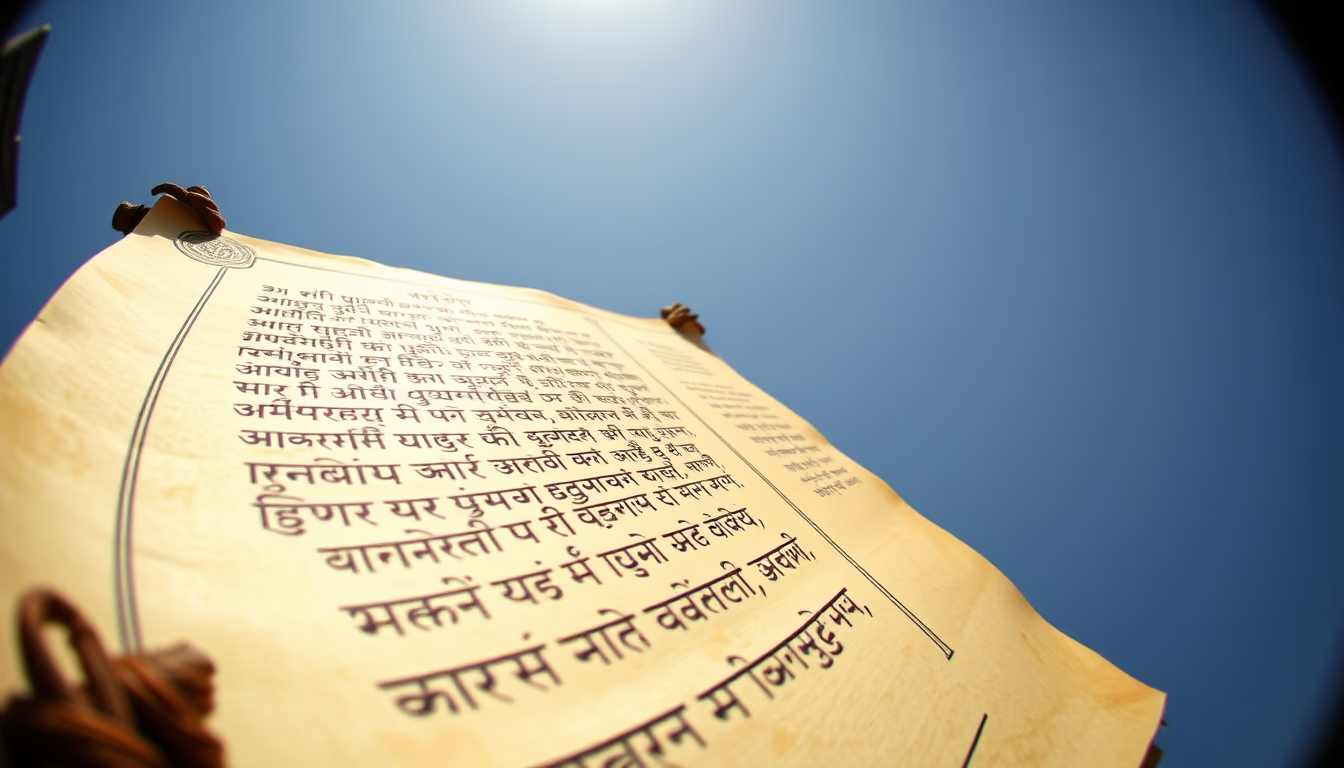
Ancient Sanskrit scroll with millennia-old calligraphy, a vital part of India's literary and religious heritage.
About this subject
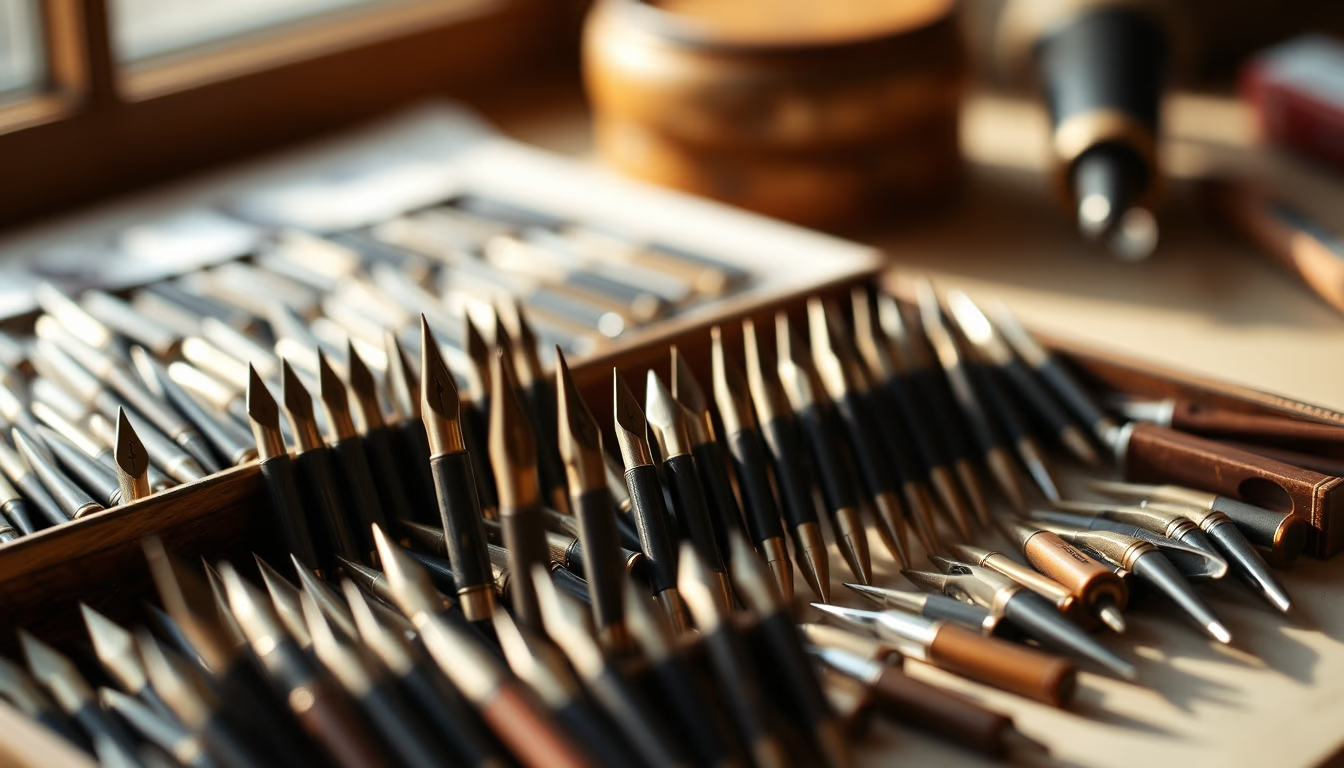
Sanskrit is one of the oldest Indo-European languages, with records dating back to around 1500 BCE. It is the classical language of India, used to compose the Vedas, Upanishads, the epics Mahabharata and Ramayana, and numerous philosophical, astronomical, and medical texts. The scripts used for Sanskrit manuscripts varied by region and period, including Brahmi, Gupta, Nagari, and later Devanagari. Ancient scrolls, like the one depicted, were often made from palm leaves, birch bark, or cotton paper, bound together by cords. Calligraphy on these materials required great skill and precision, as the texts were considered sacred and transmitted with care.
Production of Sanskrit scroll manuscripts flourished between the 5th and 12th centuries CE, especially in scholarly centers such as Nalanda, Taxila, and Vikramashila. Many of these manuscripts were preserved in Buddhist monasteries in Tibet and Nepal, while others were discovered in caves along the Silk Road, such as the Gilgit manuscripts (6th century). These documents are invaluable sources for the study of South Asian history, religion, and philosophy. The writing technique involved using soot-based ink and a bamboo or metal pen, resulting in elegant and uniform characters.
Preserving these scrolls is challenging due to the fragility of organic materials. India's humid climate and insects have caused significant damage over centuries. Today, digitization initiatives like the "Manuscripts of the World" project by the National Library of France aim to record and disseminate these treasures. The scroll in the image exemplifies the beauty of Sanskrit calligraphy, with its fluid strokes and regular spacing, reflecting centuries of tradition and devotion.
Frequently Asked Questions
What is Sanskrit and why is it important?
Sanskrit is an ancient Indo-European language, the classical language of India. It is essential to Hinduism, Buddhism, and Jainism, and preserves a vast religious, philosophical, and scientific literature, including the Vedas and epics.
How were ancient Sanskrit scrolls made?
They were typically made from palm leaves or birch bark, cut into strips and tied with cords. Ink was soot-based, and calligraphy was done with a bamboo or metal pen.
Where are these manuscripts found today?
Many are in monasteries in Tibet and Nepal, Indian libraries, or Western collections. Notable discoveries include the Gilgit manuscripts and the Dunhuang texts.
Direct URL
https://pub-c7d6a6ea828543ac903a74a341ccb2e1.r2.dev/imagens/sanskrit-ancient-scroll-fish-eye-wide-angle-fresh3.avifHow to credit
Include a visible link back to UtilizAí. Copy one of the snippets below:
<a href="https://xn--utiliza-eza.com/en/midia/imagens/sanskrit-ancient-scroll-fish-eye-wide-angle-fresh3">Sanskrit ancient scroll</a> by <a href="https://xn--utiliza-eza.com">UtilizAí</a>, licensed under <a href="https://creativecommons.org/licenses/by/4.0/">CC BY 4.0</a>.
[Sanskrit ancient scroll](https://xn--utiliza-eza.com/en/midia/imagens/sanskrit-ancient-scroll-fish-eye-wide-angle-fresh3) by [UtilizAí](https://xn--utiliza-eza.com), CC BY 4.0
License: CC-BY-4.0