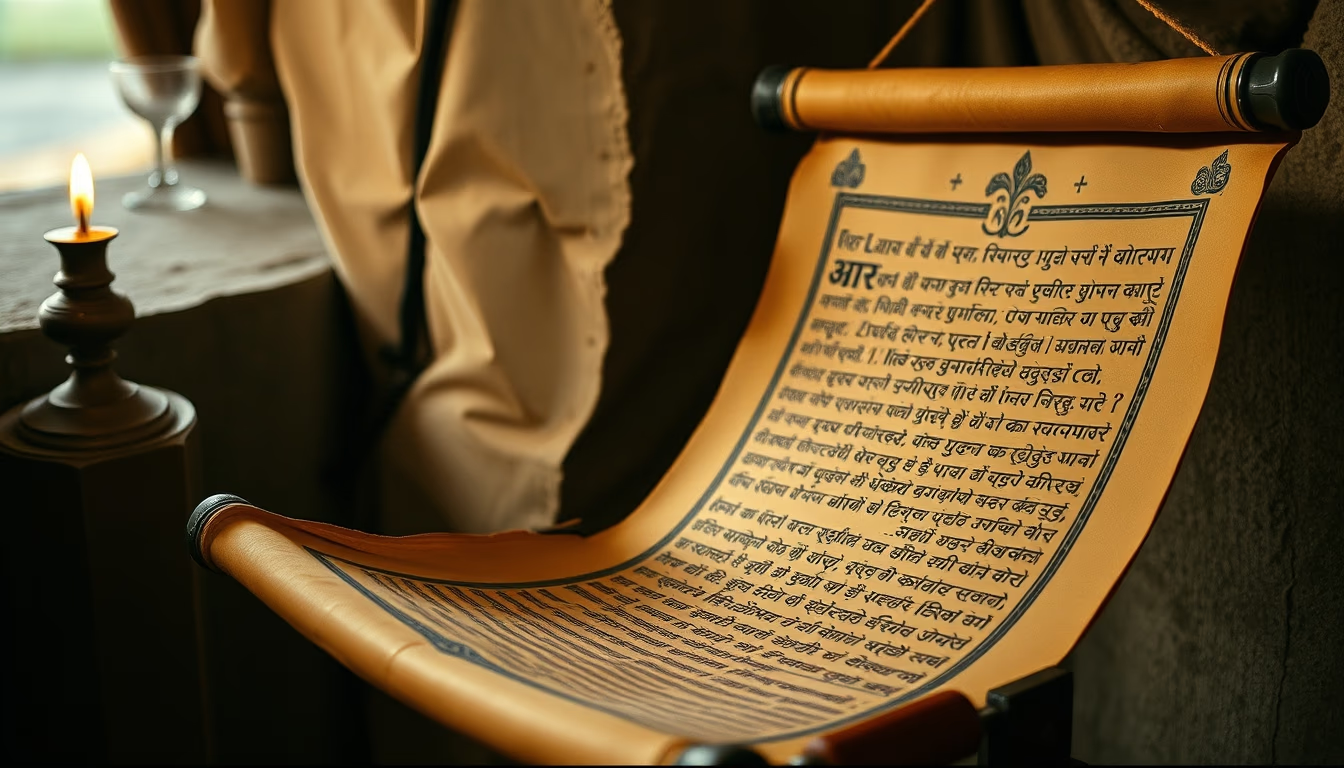
Sanskrit ancient scroll
1344×768 · AVIF · CC BY 4.0
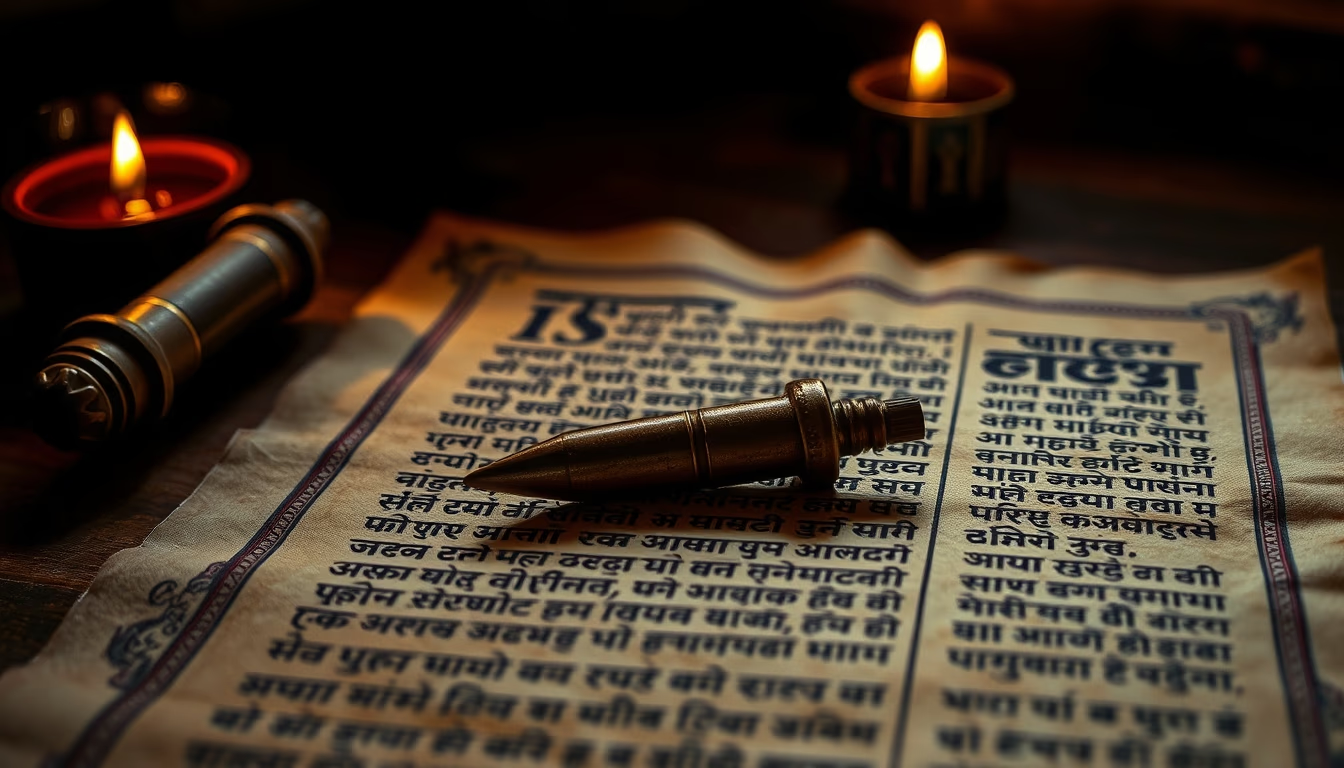
Ancient Sanskrit scrolls preserve millennia-old Indian texts, inscribed on palm leaves or birch bark, essential to Hindu culture.
About this subject
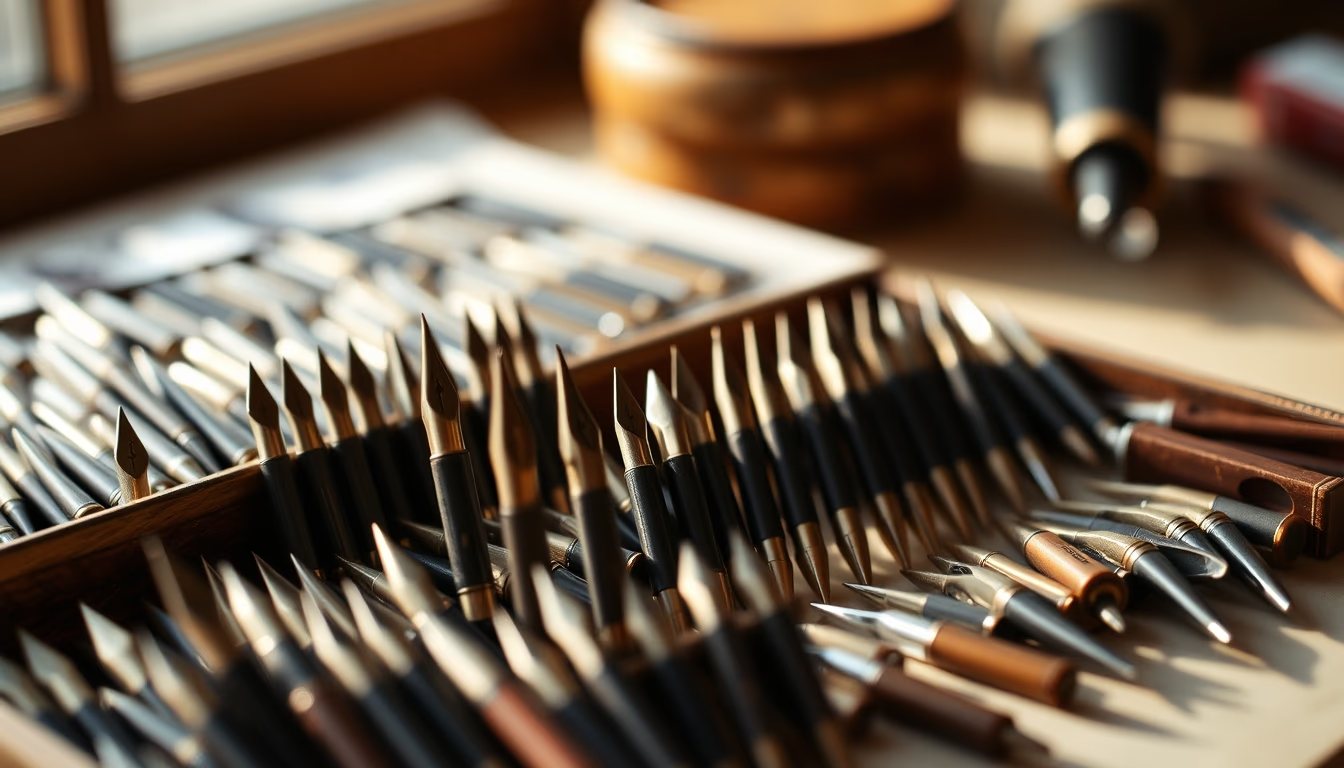
Ancient Sanskrit scrolls are testaments to India's rich written tradition, dating back to the Vedic period (c. 1500, 500 BCE). Unlike modern books, these manuscripts were made from organic materials: palm leaves (talapatra) or birch bark (bhurjapatra), treated with oils and lampblack to last for centuries. Writing was done with a metal stylus, and the leaves were sewn or tied together forming rolls or pothis. Sanskrit, India's classical language, was written in various scripts, such as Brahmi, Gupta, and Devanagari, the latter being most common today.
These manuscripts contain foundational works of Hinduism, Buddhism, and Jainism, including the Vedas, Upanishads, Puranas, epics like Mahabharata and Ramayana, medical treatises (Ayurveda), and mathematical and astronomical texts by sages like Aryabhata and Brahmagupta. Famous manuscripts include the Bower Manuscript (5th century CE), discovered in Kyzyl, and texts from the Nalanda library, a major learning center before its destruction. Over 30 million Indian manuscripts are estimated to exist, many uncatalogued.
Major centers preserve these scrolls today, such as the Bhandarkar Oriental Research Institute in Pune, the Asiatic Society Library in Kolkata, and the Oriental Research Institute in Mysore. India's hot and humid climate, plus insects, threaten originals, prompting digitization projects by the British Library and Google Arts & Culture. In popular culture, the image of a sage studying a Sanskrit scroll has become a symbol of ancient wisdom. The calligraphy in these manuscripts is not mere writing but refined art, often with illuminations and decorated margins.
Frequently Asked Questions
How were ancient Sanskrit manuscripts produced?
They were hand-written with a metal stylus on palm leaves or birch bark, treated for preservation. The leaves were perforated and tied with cord, forming rolls or pothis.
What is the significance of these ancient scrolls for Indian culture?
They preserve foundational religious, philosophical, scientific, and literary texts like the Vedas and Ayurveda, crucial for the continuity of Hindu, Buddhist, and Jain traditions.
Where can I find Sanskrit manuscripts today?
Major collections are at the Bhandarkar Oriental Research Institute (Pune), Oriental Research Institute (Mysore), and international libraries, with many digitized online by the British Library and Google.
Direct URL
https://pub-c7d6a6ea828543ac903a74a341ccb2e1.r2.dev/imagens/sanskrit-ancient-scroll-fine-art-photography-fresh12.avifHow to credit
Include a visible link back to UtilizAí. Copy one of the snippets below:
<a href="https://xn--utiliza-eza.com/en/midia/imagens/sanskrit-ancient-scroll-fine-art-photography-fresh12">Sanskrit ancient scroll</a> by <a href="https://xn--utiliza-eza.com">UtilizAí</a>, licensed under <a href="https://creativecommons.org/licenses/by/4.0/">CC BY 4.0</a>.
[Sanskrit ancient scroll](https://xn--utiliza-eza.com/en/midia/imagens/sanskrit-ancient-scroll-fine-art-photography-fresh12) by [UtilizAí](https://xn--utiliza-eza.com), CC BY 4.0
License: CC-BY-4.0