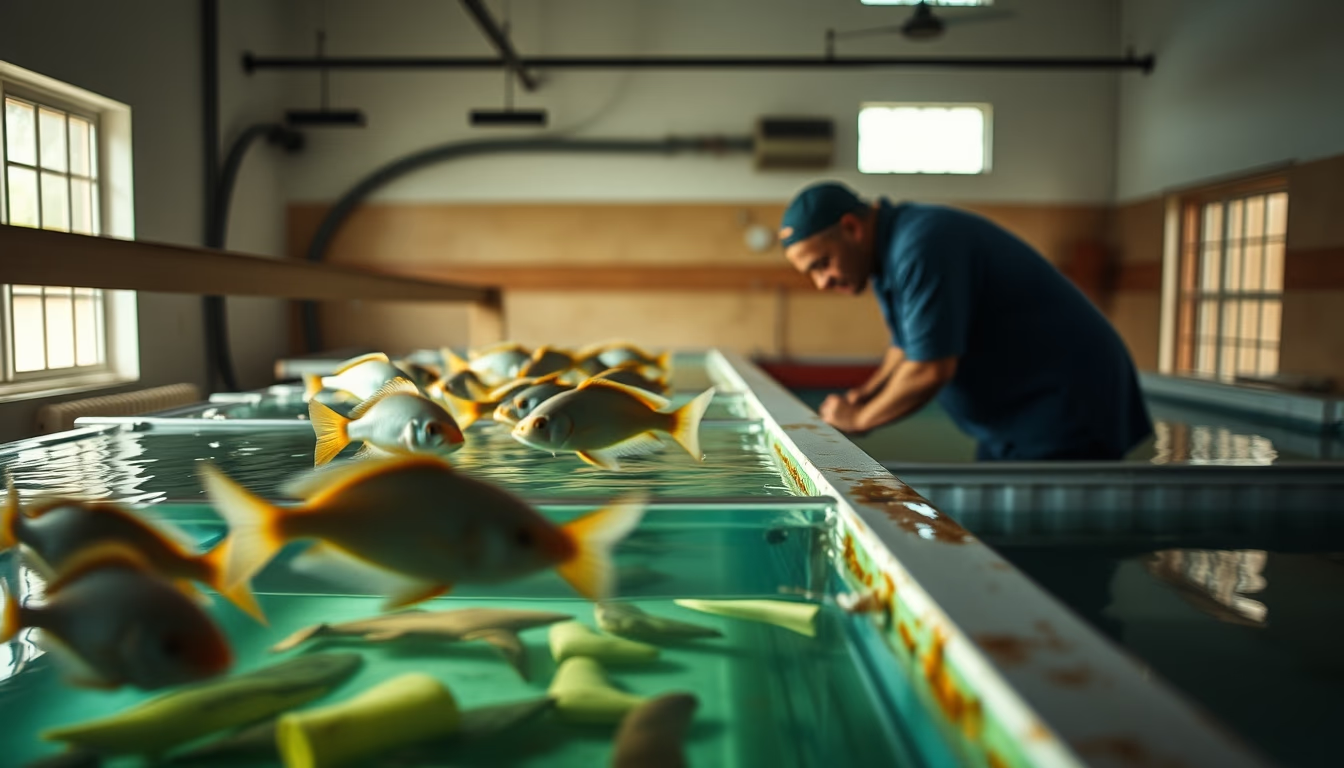
Salmon farm offshore
1344×768 · AVIF · CC BY 4.0
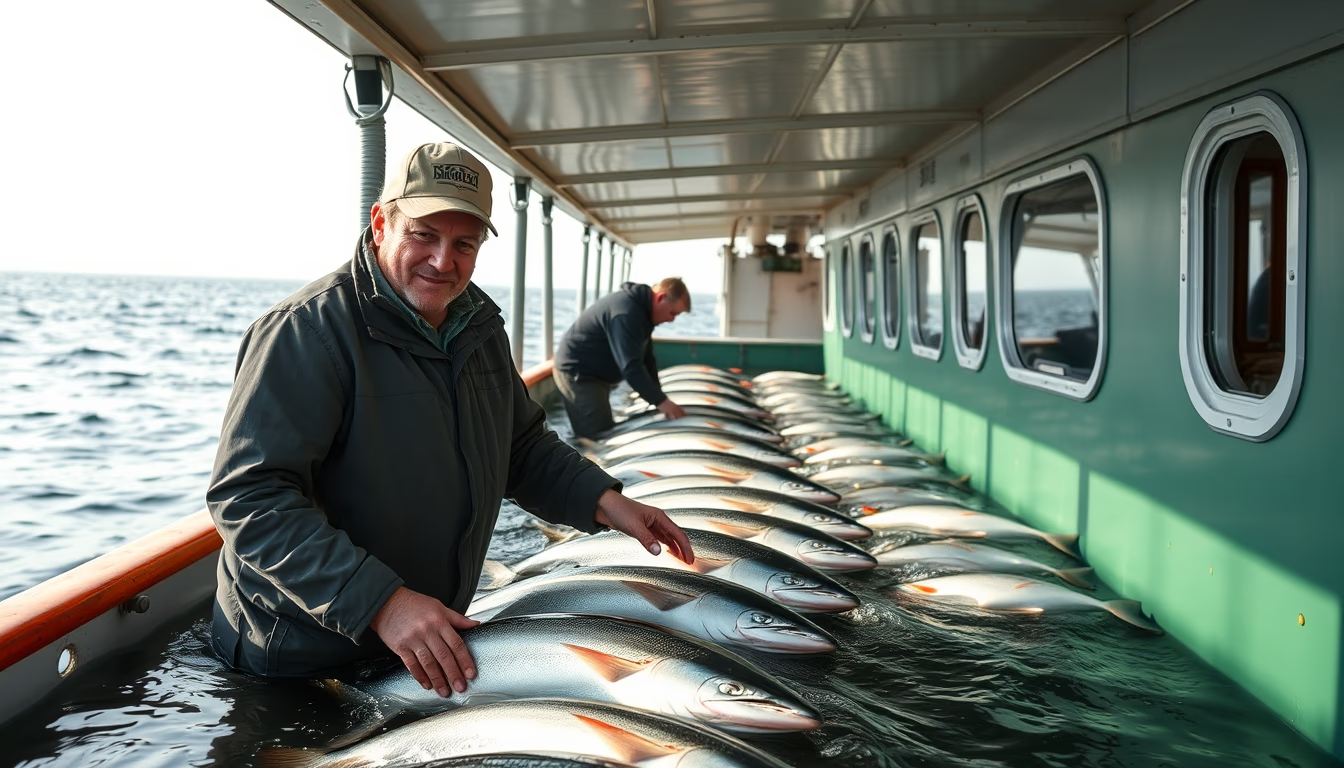
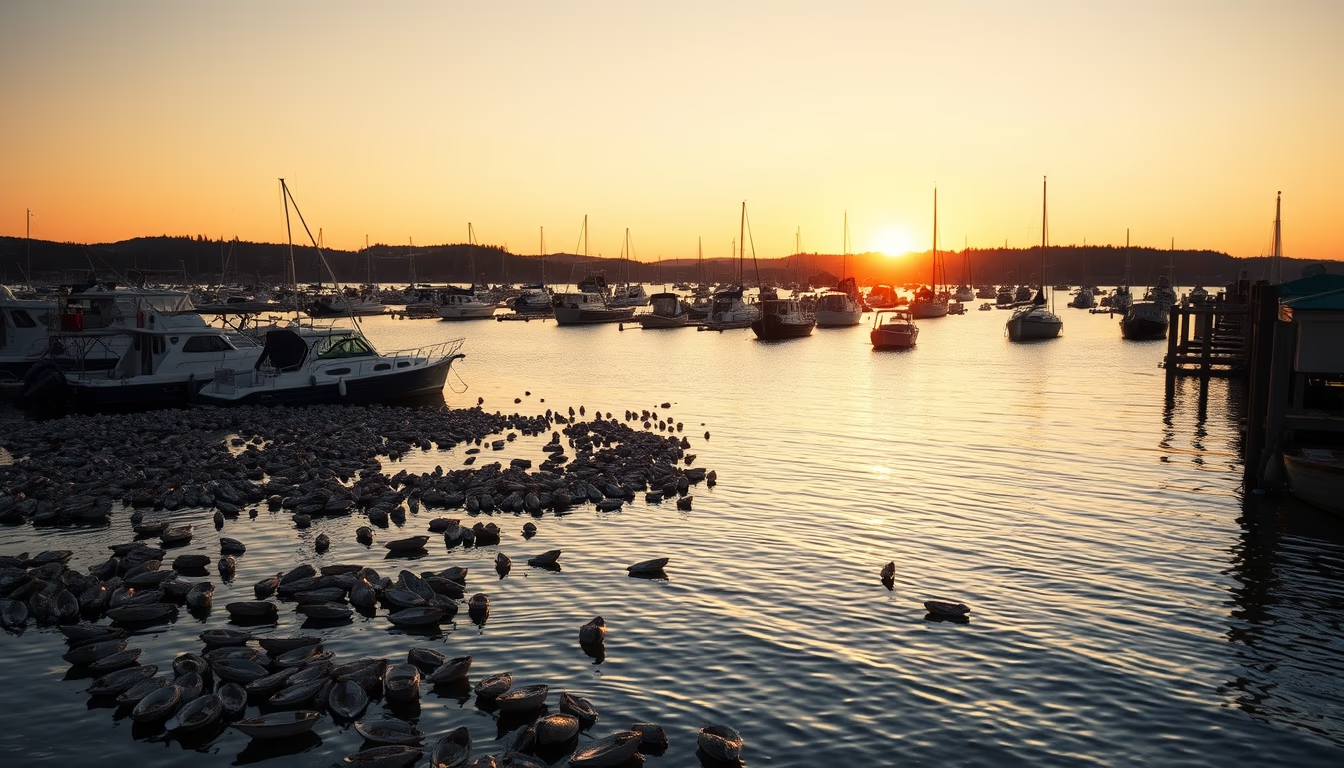
Offshore salmon farming uses submersible cages in open ocean to rear fish, reducing coastal impacts.
About this subject
Offshore salmon farming represents a technological evolution in aquaculture, where marine farms are installed in open ocean, far from the coast. These systems use submersible cages that can be lowered to avoid storms and strong currents, keeping fish in stable environmental conditions. Countries such as Norway, Chile, Canada, and Scotland lead this sector, with Norway producing over 1.5 million tons of salmon annually, a significant portion coming from offshore operations.
Advantages of this method include lower concentration of waste on the seabed, faster dilution of residues, and reduced disease transmission between nearby farms. Deeper water and strong currents provide better water quality for the fish, decreasing antibiotic use. However, challenges are substantial: high installation and maintenance costs, need for automated feeding and remote monitoring systems, and risks of fish escapes under extreme conditions.
Regulations for offshore farms vary globally. In Brazil, marine aquaculture is still incipient, but growth of this model may be influenced by pilot projects in jurisdictional waters. Submersible cage technology has evolved with more durable materials and robust mooring systems, allowing operation at depths up to 100 meters. Companies like Ocean Farm and SalMar have developed large-scale prototypes, such as Ocean Farm 1, a 110-meter diameter structure installed in the Norwegian Sea.
Environmental issues remain at the core of the debate. While reducing coastal impacts, offshore farming still raises concerns about genetic escapes, predator attraction, and resource use. Certifications like ASC (Aquaculture Stewardship Council) aim to ensure sustainable practices. The future of salmon production increasingly depends on this type of operation, especially given the demand for low-carbon animal protein and the scarcity of available coastal areas.
Frequently Asked Questions
How does an offshore salmon farm work?
It uses submersible cages anchored in the open ocean, typically at depths of 50 to 100 meters. Fish are fed remotely by automated systems, and cages can be lowered to avoid waves and strong currents.
What are the main environmental impacts of offshore salmon farming?
Include fish escapes that may interbreed with wild populations, accumulation of feces and uneaten feed on the seabed (though less than in coastal areas), and attraction of predators such as seals and birds.
Why is offshore salmon aquaculture growing?
Due to scarcity of suitable coastal areas, lower disease and parasite prevalence in deeper waters, and potential for higher sustainable production with reduced local environmental footprint.
Direct URL
https://pub-c7d6a6ea828543ac903a74a341ccb2e1.r2.dev/imagens/salmon-farm-offshore-documentary-photography-fresh0.avifHow to credit
Include a visible link back to UtilizAí. Copy one of the snippets below:
<a href="https://xn--utiliza-eza.com/en/midia/imagens/salmon-farm-offshore-documentary-photography-fresh0">Salmon farm offshore</a> by <a href="https://xn--utiliza-eza.com">UtilizAí</a>, licensed under <a href="https://creativecommons.org/licenses/by/4.0/">CC BY 4.0</a>.
[Salmon farm offshore](https://xn--utiliza-eza.com/en/midia/imagens/salmon-farm-offshore-documentary-photography-fresh0) by [UtilizAí](https://xn--utiliza-eza.com), CC BY 4.0
License: CC-BY-4.0