Rodin thinker statue
1344×768 · AVIF · CC BY 4.0

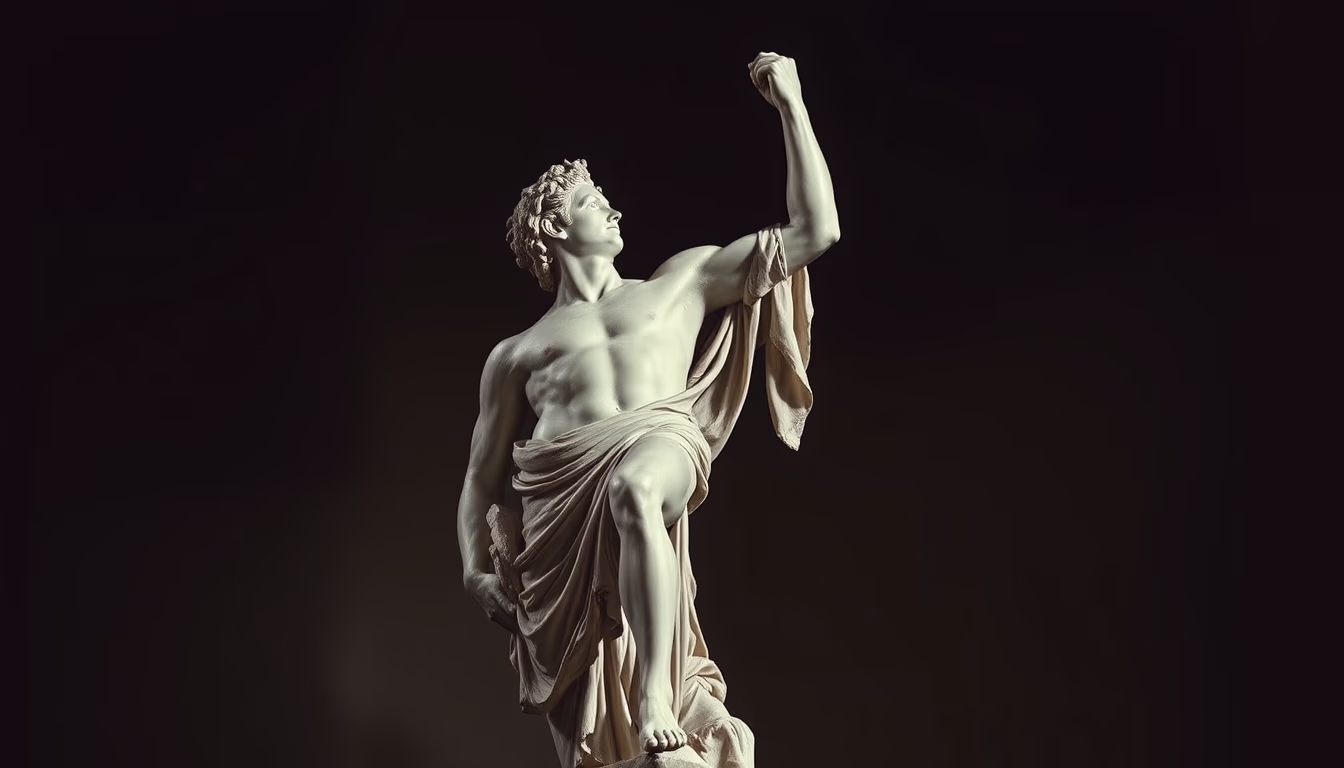
The sculpture The Thinker by Auguste Rodin is a global icon of art and philosophy, symbolizing human contemplation.
About this subject
Auguste Rodin created The Thinker between 1880 and 1882, originally conceived as the central figure of the monumental portal The Gates of Hell, commissioned for the Museum of Decorative Arts in Paris. The figure depicts a nude man in deep meditation, often associated with the poet Dante Alighieri contemplating his epic poem The Divine Comedy. However, Rodin also described it as a representation of the artist himself in his creative process.
The work was first exhibited independently in 1888 in Copenhagen and quickly became one of the most recognizable symbols of modern sculpture. Rodin produced the original bronze version on a smaller scale but later enlarged the mold to create larger casts, such as the famous 1904 casting at the Musée Rodin in Paris. The model was also reproduced in plaster, marble, and other alloys.
Today, dozens of authorized copies of The Thinker exist in museums and public spaces worldwide, including the Metropolitan Museum of Art in New York, the Rodin Museum in Philadelphia, and the Calouste Gulbenkian Collection in Lisbon. The hunched posture, hand resting on the chin, and muscular tension convey a state of introspection and intellectual struggle, characteristics that made the piece an archetype of the human condition.
Interestingly, Rodin was influenced by Renaissance sculpture, especially Michelangelo, and intended The Thinker to sit at the center of the tympanum of The Gates of Hell, above the damned figures. The work also sparked controversy at the time for its anatomical realism and psychological expressiveness, breaking with academic standards. Today, it is considered a landmark of Impressionist sculpture, with its textured surfaces and play of light and shadow.
Frequently Asked Questions
Where is the original sculpture of The Thinker located?
The original 1904 casting, considered the most authentic, is at the Musée Rodin in Paris. However, the original mold was used for multiple copies, and the first plaster version is also at the same museum.
What is the meaning of The Thinker's posture?
The posture with the hand on the chin and the tense body symbolizes deep intellectual effort and philosophical reflection. Rodin aimed to portray not only thought but the physical weight of thinking.
How many authorized copies of The Thinker exist worldwide?
It is estimated that there are about 20 to 30 authorized bronze castings, plus versions in plaster and marble. The copies were produced at different times and sizes, ranging from 70 cm to 2 meters in height.
Direct URL
https://pub-c7d6a6ea828543ac903a74a341ccb2e1.r2.dev/imagens/rodin-thinker-statue-macro-closeup-p6.avifHow to credit
Include a visible link back to UtilizAí. Copy one of the snippets below:
<a href="https://xn--utiliza-eza.com/en/midia/imagens/rodin-thinker-statue-macro-closeup-p6">Rodin thinker statue</a> by <a href="https://xn--utiliza-eza.com">UtilizAí</a>, licensed under <a href="https://creativecommons.org/licenses/by/4.0/">CC BY 4.0</a>.
[Rodin thinker statue](https://xn--utiliza-eza.com/en/midia/imagens/rodin-thinker-statue-macro-closeup-p6) by [UtilizAí](https://xn--utiliza-eza.com), CC BY 4.0
License: CC-BY-4.0