Rodin thinker statue
1344×768 · AVIF · CC BY 4.0
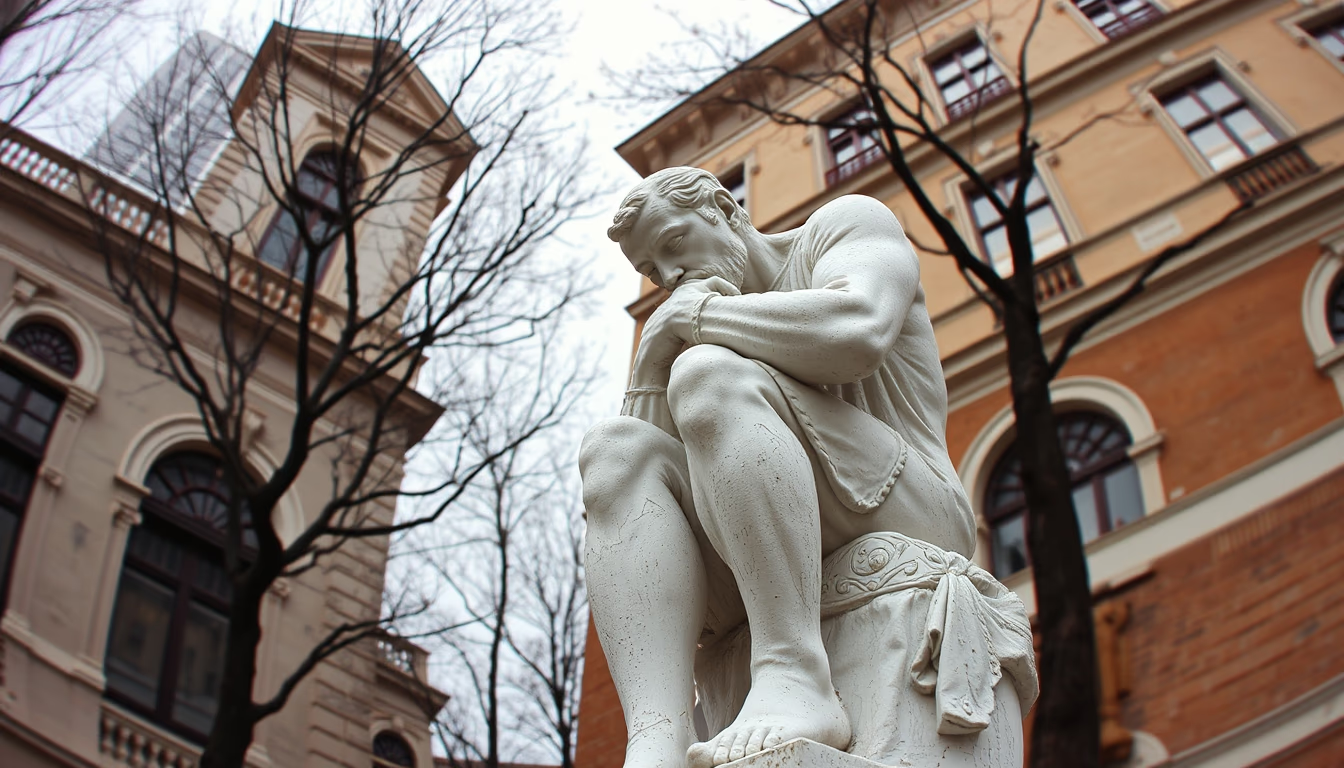
Auguste Rodin's The Thinker sculpture is a global icon of art, symbolizing philosophical reflection and the human condition.
About this subject
The Thinker is one of the world's most recognized sculptures, created by French artist Auguste Rodin between 1880 and 1882. Originally conceived as part of a larger work called The Gates of Hell, based on Dante Alighieri's Divine Comedy, the figure represented Dante himself reflecting on the damned. Over time, the piece gained autonomy and came to be interpreted as a universal representation of thought, introspection, and intellectual effort. Standing about 1.86 meters tall in the bronze version, the statue depicts a nude man sitting on a rock, with his chin resting on his hand, in a pose suggesting deep meditation.
Rodin worked on several versions of The Thinker, using different materials such as bronze, marble, and plaster. The first bronze casting was exhibited in 1888 in Copenhagen and since then numerous replicas have been spread across museums and public spaces worldwide. Among the most famous are those at the Musée Rodin in Paris, the Museum of Modern Art in New York, and the National Museum of Fine Arts in Rio de Janeiro. The sculpture has become a symbol of Western culture, often used in advertising, film, and even as a symbol of philosophy.
Interestingly, the pose of The Thinker was influenced by anatomical studies and observation of boxers from that time. Rodin sought to capture muscle tension and extreme concentration, contrasting with the usual stillness of statues. The work also sparked debates about its nudity: some critics argued it distracted from the intellectual theme, but Rodin defended that the nudity universalized the figure, removing temporal or social references. Today, The Thinker is widely studied in art and philosophy courses, and its image is one of the most reproduced in sculpture history.
Frequently Asked Questions
What is the meaning of Rodin's The Thinker?
The sculpture symbolizes philosophical reflection and intellectual effort. Originally it represented Dante in The Gates of Hell, but today it is seen as a universal figure of human thought.
How many copies of The Thinker exist?
There is no exact number, but more than 20 authorized bronze castings have been made, along with marble and plaster versions. Replicas are found worldwide, including France, the United States, Brazil, Japan, and Denmark.
Why is The Thinker nude?
Rodin chose nudity to make the figure timeless and universal, without references to clothing from a specific era. The nudity also emphasizes muscle tension and the physical concentration of thinking.
Direct URL
https://pub-c7d6a6ea828543ac903a74a341ccb2e1.r2.dev/imagens/rodin-thinker-statue-fish-eye-wide-angle-p0.avifHow to credit
Include a visible link back to UtilizAí. Copy one of the snippets below:
<a href="https://xn--utiliza-eza.com/en/midia/imagens/rodin-thinker-statue-fish-eye-wide-angle-p0">Rodin thinker statue</a> by <a href="https://xn--utiliza-eza.com">UtilizAí</a>, licensed under <a href="https://creativecommons.org/licenses/by/4.0/">CC BY 4.0</a>.
[Rodin thinker statue](https://xn--utiliza-eza.com/en/midia/imagens/rodin-thinker-statue-fish-eye-wide-angle-p0) by [UtilizAí](https://xn--utiliza-eza.com), CC BY 4.0
License: CC-BY-4.0