Research vessel ocean
1344×768 · AVIF · CC BY 4.0
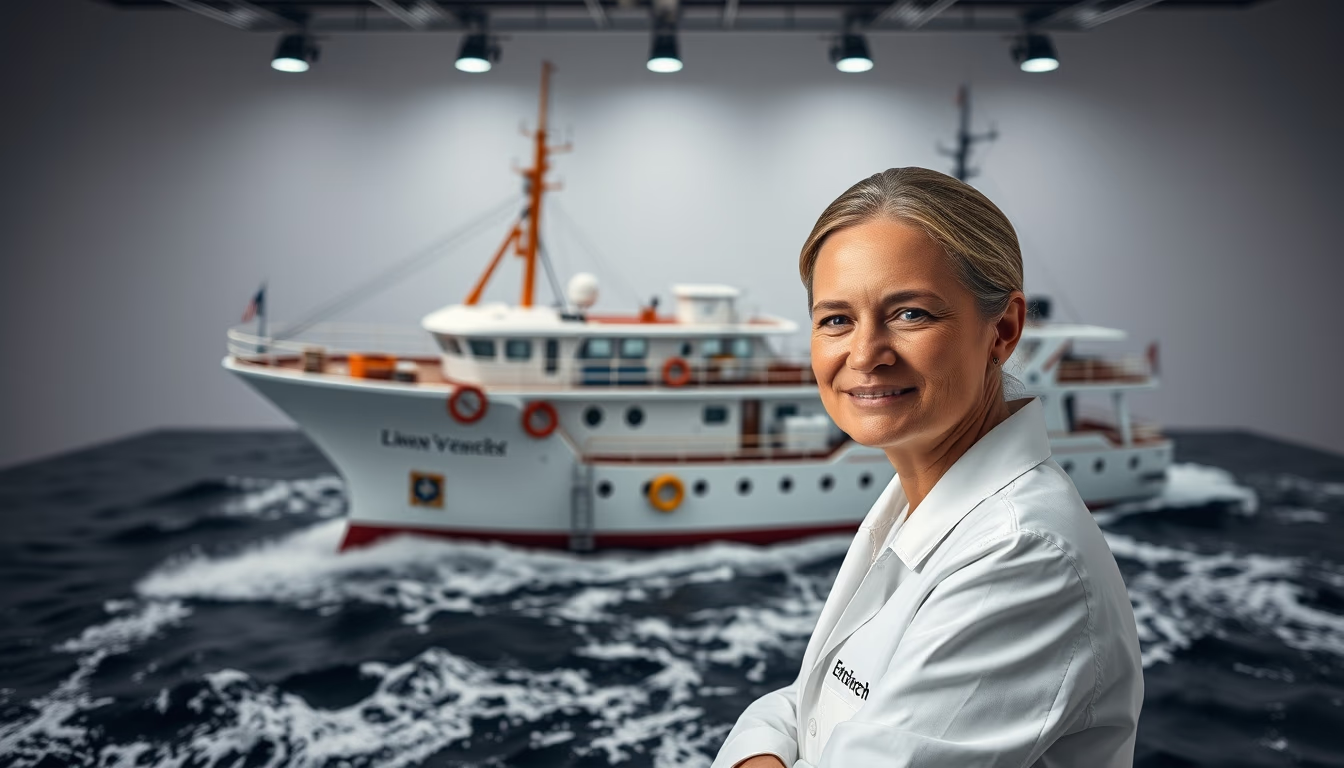
Oceanographic research vessels are specialized ships that carry scientists and equipment to study the oceans, collecting data on marine biology, geology, chemistry, and physics.
About this subject
Oceanographic research vessels form the backbone of scientific exploration of the seas. These ships range from small coastal boats to giants capable of months-long expeditions. They are equipped with laboratories, sonars, plankton nets, deep-sea sampling winches, and remotely operated vehicles (ROVs). The world's most famous research vessel might be the "Atlantis," operated by the Woods Hole Oceanographic Institution, which deploys the manned submersible Alvin. Brazil's "Ciências do Mar III," from the Federal University of Rio Grande, works in the South Atlantic studying the continental shelf and the country's Exclusive Economic Zone.
These vessels play a key role in monitoring climate change, as the oceans absorb about 30% of anthropogenic carbon dioxide and a large portion of excess heat. Expeditions like those of the International Ocean Discovery Program (IODP) drill into the seafloor to retrieve sediment cores that reveal Earth's climate history over millions of years. Oceanographic research is also vital for sustainable fisheries management and the discovery of new pharmaceutical compounds from marine organisms.
In Brazil, the Navy operates the oceanographic ships "Antares" and "Cruzeiro do Sul," supporting seafloor mapping projects and studies of ocean currents. Building a research vessel is a logistical and financial challenge; the cost of a modern ship can exceed US$100 million. Nevertheless, international cooperation allows countries to share vessels in programs such as the Global Ocean Observing System (GOOS) and Argo, which uses profiling floats to monitor ocean temperature and salinity in real time.
Frequently Asked Questions
What is the largest oceanographic research vessel in the world?
The largest dedicated research ship currently is the RRS Sir David Attenborough, operated by the British Antarctic Survey, measuring 129 meters in length. It carries out polar and oceanographic research.
How do research vessels collect samples from the seafloor?
They use winches with steel cables to lower equipment such as dredges, piston corers, and ROVs. The piston corer extracts sediment cylinders that can be tens of meters long.
How many research vessels does Brazil have?
Brazil has about 10 oceanographic ships operated by universities, research institutes, and the Navy. Noteworthy are the Antares (Navy), Ciências do Mar III (FURG), and Atlântico Sul (IOUSP).
Direct URL
https://pub-c7d6a6ea828543ac903a74a341ccb2e1.r2.dev/imagens/research-vessel-ocean-studio-editorial-portrait-p5.avifHow to credit
Include a visible link back to UtilizAí. Copy one of the snippets below:
<a href="https://xn--utiliza-eza.com/en/midia/imagens/research-vessel-ocean-studio-editorial-portrait-p5">Research vessel ocean</a> by <a href="https://xn--utiliza-eza.com">UtilizAí</a>, licensed under <a href="https://creativecommons.org/licenses/by/4.0/">CC BY 4.0</a>.
[Research vessel ocean](https://xn--utiliza-eza.com/en/midia/imagens/research-vessel-ocean-studio-editorial-portrait-p5) by [UtilizAí](https://xn--utiliza-eza.com), CC BY 4.0
License: CC-BY-4.0