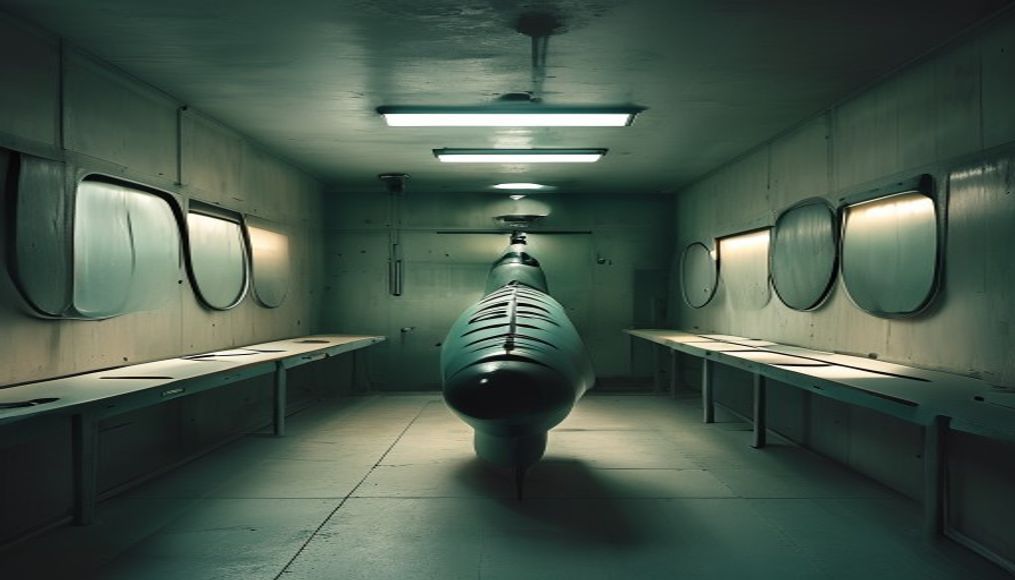
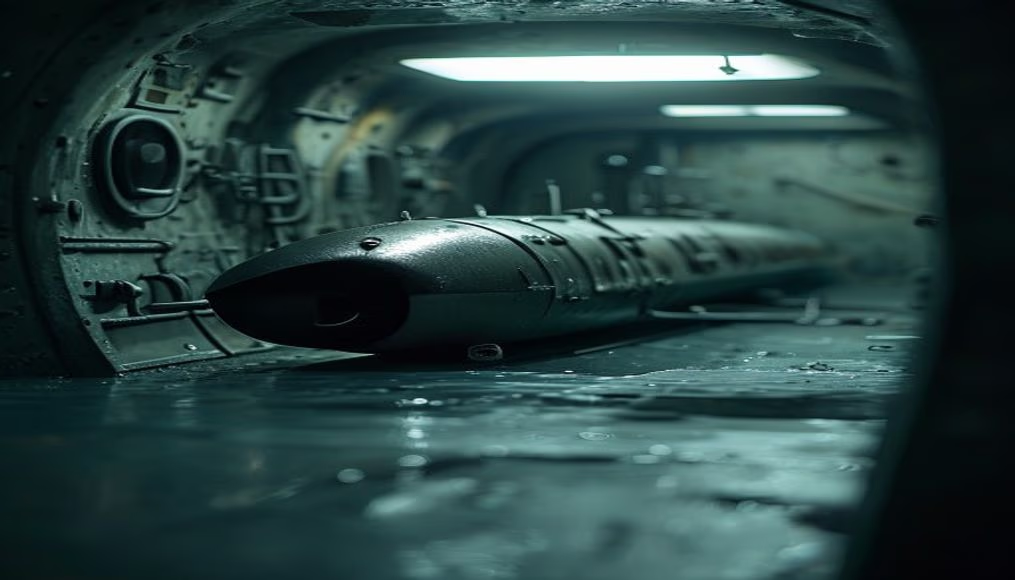
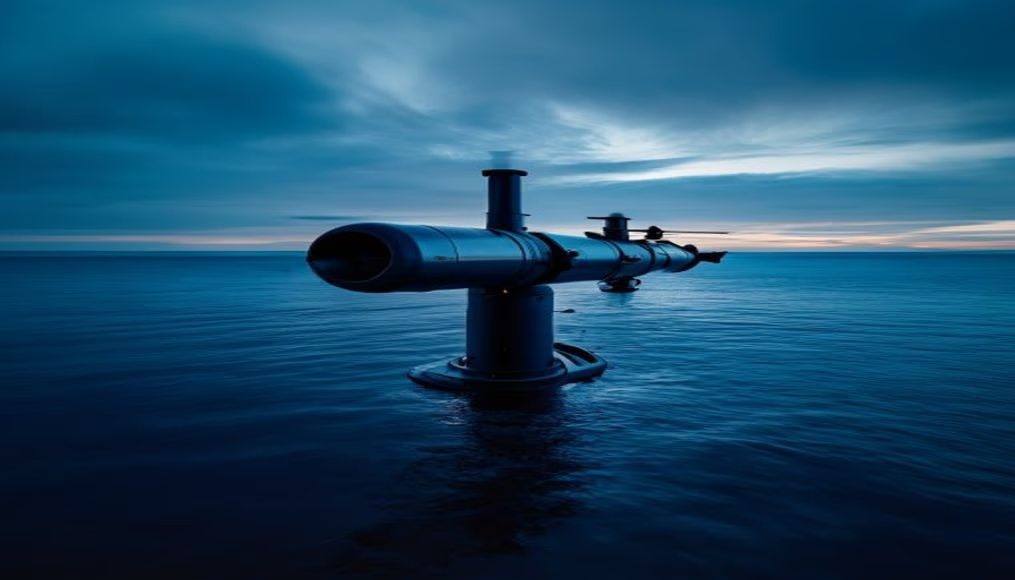
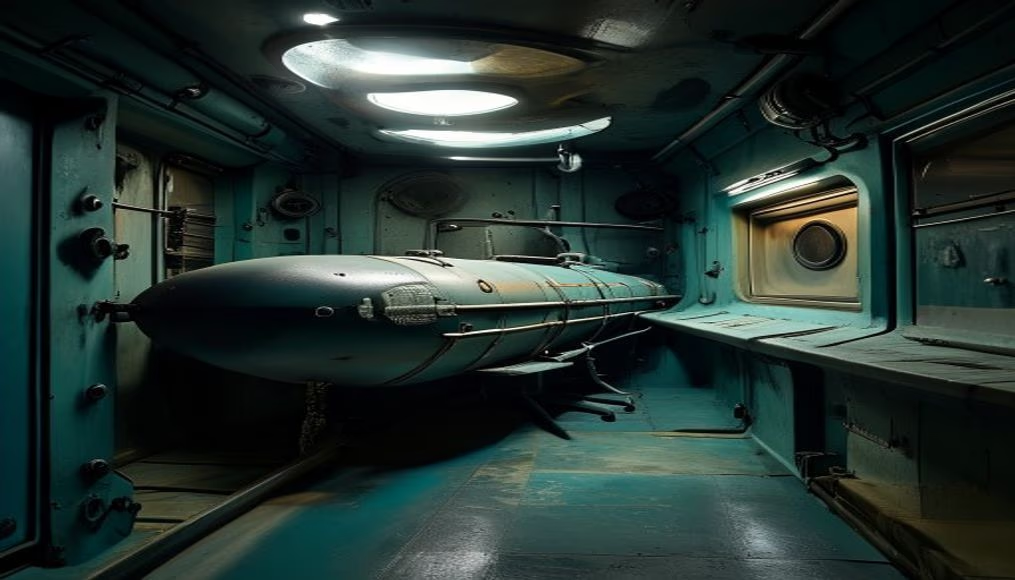
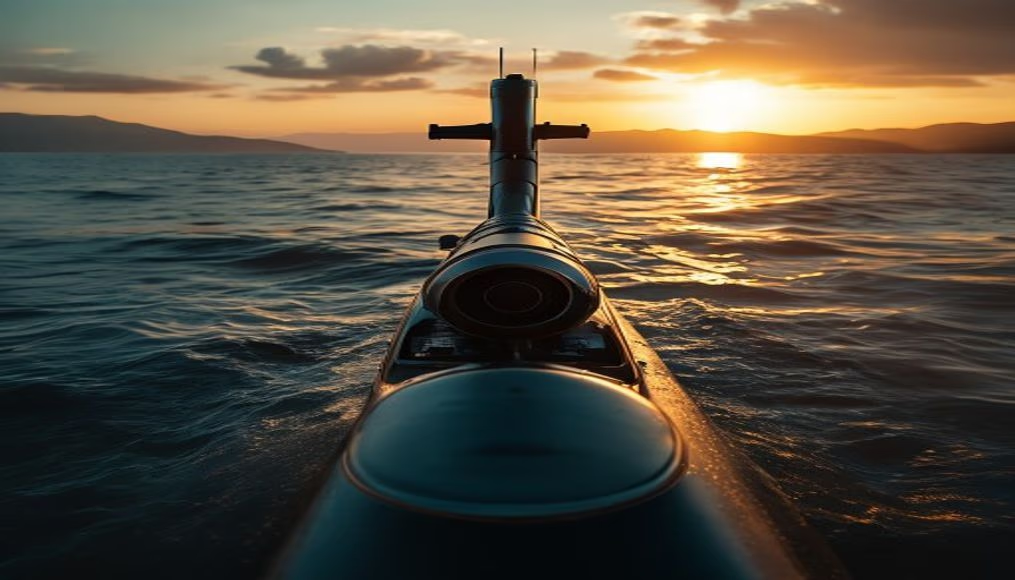
Research vessel ocean
1344×768 · AVIF · CC BY 4.0
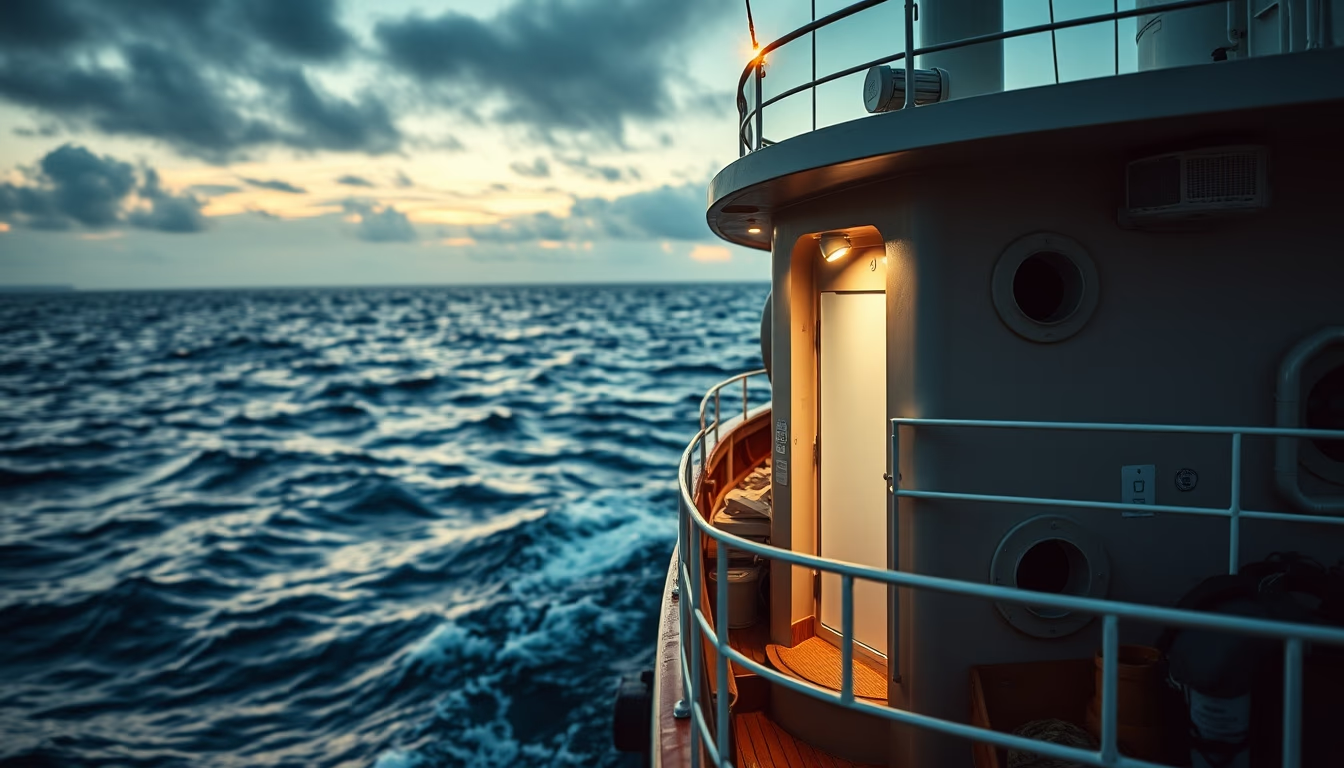
Research vessels are ships equipped with laboratories and instruments to explore oceans, study marine life, and monitor climate change.
About this subject
Research vessels are mobile scientific platforms essential for advancing marine knowledge. They operate across all world oceans, performing tasks from water and sediment sampling to deploying remotely operated vehicles (ROVs) and autonomous underwater vehicles (AUVs). Examples include the R/V Atlantis (USA), which supports the submersible Alvin famous for exploring the Titanic and hydrothermal vents, and Japan's R/V Mirai, with an ice-strengthened hull enabling polar navigation. According to UNESCO, the global fleet comprises about 1,500 dedicated research ships, but only a fraction can undertake long-term expeditions.
These vessels are critical for climate prediction, fisheries management, and discovering new bioactive compounds. The R/V Knorr (USA) helped map the Mariana Trench, while recent expeditions by R/V Falkor (Germany) mapped deep-sea coral reefs off Australia. In Brazil, vessels like the R/V Alpha Crucis (University of São Paulo) and the Naval Support Ship Vital de Oliveira collaborate internationally to survey the Brazilian coast and the Santos Basin.
A notable curiosity is the Antarctic research vessel R/V Nathaniel B. Palmer, which operates at -50°C and can break ice up to 1 meter thick. Brazil's Antarctic Program uses the Polar Ship Almirante Maximiano to supply the Comandante Ferraz Station and study polar climate influences on South America. Modern research vessels are increasingly equipped with dynamic positioning systems, multi-beam echo sounders, and onboard genomics labs, reflecting the integration of Big Data and AI in oceanography.
Frequently Asked Questions
What does an oceanographic research vessel do?
It conducts scientific studies at sea, including sample collection, seafloor mapping, water quality monitoring, and supporting submersible expeditions.
What is the largest research ship in the world?
The R/V Sikuliaq (USA) is 80 meters long, but Japan's R/V Mirai (86 meters) is among the largest. Germany's R/V Sonne is also highly capable.
How do research vessels help study climate change?
They collect data on temperature, salinity, currents, and carbon dioxide in oceans, feeding into global climate models.
Direct URL
https://pub-c7d6a6ea828543ac903a74a341ccb2e1.r2.dev/imagens/research-vessel-ocean-fine-art-photography-p9.avifHow to credit
Include a visible link back to UtilizAí. Copy one of the snippets below:
<a href="https://xn--utiliza-eza.com/en/midia/imagens/research-vessel-ocean-fine-art-photography-p9">Research vessel ocean</a> by <a href="https://xn--utiliza-eza.com">UtilizAí</a>, licensed under <a href="https://creativecommons.org/licenses/by/4.0/">CC BY 4.0</a>.
[Research vessel ocean](https://xn--utiliza-eza.com/en/midia/imagens/research-vessel-ocean-fine-art-photography-p9) by [UtilizAí](https://xn--utiliza-eza.com), CC BY 4.0
License: CC-BY-4.0