Pioneer steamboat mississippi
1344×768 · AVIF · CC BY 4.0
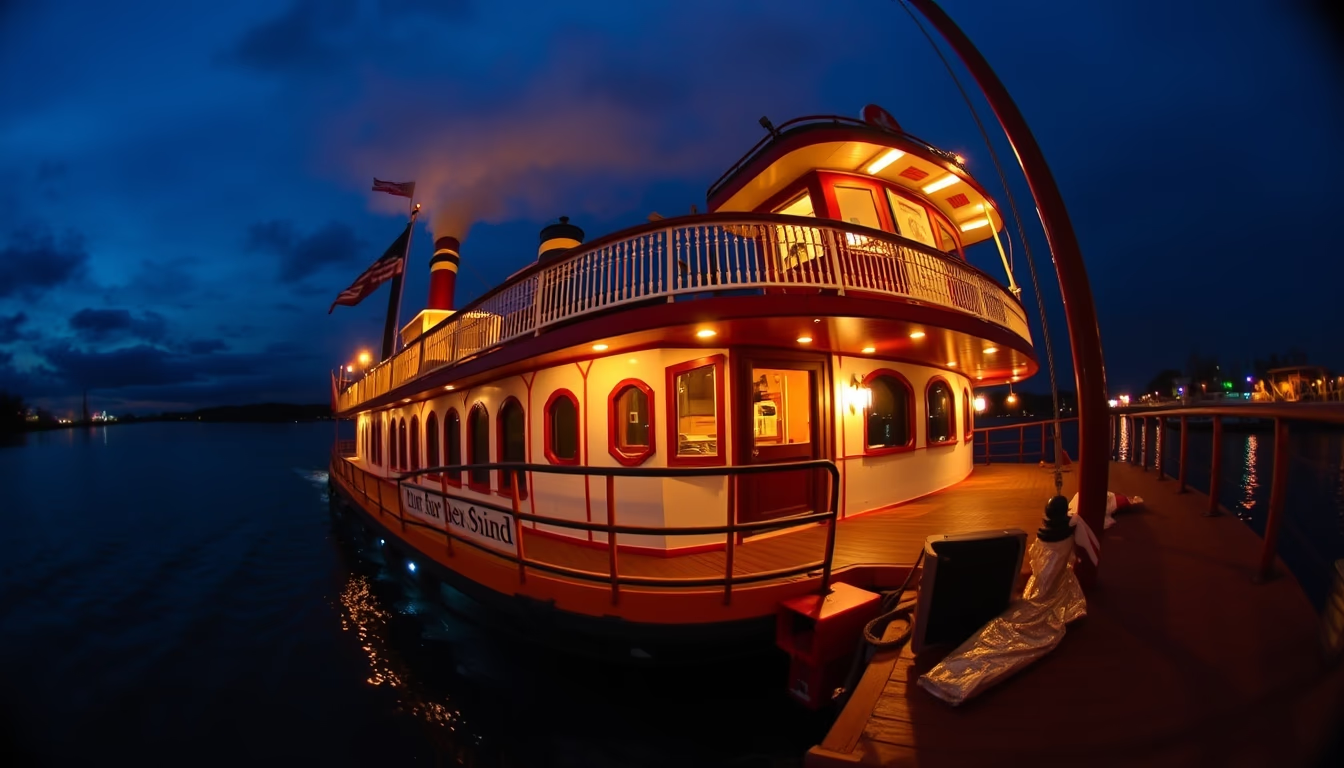
The steamboat Pioneer marked the beginning of commercial navigation on the Mississippi River, transforming transportation and the U.S. economy in the 19th century.
About this subject
The steamboat Pioneer was one of the first steam-powered vessels to operate commercially on the Mississippi River, a landmark in American river transportation history. Built in 1822 by Henry Shreve, it introduced a flat-bottomed hull design, ideal for the shallow and winding waters of the Mississippi. Before the Pioneer, river navigation relied on barges and rafts propelled by currents or oars, making travel slow and unpredictable. With the steam engine, travel time from New Orleans to St. Louis dropped from months to just a few weeks, boosting trade in cotton, sugar, and other goods.
The Pioneer's success sparked a steamboat boom on the river, which became the primary mode of freight and passenger transport in the U.S. Midwest until the late 19th century. These vessels were characterized by side paddle wheels and tall smokestacks, burning wood or coal. The Mississippi, with its massive volume and hundreds of tributaries, served as the backbone of the riverine system, and steamboats symbolized progress and westward expansion.
Interestingly, the name "Pioneer" was later used for several subsequent steamboats, but the original 1822 vessel was dismantled in 1834. Its legacy endures: it demonstrated the viability of steam power on treacherous Mississippi waters, paving the way for the golden age of river navigation. Today, replicas like the "Natchez" in New Orleans keep that tradition alive, even though commercial freight has shifted to railroads and trucks.
Frequently Asked Questions
Who built the steamboat Pioneer and in what year?
The Pioneer was built by Henry Shreve in 1822. He was an entrepreneur and engineer who also helped clear the Red River.
What was the main innovation of the steamboat Pioneer on the Mississippi?
Its main innovation was the flat-bottomed hull, which allowed navigation in shallow waters and sharp bends, a constant challenge on the Mississippi.
Why were steamboats so important for the development of the United States?
They drastically reduced travel time and freight transport, connecting the interior to the port of New Orleans and accelerating trade and westward expansion.
Direct URL
https://pub-c7d6a6ea828543ac903a74a341ccb2e1.r2.dev/imagens/pioneer-steamboat-mississippi-fish-eye-wide-angle-p6.avifHow to credit
Include a visible link back to UtilizAí. Copy one of the snippets below:
<a href="https://xn--utiliza-eza.com/en/midia/imagens/pioneer-steamboat-mississippi-fish-eye-wide-angle-p6">Pioneer steamboat mississippi</a> by <a href="https://xn--utiliza-eza.com">UtilizAí</a>, licensed under <a href="https://creativecommons.org/licenses/by/4.0/">CC BY 4.0</a>.
[Pioneer steamboat mississippi](https://xn--utiliza-eza.com/en/midia/imagens/pioneer-steamboat-mississippi-fish-eye-wide-angle-p6) by [UtilizAí](https://xn--utiliza-eza.com), CC BY 4.0
License: CC-BY-4.0