Pieta marble
1344×768 · AVIF · CC BY 4.0
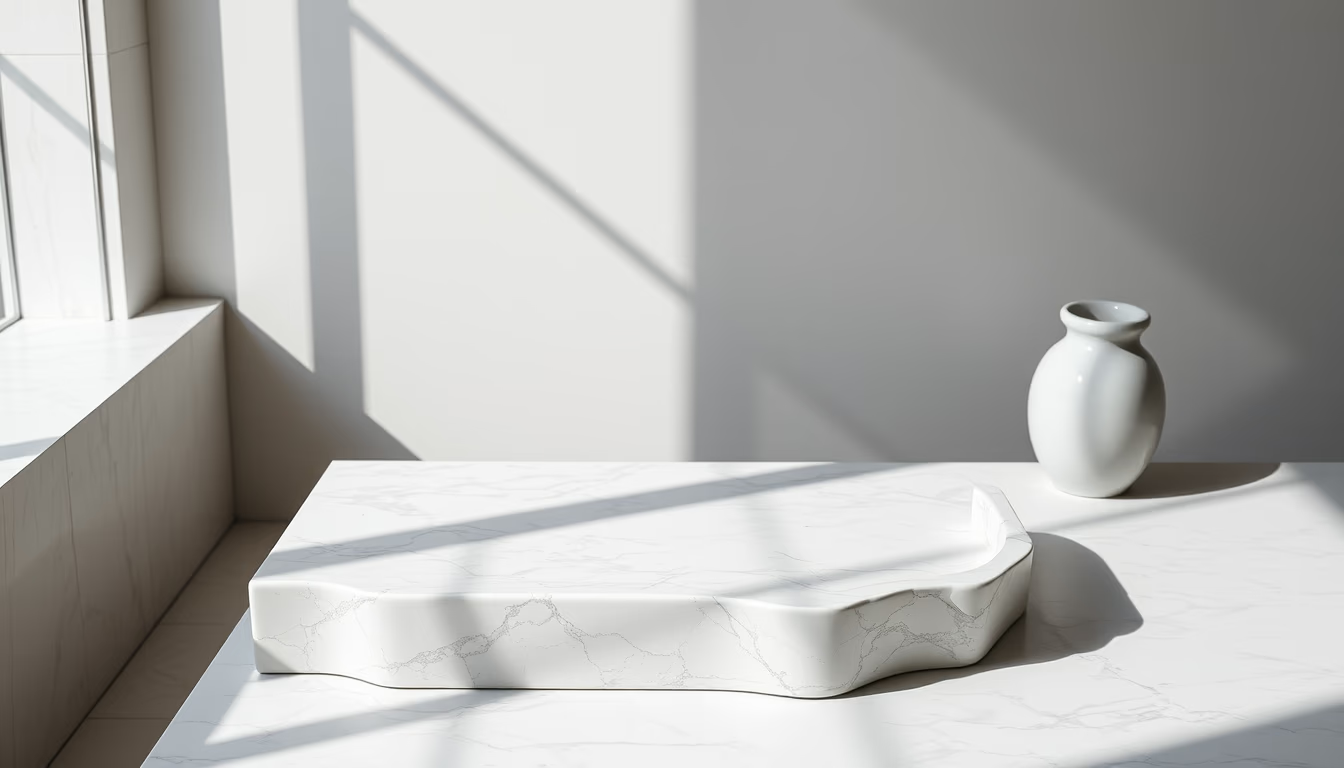
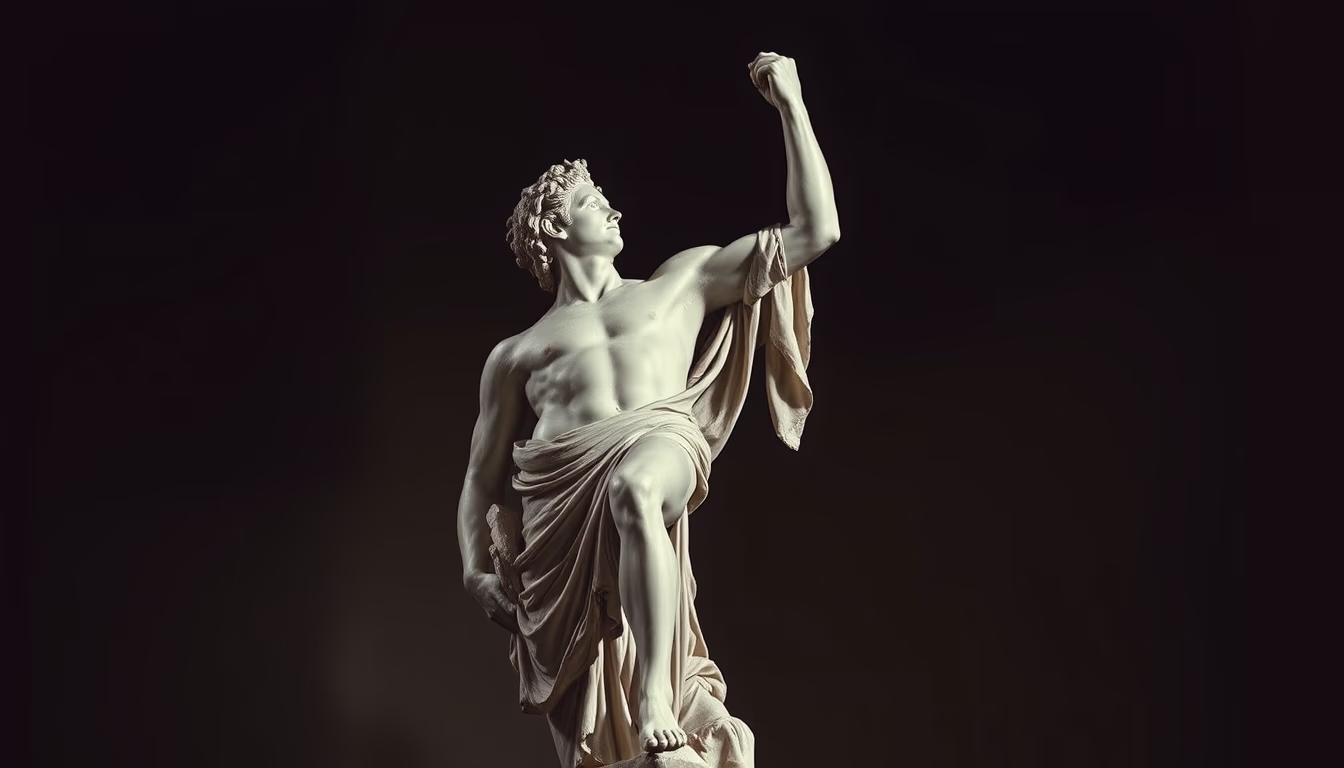
Michelangelo's Pietà is one of the most celebrated sculptures of the Renaissance, carved from Carrara marble and displayed in St. Peter's Basilica in Vatican City.
About this subject
Michelangelo's Pietà, a masterpiece of the Italian Renaissance, was sculpted between 1498 and 1499 when the artist was only 24 years old. Commissioned by Cardinal Jean de Bilhères for his tomb, the sculpture depicts the Virgin Mary holding the body of Jesus Christ after the crucifixion. The composition, considered a pinnacle of Renaissance art, impresses with the softness of the drapery, precise anatomy, and an expression of serene sorrow. It is the only work Michelangelo ever signed, inscribing his name on the sash across Mary's chest after hearing that the sculpture was being attributed to another artist.
The block of Carrara marble, sourced from the famous quarries in Tuscany, was chosen for its purity and translucency. Michelangelo worked the stone with such mastery that the figures appear lifelike: details such as the veins in the hands, the folds of fabric, and Mary's facial expression showcase his technical virtuosity. The pyramidal composition, with Mary as the base and Christ in her lap, conveys stability and balance despite the tragic subject.
Located in the first chapel on the right side of St. Peter's Basilica in Vatican City, the Pietà suffered an attack in 1972 when a Hungarian geologist struck the work with a hammer. Mary's left arm was broken and her nose damaged. A meticulous restoration restored the sculpture's integrity, and it is now protected by bulletproof glass. Despite the incident, the Pietà continues to attract millions of visitors annually, standing as a symbol of sacred art and Renaissance genius.
The Pietà's influence extends beyond the religious sphere. The work has inspired countless reproductions, academic studies, and references in popular culture. Its idealized realism and ability to convey emotion through cold stone are hallmarks of Renaissance Humanism. The sculpture is frequently analyzed in art history courses as a perfect example of composition and sculptural technique, cementing Michelangelo's legacy as one of the greatest artists of all time.
Frequently Asked Questions
Where is Michelangelo's Pietà located?
The Pietà is displayed in St. Peter's Basilica in Vatican City, specifically in the first chapel on the right side of the entrance.
Why did Michelangelo sign the Pietà?
Michelangelo signed the work after hearing that the sculpture was being attributed to another artist. He carved his name on the sash across Mary's chest.
How was the Pietà damaged in 1972?
In 1972, a Hungarian geologist attacked the sculpture with a hammer, breaking Mary's left arm and damaging her nose. The piece was restored and is now protected by bulletproof glass.
Direct URL
https://pub-c7d6a6ea828543ac903a74a341ccb2e1.r2.dev/imagens/pieta-marble-minimalist-composition-p8.avifHow to credit
Include a visible link back to UtilizAí. Copy one of the snippets below:
<a href="https://xn--utiliza-eza.com/en/midia/imagens/pieta-marble-minimalist-composition-p8">Pieta marble</a> by <a href="https://xn--utiliza-eza.com">UtilizAí</a>, licensed under <a href="https://creativecommons.org/licenses/by/4.0/">CC BY 4.0</a>.
[Pieta marble](https://xn--utiliza-eza.com/en/midia/imagens/pieta-marble-minimalist-composition-p8) by [UtilizAí](https://xn--utiliza-eza.com), CC BY 4.0
License: CC-BY-4.0