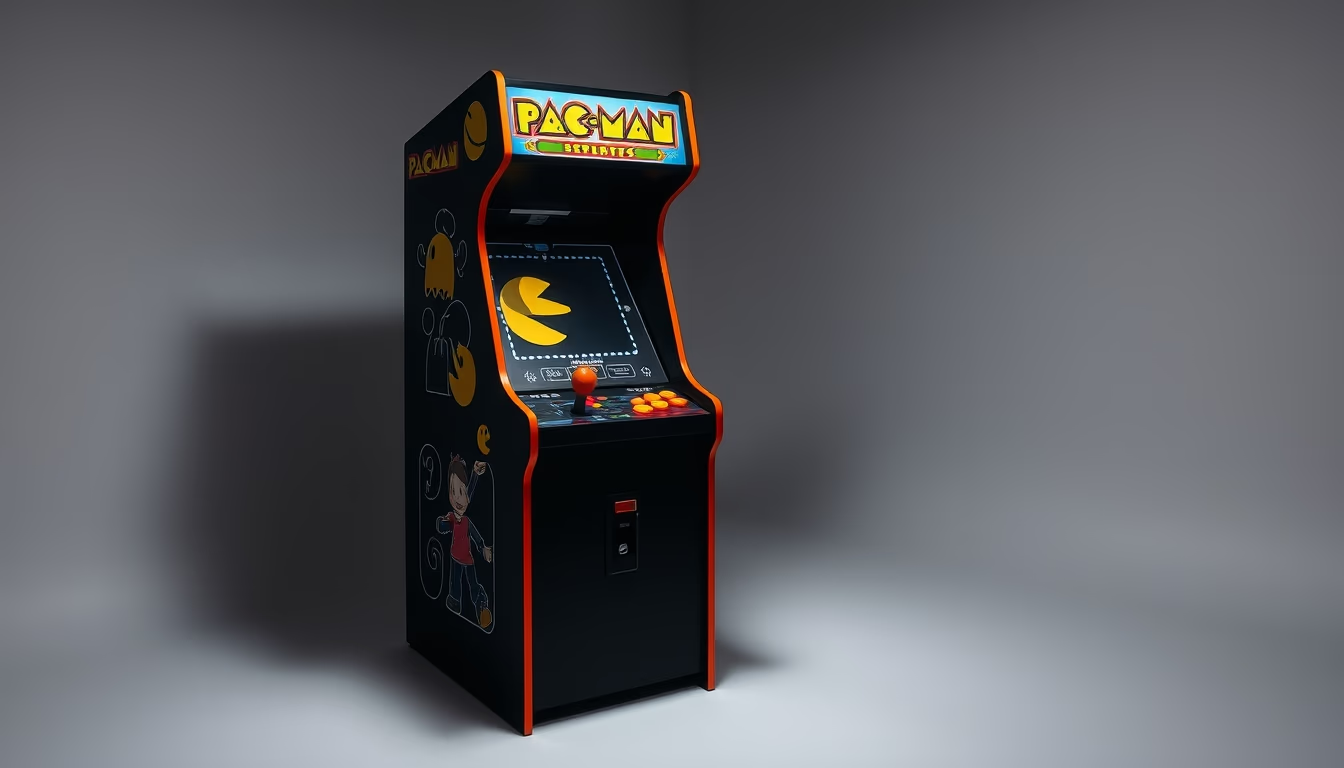
Pacman cabinet arcade
1344×768 · AVIF · CC BY 4.0
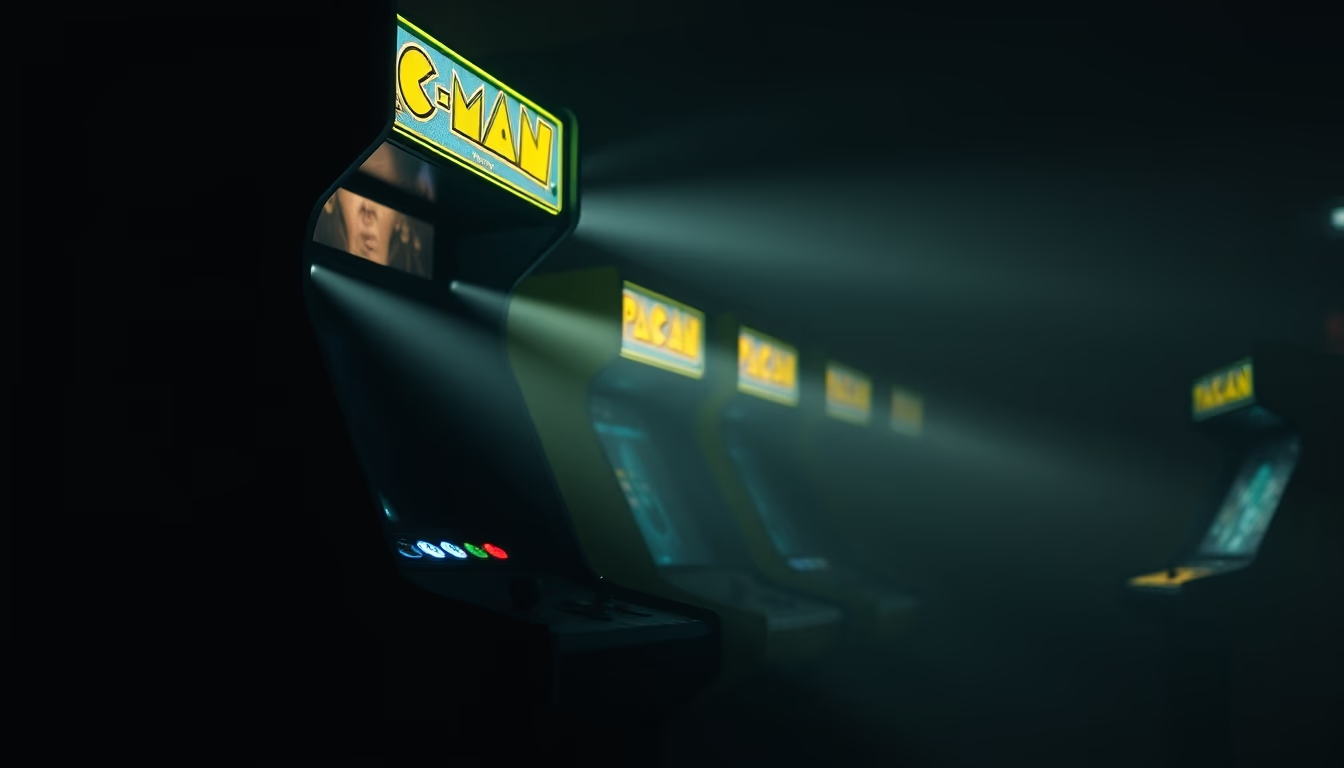
The original Pac-Man arcade cabinet, released in 1980 by Namco, revolutionized arcades with its maze and iconic characters.
About this subject
Released in Japan on May 22, 1980 by Namco and distributed worldwide by Midway, the Pac-Man arcade cabinet became an icon of arcades. Unlike the space shooters of the time, Pac-Man offered a non-violent premise: guide a yellow circular character through a maze, eating pellets and avoiding ghosts. The cabinet's colorful side art depicting the character and ghosts helped attract a broader audience, including girls and women, who previously did not frequent game arcades.
The control was a four-direction joystick, innovative for the time, allowing precise movements. The cabinet measures about 1.70 m in height and weighs approximately 100 kg, with a 19-inch CRT monitor. The artwork on the front panel and sides varied by distributor, but the most famous version shows Pac-Man in action inside the maze. This design influenced generations of arcade cabinets.
In Brazil, Pac-Man became a craze in the 1980s, especially in commercial districts of São Paulo and Rio de Janeiro. Many local arcades adapted generic cabinets with Pac-Man stickers. An estimated 400,000 original cabinets were sold globally, a record at the time. The game spawned sequels, TV series, and a speedrunning culture, the first perfect score (3,333,360 points) was achieved in 1999 by Billy Mitchell.
Trivia: the original name was Puck Man, but Midway changed it to prevent people from altering the P to an F (forming an obscene word). The ghosts have proper names: Blinky (red), Pinky (pink), Inky (cyan), and Clyde (orange), each with a unique AI pattern, a technical feat for 1980.
Frequently Asked Questions
Why was the name changed from Puck Man to Pac-Man?
In the United States, Midway feared that vandals would change the P to an F, forming an obscene word. They changed it to Pac-Man while keeping a similar sound.
What is the maximum possible score in the original Pac-Man?
The theoretically maximum score is 3,333,360 points, achieved by eating all pellets, fruits, and ghosts in each of the 256 levels without losing a life. The first to accomplish this was Billy Mitchell in 1999.
What do the ghost names mean?
The ghosts are named Blinky (red, the chaser), Pinky (pink, the ambusher), Inky (cyan, the unpredictable), and Clyde (orange, the foolish). Each has a different chase pattern programmed to challenge the player.
Direct URL
https://pub-c7d6a6ea828543ac903a74a341ccb2e1.r2.dev/imagens/pacman-cabinet-arcade-fine-art-photography-fresh10.avifHow to credit
Include a visible link back to UtilizAí. Copy one of the snippets below:
<a href="https://xn--utiliza-eza.com/en/midia/imagens/pacman-cabinet-arcade-fine-art-photography-fresh10">Pacman cabinet arcade</a> by <a href="https://xn--utiliza-eza.com">UtilizAí</a>, licensed under <a href="https://creativecommons.org/licenses/by/4.0/">CC BY 4.0</a>.
[Pacman cabinet arcade](https://xn--utiliza-eza.com/en/midia/imagens/pacman-cabinet-arcade-fine-art-photography-fresh10) by [UtilizAí](https://xn--utiliza-eza.com), CC BY 4.0
License: CC-BY-4.0