Donkey kong screen retro
1344×768 · AVIF · CC BY 4.0
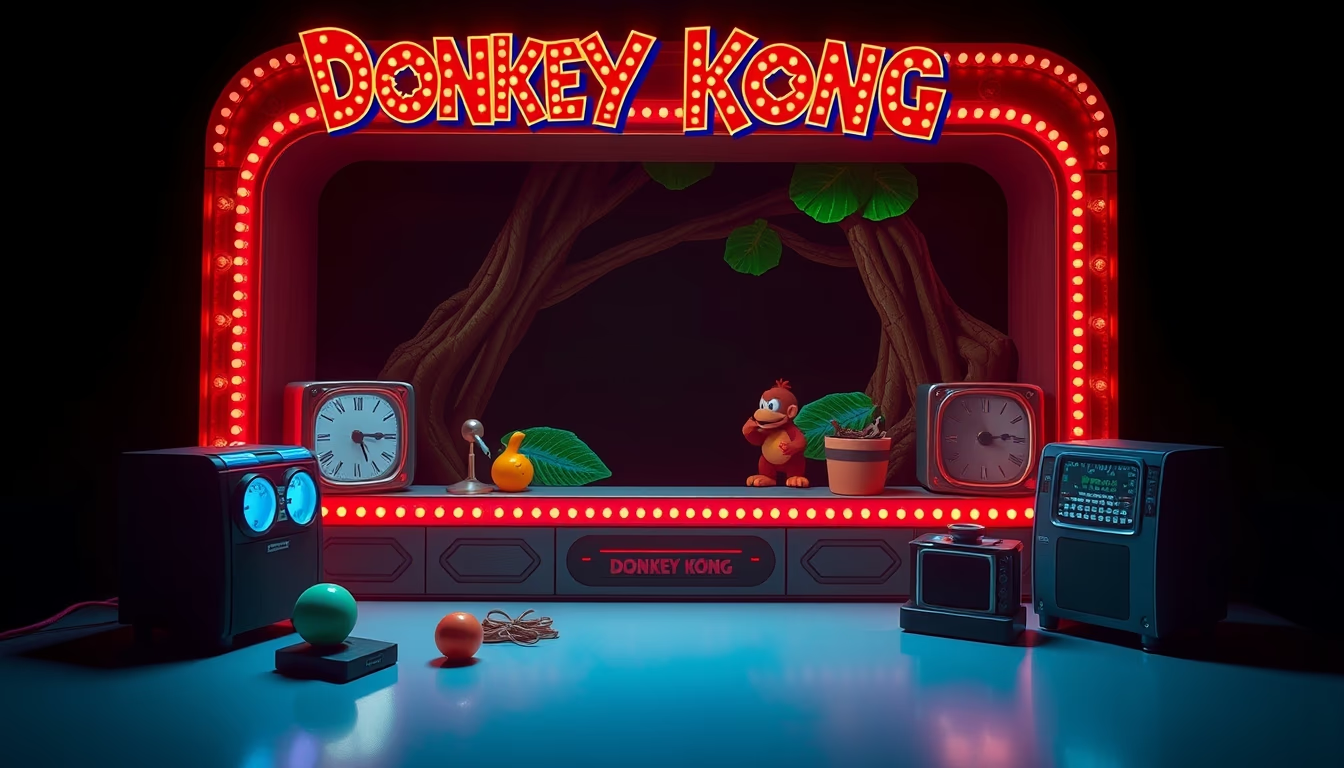
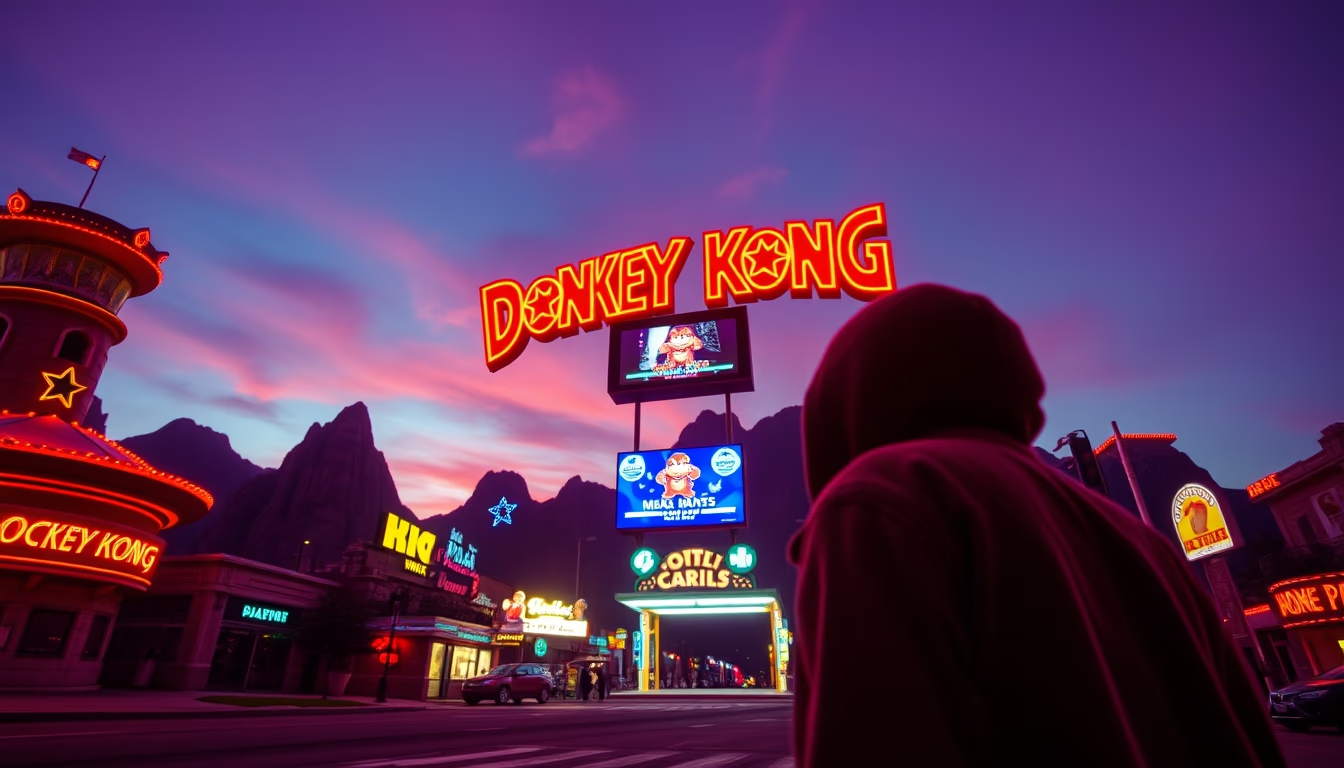
Donkey Kong, the game that defined the golden age of arcades, features its iconic platform setting and the hero Jumpman.
About this subject
Donkey Kong is an arcade game released by Nintendo in 1981, designed by Shigeru Miyamoto. The game introduced characters that would become legends in video games: Jumpman (later known as Mario) and the gorilla Donkey Kong. The game screen, typically divided into four platforms, shows Jumpman attempting to rescue the damsel Pauline from Donkey Kong, who rolls barrels down. This setting became one of the most recognizable in gaming history, influencing countless later titles.
Development of Donkey Kong initially began as an attempt by Nintendo to adapt the Popeye game, but when they failed to obtain the license, Miyamoto created original characters. The simple plot and mechanics of climbing platforms while dodging obstacles were revolutionary for the time. The game was a massive commercial success, selling over 60,000 units in the United States in its first year and spawning sequels and a franchise.
The original Donkey Kong was released for arcades but later ported to various systems, including the NES, Atari, and personal computers. Its title screen, with the game's name in large letters and the gorilla at the top of the structure, is a nostalgic image for retro gaming fans. The soundtrack, composed by Yukio Kaneoka, is equally memorable, with the opening theme being one of the most sampled and remixed tunes.
Interestingly, Donkey Kong was the first game to feature a narrative on screen, using short cutscenes to tell the story. It was also the first platform game, a genre that would dominate the market for decades. The game's success saved Nintendo from bankruptcy and established the company as a powerhouse in electronic entertainment.
Frequently Asked Questions
What was the cultural impact of Donkey Kong?
Donkey Kong was the first platform game and popularized narrative cutscenes. It also introduced Mario, who became Nintendo's mascot, and inspired a series of sequels and adaptations.
Why is the Donkey Kong screen so iconic?
The game screen, with its rolling barrels and metal platforms, is a simple but challenging design that became a symbol of the golden age of arcades. It is frequently referenced in pop culture.
How many different stages are in the original Donkey Kong?
The original Donkey Kong has four stages: platform construction, a conveyor belt, an elevator stage, and a stage involving removing rivets. Each stage has a unique layout.
Direct URL
https://pub-c7d6a6ea828543ac903a74a341ccb2e1.r2.dev/imagens/donkey-kong-screen-retro-studio-still-life-fresh17.avifHow to credit
Include a visible link back to UtilizAí. Copy one of the snippets below:
<a href="https://xn--utiliza-eza.com/en/midia/imagens/donkey-kong-screen-retro-studio-still-life-fresh17">Donkey kong screen retro</a> by <a href="https://xn--utiliza-eza.com">UtilizAí</a>, licensed under <a href="https://creativecommons.org/licenses/by/4.0/">CC BY 4.0</a>.
[Donkey kong screen retro](https://xn--utiliza-eza.com/en/midia/imagens/donkey-kong-screen-retro-studio-still-life-fresh17) by [UtilizAí](https://xn--utiliza-eza.com), CC BY 4.0
License: CC-BY-4.0