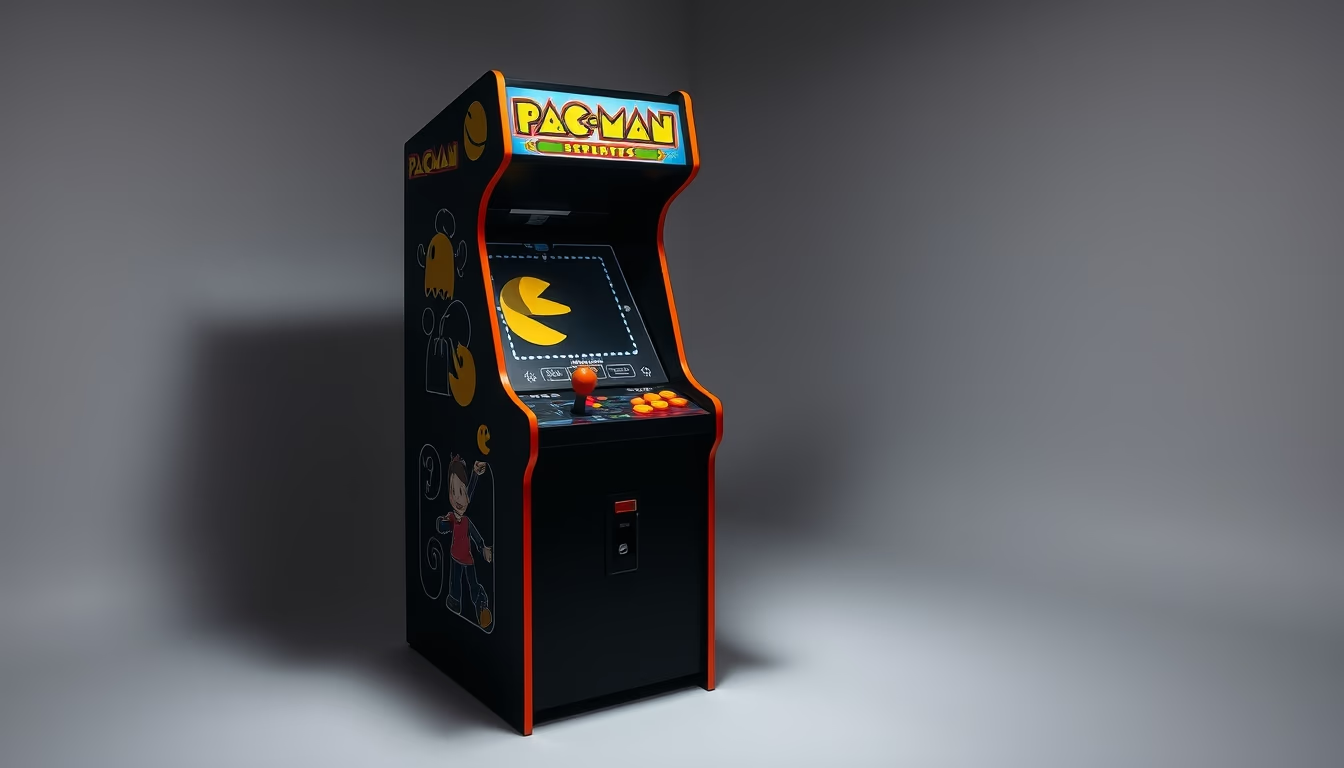
Pacman cabinet arcade
1344×768 · AVIF · CC BY 4.0
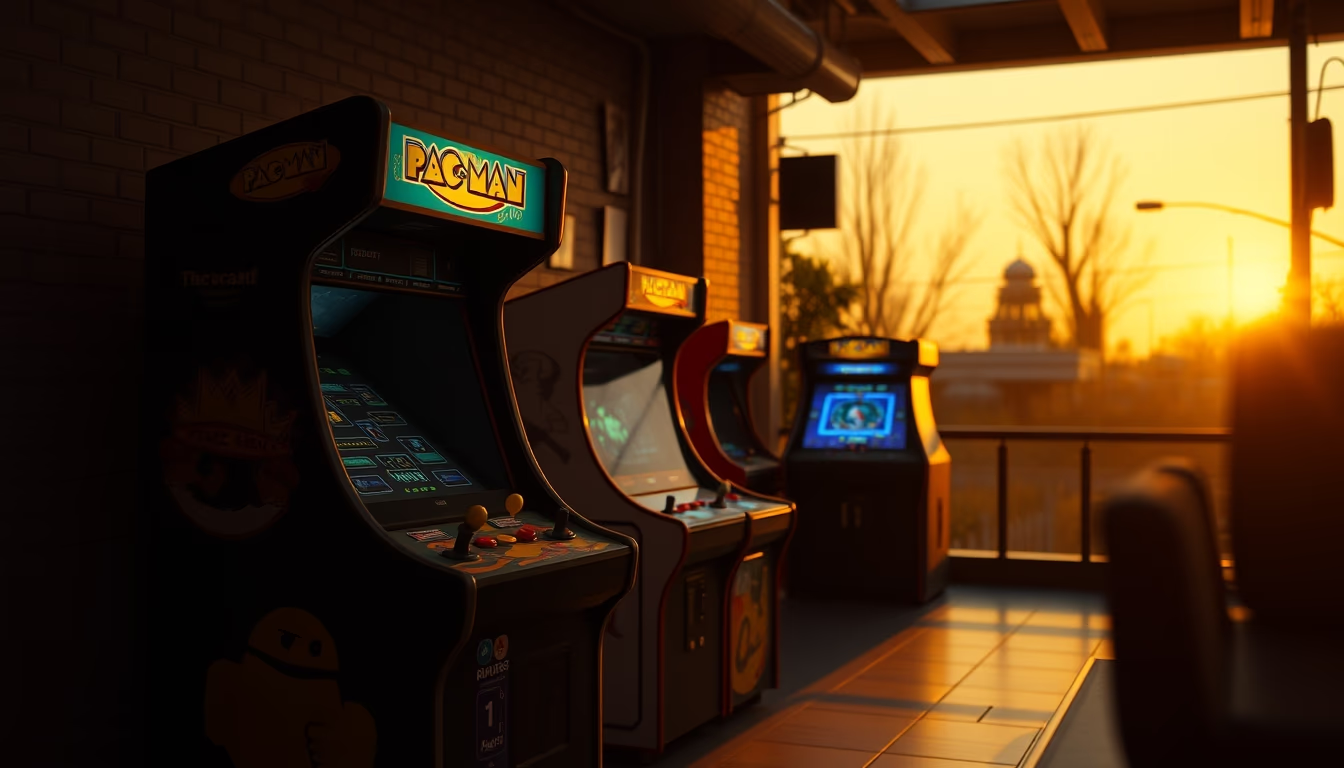
The Pac-Man arcade cabinet, released in 1980 by Namco, revolutionized arcades and became a global cultural icon.
About this subject
The Pac-Man arcade cabinet is one of the most recognizable symbols of the golden age of video games. Released on May 22, 1980 in Japan by Namco, and later in 1980 in the United States by Midway, the game was created by Toru Iwatani, who drew inspiration from a pizza missing a slice to design the protagonist. The goal was simple: guide Pac-Man through a maze, eating dots and fruits while fleeing from four colorful ghosts.
Original cabinets featured a horizontal design with vibrant artwork, including the yellow character and the ghosts Inky, Blinky, Pinky, and Clyde. The machine used proprietary hardware with a Z80 processor running at 3.072 MHz and raster graphics. Success was immediate: Pac-Man became the best-selling arcade game of all time, with over 400,000 units sold by 1981. It was also the first game to feature power-ups, allowing players to temporarily eat ghosts.
Culturally, Pac-Man transcended arcades. It inspired an animated series, songs like "Pac-Man Fever" (1981), and countless licensed products. The game is often cited as an example of accessible design, appealing to both casual and hardcore players. In 2015, it was inducted into the World Video Game Hall of Fame. To this day, original cabinets are sought after by collectors and can fetch thousands of dollars at auction.
Pac-Man's influence on the industry is lasting. It popularized charismatic characters in games and established a monetization model that fueled arcade growth. Even decades later, the cabinet and game design remain a reference for developers and retrogaming enthusiasts.
Frequently Asked Questions
Who created Pac-Man and what was the inspiration?
The game was created by Toru Iwatani, a designer at Namco. The inspiration came from a pizza missing a slice, which he ate while thinking of a simple, friendly character.
Why do the ghosts have different names and colors?
Each ghost has a personality and chase strategy: Blinky (red) pursues directly, Pinky (pink) tries to ambush, Inky (cyan) is unpredictable, and Clyde (orange) acts cowardly. The names were given by Namco for identification.
What was Pac-Man's impact on pop culture?
Pac-Man became a global phenomenon, spawning an animated series, hit songs, toys, and even a world record high score (6,131,940 points by Billy Mitchell, later disputed). It is also considered the first video game mascot.
Direct URL
https://pub-c7d6a6ea828543ac903a74a341ccb2e1.r2.dev/imagens/pacman-cabinet-arcade-cinematic-wide-shot-fresh5.avifHow to credit
Include a visible link back to UtilizAí. Copy one of the snippets below:
<a href="https://xn--utiliza-eza.com/en/midia/imagens/pacman-cabinet-arcade-cinematic-wide-shot-fresh5">Pacman cabinet arcade</a> by <a href="https://xn--utiliza-eza.com">UtilizAí</a>, licensed under <a href="https://creativecommons.org/licenses/by/4.0/">CC BY 4.0</a>.
[Pacman cabinet arcade](https://xn--utiliza-eza.com/en/midia/imagens/pacman-cabinet-arcade-cinematic-wide-shot-fresh5) by [UtilizAí](https://xn--utiliza-eza.com), CC BY 4.0
License: CC-BY-4.0