Mountains everest base
1344×768 · AVIF · CC BY 4.0
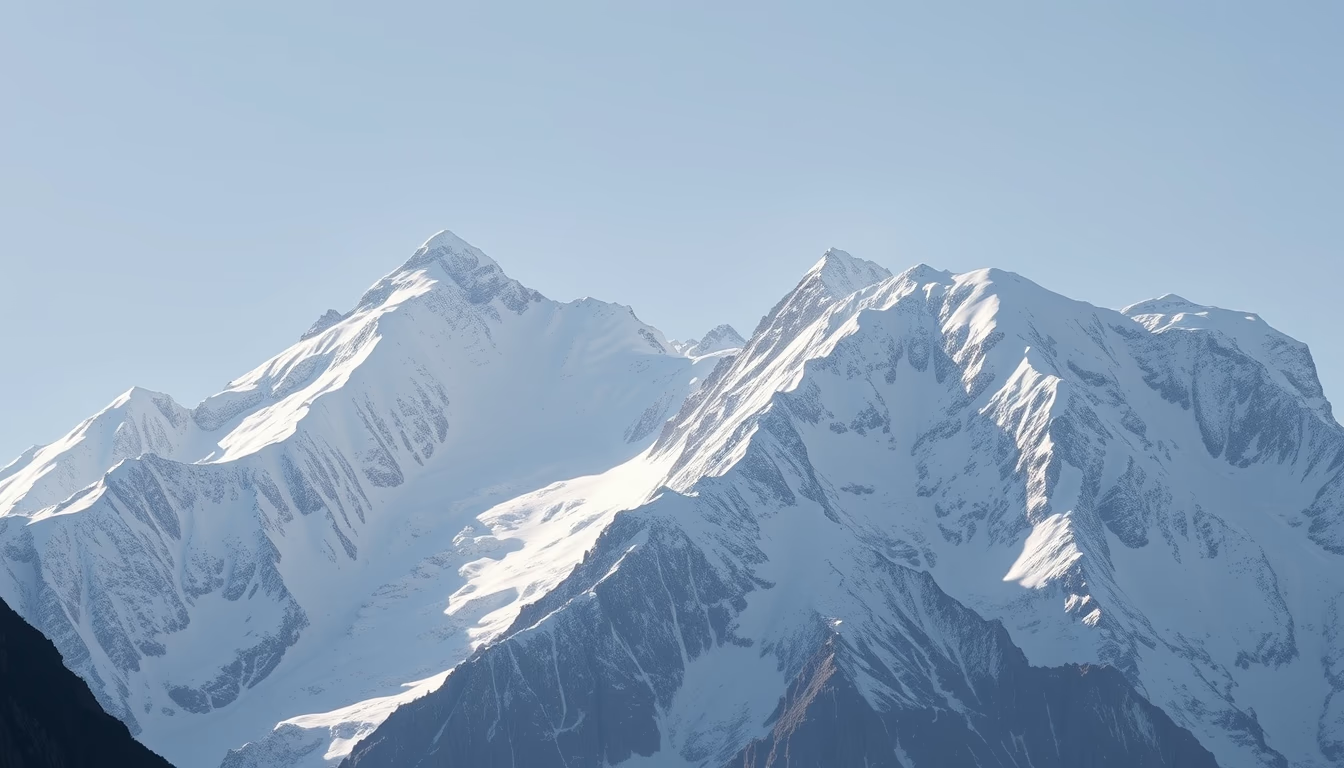
Mount Everest, at 8,848 meters, is the highest point on Earth, a geological marvel of the Himalayas located on the Nepal-Tibet border.
About this subject
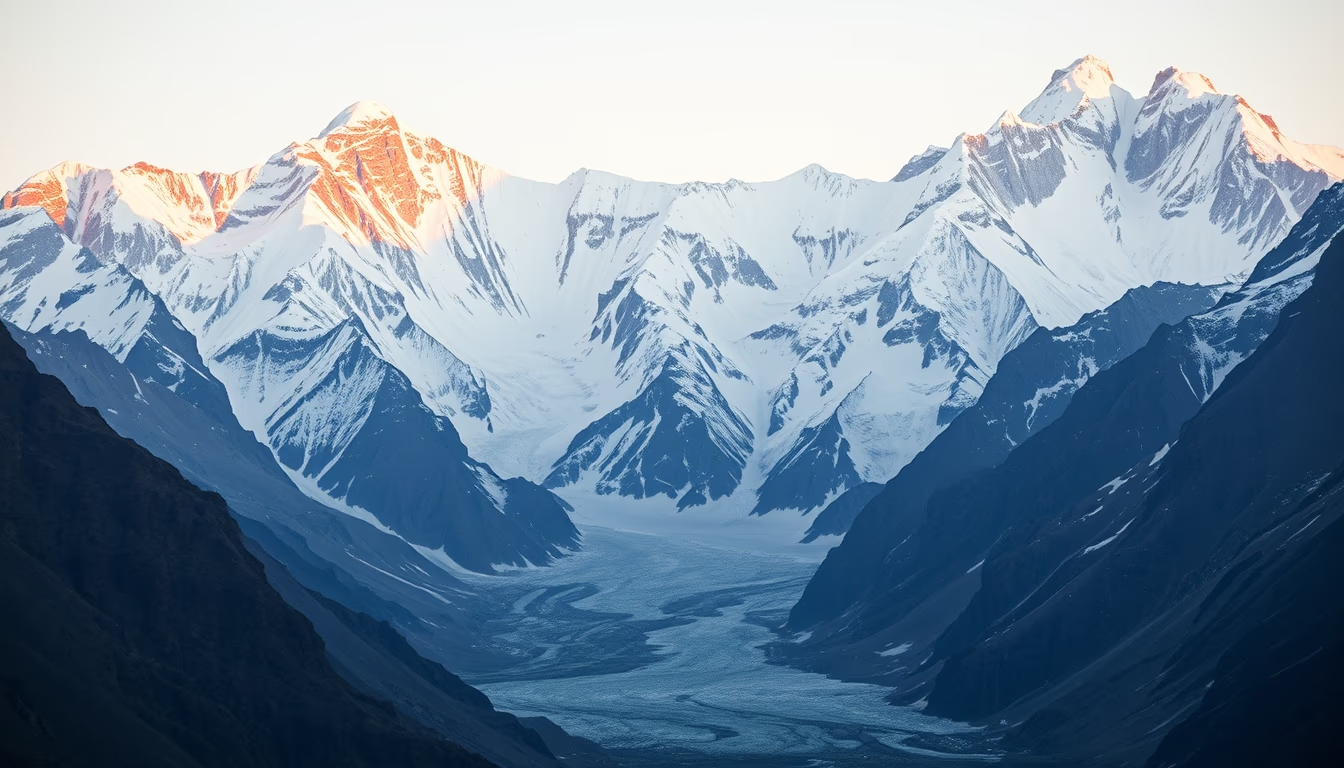
Mount Everest, known as Sagarmatha in Nepal and Chomolungma in Tibet, is the world's highest peak at 8,848 meters. Its base, located at approximately 5,364 meters on the south side (Nepal), serves as the starting point for most climbing expeditions. This area is part of Sagarmatha National Park, a UNESCO World Heritage site, and hosts the famous Everest Base Camp, a seasonal settlement that transforms into a small town during the climbing season (April to May). The region is dominated by the Khumbu Glacier, one of the largest in the Himalayas, and the treacherous Khumbu Icefall, a constantly shifting ice cascade that presents the first major challenge for climbers.
Geologically, Everest is part of the Himalayan orogenic belt, formed by the collision of the Indian Plate with the Eurasian Plate about 50 million years ago. The rocks composing the peak are primarily metamorphic and sedimentary, including limestone and granite, with marine fossils found at high altitudes, indicating that the area was once underwater. Tectonic movement continues to uplift the Himalayas at a rate of about 5 millimeters per year, meaning Everest is slowly growing.
The base of Everest is not just a climbing camp; it is a fragile ecosystem and a hub of temporary human activity. Thousands of climbers and Sherpas pass through each year, creating significant environmental impacts. The Nepalese government has implemented regulations to manage waste and pollution, but challenges remain. Additionally, the local Sherpa culture, deeply intertwined with Buddhism, considers the mountain sacred and holds blessing ceremonies (pujas) before expeditions.
Interestingly, the altitude of the base is higher than many peaks around the world. The thin air and extreme temperatures (which can drop to -20°C at night) require physical preparation and acclimatization. South Base Camp is often called "the highest city in the world" during the season, with tents, communication facilities, and even a small Buddhist chapel. The view of Everest from the base is stunning, with its ice and snow pyramid dominating the horizon, surrounded by other mountains like Lhotse and Nuptse.
Frequently Asked Questions
What is the altitude of Everest Base Camp?
The South Base Camp in Nepal is at approximately 5,364 meters (17,598 feet). The North Base Camp in Tibet is at about 5,150 meters (16,900 feet).
Why is Everest geologically significant?
Everest is part of the Himalayan range, formed by the collision of the Indian and Eurasian tectonic plates. Sedimentary rocks with marine fossils found at the summit indicate the area was once under the sea.
What are the main challenges to reach Everest Base Camp?
The primary challenge is altitude acclimatization, which can cause acute mountain sickness. Additionally, the terrain involves glaciers, the Khumbu Icefall, and extreme weather with sub-zero temperatures.
Direct URL
https://pub-c7d6a6ea828543ac903a74a341ccb2e1.r2.dev/imagens/mountains-everest-base-minimalist-composition-p6.avifHow to credit
Include a visible link back to UtilizAí. Copy one of the snippets below:
<a href="https://xn--utiliza-eza.com/en/midia/imagens/mountains-everest-base-minimalist-composition-p6">Mountains everest base</a> by <a href="https://xn--utiliza-eza.com">UtilizAí</a>, licensed under <a href="https://creativecommons.org/licenses/by/4.0/">CC BY 4.0</a>.
[Mountains everest base](https://xn--utiliza-eza.com/en/midia/imagens/mountains-everest-base-minimalist-composition-p6) by [UtilizAí](https://xn--utiliza-eza.com), CC BY 4.0
License: CC-BY-4.0