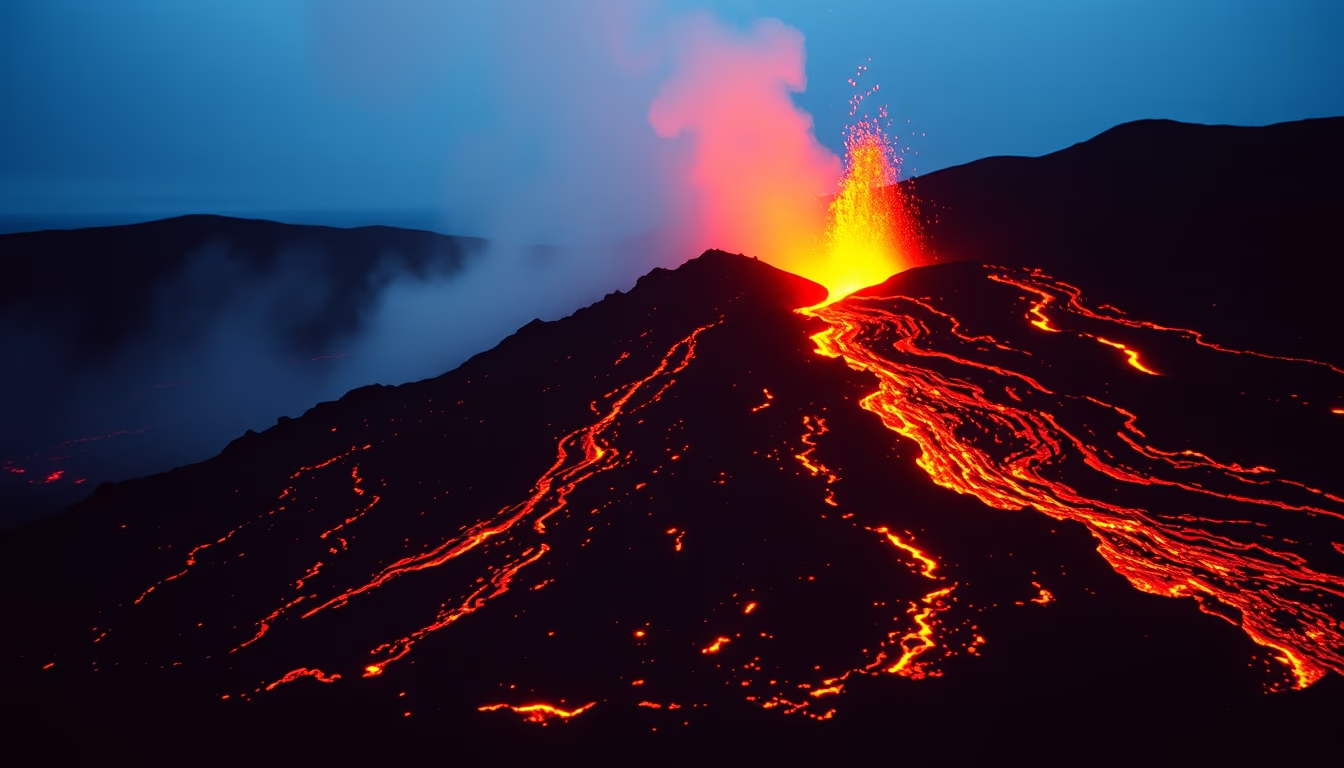
Mount kilauea lava
1344×768 · AVIF · CC BY 4.0
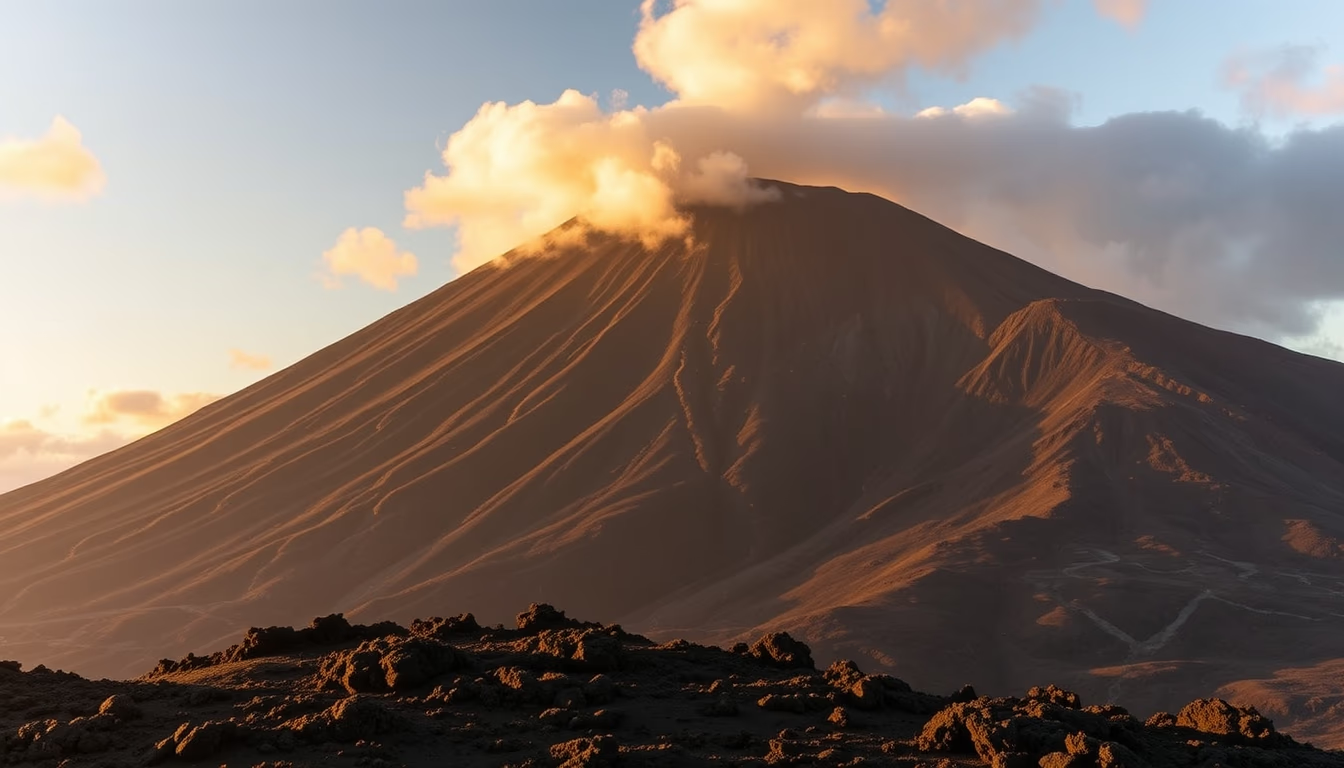
Incandescent lava from Kilauea volcano in Hawaii, one of the most active in the world, sculpts landscapes and renews the soil with its continuous flow.
About this subject
Kilauea is a shield volcano located on the Big Island of Hawaii, part of Hawaii Volcanoes National Park. Its nearly continuous eruptive activity since 1983, especially at the Pu'u 'Ō'ō cone, has made it one of the most studied volcanoes on Earth. The eruptions produce fluid basaltic lava that travels long distances, creating new terrain and releasing gases such as sulfur dioxide.
Kilauea's lava not only destroys but also builds. It adds hundreds of hectares of new land along the island's southeastern coast, expanding its territory. Culturally, the volcano is the home of Pele, the Hawaiian goddess of fire, and many natives view eruptions as manifestations of her presence.
For visitors, observing lava up close is a unique but risky experience. Lava can reach temperatures over 1100°C, and flows are unpredictable. The park offers safe observation points, such as the crater rim and Jaggar Lookout. Volcanic smog, or vog, can affect health, so caution is advised.
Kilauea's activity also influences the local ecosystem. Some plants, like the ‘ōhi’a lehua, are pioneers on freshly cooled lava fields. The volcano serves as a natural laboratory for ecological succession and geology studies. Its eruptions continue to fascinate scientists and tourists, underscoring its global significance.
Frequently Asked Questions
Why is Kilauea so active?
Kilauea sits over a hot spot in the Earth's mantle, where magma continuously rises. The Pacific plate slowly moves over this spot, but the volcano remains fed by fresh magma, explaining its persistent activity.
Is Kilauea's lava dangerous to communities?
Yes, especially when lava flows advance over populated areas. In 2018, the east rift zone eruption destroyed hundreds of homes. Authorities constantly monitor and issue warnings.
What is the temperature of Kilauea's lava?
Kilauea's basaltic lava typically reaches between 1100°C and 1200°C. When exposed to air, it quickly forms a dark crust, but the interior remains incandescent.
Direct URL
https://pub-c7d6a6ea828543ac903a74a341ccb2e1.r2.dev/imagens/mount-kilauea-lava-travel-photography-p6.avifHow to credit
Include a visible link back to UtilizAí. Copy one of the snippets below:
<a href="https://xn--utiliza-eza.com/en/midia/imagens/mount-kilauea-lava-travel-photography-p6">Mount kilauea lava</a> by <a href="https://xn--utiliza-eza.com">UtilizAí</a>, licensed under <a href="https://creativecommons.org/licenses/by/4.0/">CC BY 4.0</a>.
[Mount kilauea lava](https://xn--utiliza-eza.com/en/midia/imagens/mount-kilauea-lava-travel-photography-p6) by [UtilizAí](https://xn--utiliza-eza.com), CC BY 4.0
License: CC-BY-4.0