Mount kilauea lava
1344×768 · AVIF · CC BY 4.0
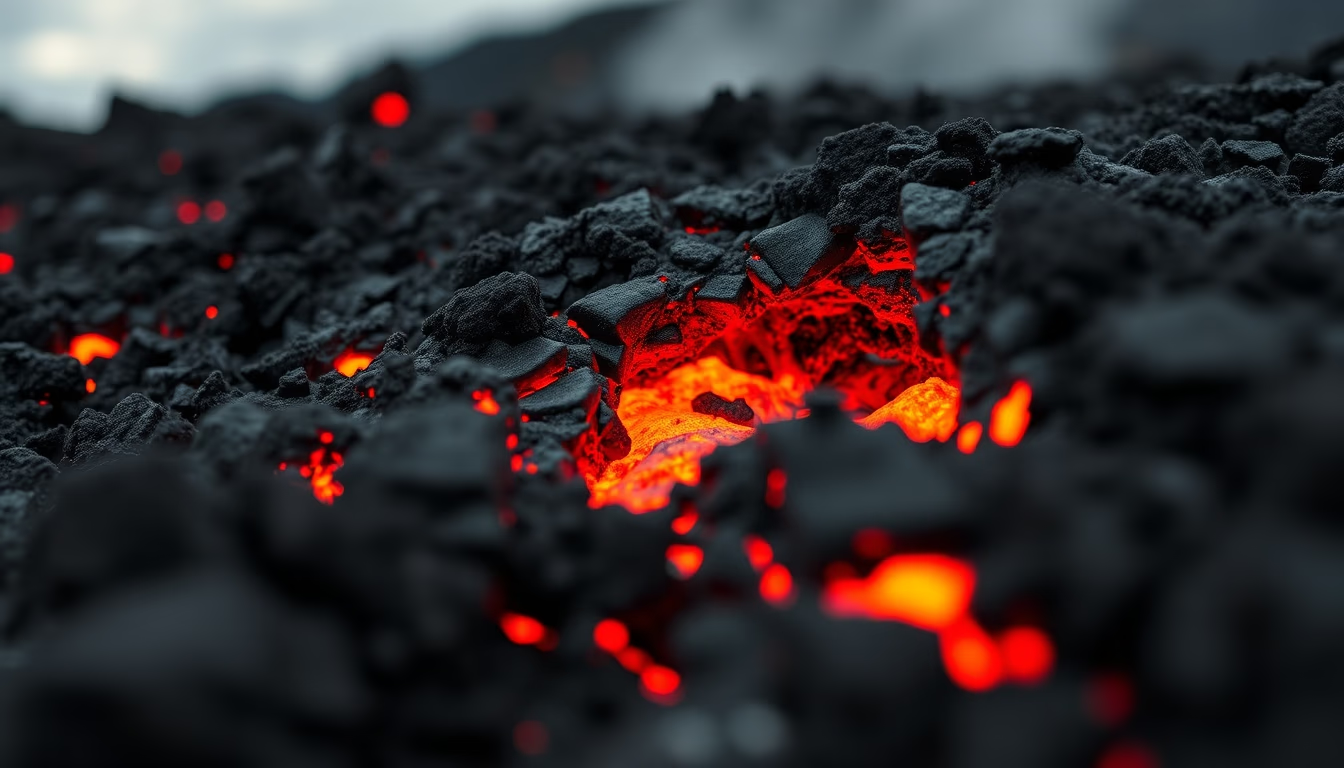
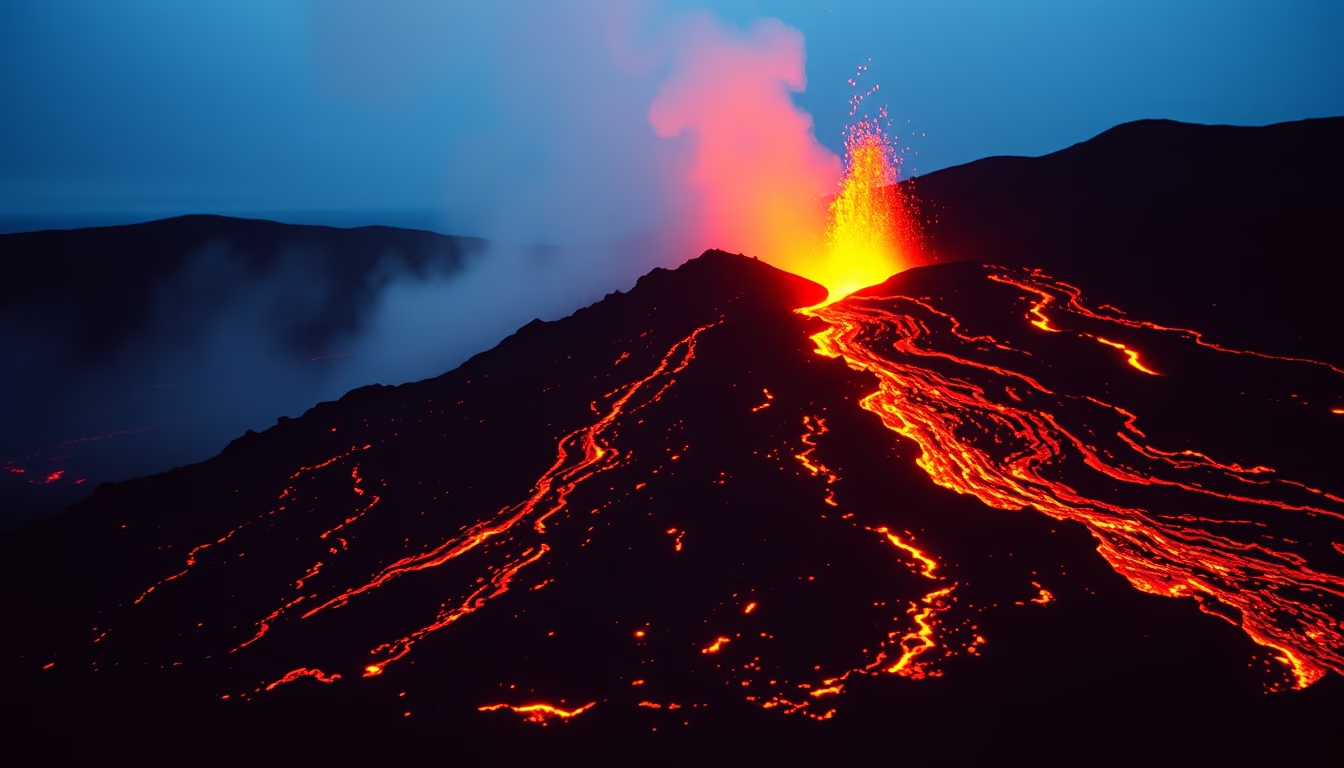
Mount Kilauea in Hawaii is one of the most active volcanoes on Earth, famous for its spectacular basaltic lava eruptions.
About this subject
Kilauea is a shield volcano located on the Big Island of Hawaii, the youngest and most active of the five volcanoes that form the island. Its continuous activity from 1983 to 2018, along the East Rift Zone, provided scientists a unique opportunity to study volcanic processes in real time. Kilauea's lava is predominantly basaltic, with low silica content, making it highly fluid. This fluidity allows it to flow long distances, forming two main types: pahoehoe lava, with a smooth, ropy surface, and aa lava, rough and fragmented.
The 2018 eruption destroyed over 700 homes and added about 875 acres of new land to the island. The volcano is sacred in Hawaiian mythology, associated with the goddess Pele, considered the creator of the islands. Locals often make offerings to appease her wrath. The Hawaiian Volcano Observatory constantly monitors Kilauea using seismic sensors, ground deformation measurements, and gas samples to predict eruptions.
Kilauea's lava is studied by volcanologists to better understand mantle dynamics and oceanic crust formation. Samples collected reveal information about magma composition and crystallization processes. Moreover, Kilauea's effusive eruptions contrast with explosive eruptions of other volcanoes like Mount St. Helens, providing insights into different eruptive styles. Volcanic tourism at Hawaii Volcanoes National Park attracts millions of visitors, who can observe lava up close (when safe), generating revenue and geological awareness.
Frequently Asked Questions
What is the chemical composition of Kilauea's lava?
Kilauea's lava is mainly basalt, with low silica content (about 50%) and high levels of iron and magnesium. This makes it very fluid, allowing long flows.
Is Kilauea currently erupting?
After the major 2018 eruption, Kilauea entered a quiet period. However, eruptions occurred at the summit caldera in 2020 and 2021. As of 2023, the volcano remained active with occasional lava lakes.
Is it safe to visit Kilauea to see lava?
Yes, when the national park is open and eruptions are controlled. However, it is essential to follow ranger instructions, use protective gear, and avoid areas with toxic gases or active flows.
Direct URL
https://pub-c7d6a6ea828543ac903a74a341ccb2e1.r2.dev/imagens/mount-kilauea-lava-macro-closeup-p1.avifHow to credit
Include a visible link back to UtilizAí. Copy one of the snippets below:
<a href="https://xn--utiliza-eza.com/en/midia/imagens/mount-kilauea-lava-macro-closeup-p1">Mount kilauea lava</a> by <a href="https://xn--utiliza-eza.com">UtilizAí</a>, licensed under <a href="https://creativecommons.org/licenses/by/4.0/">CC BY 4.0</a>.
[Mount kilauea lava](https://xn--utiliza-eza.com/en/midia/imagens/mount-kilauea-lava-macro-closeup-p1) by [UtilizAí](https://xn--utiliza-eza.com), CC BY 4.0
License: CC-BY-4.0