Mech robot industrial
1344×768 · AVIF · CC BY 4.0
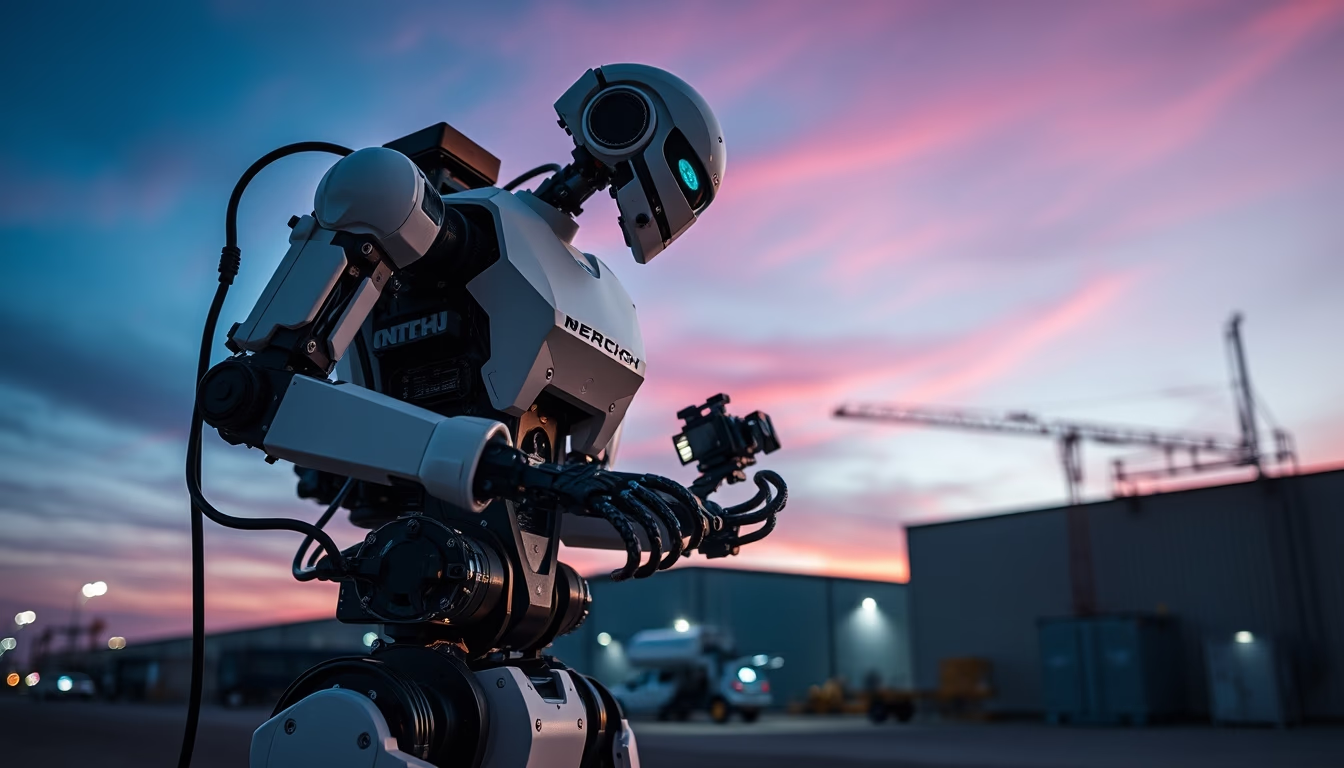
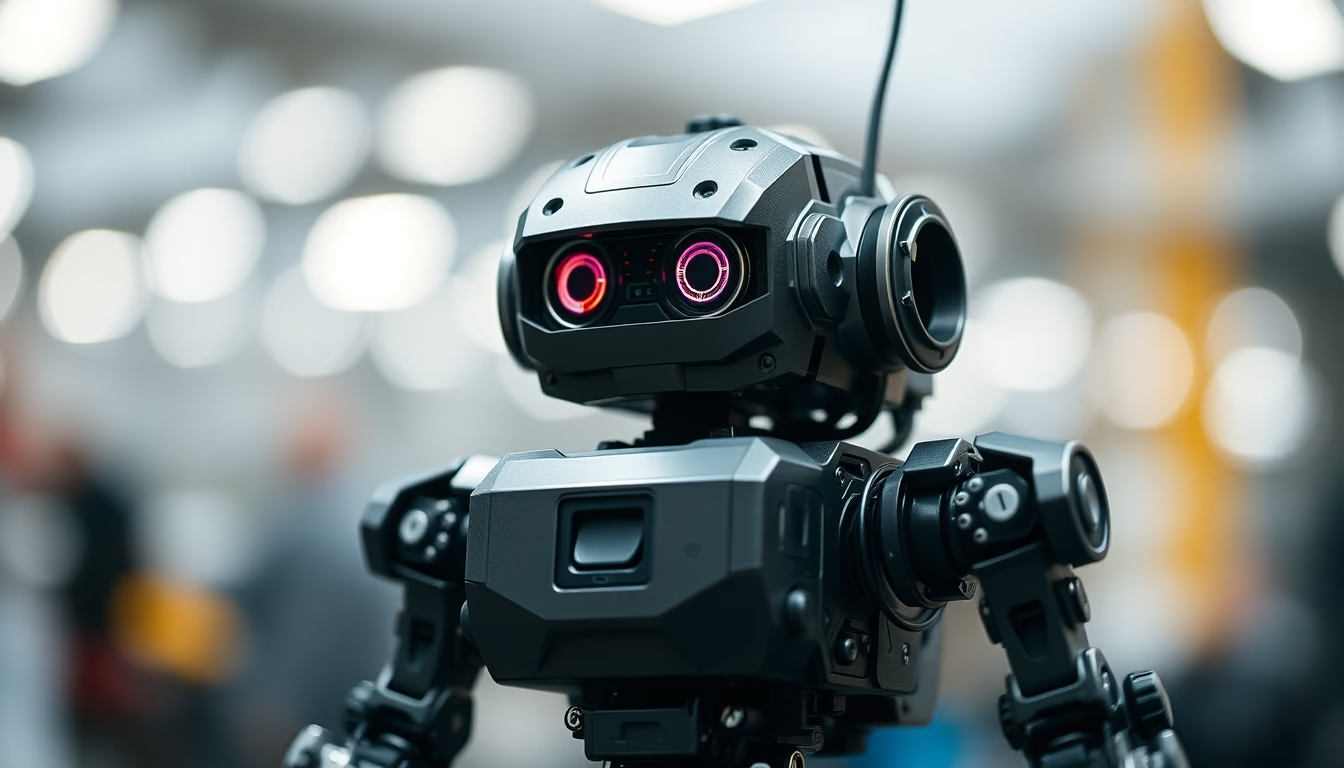
Industrial mech robots combine automation technology with sci‑inspired design, used in factories and exhibitions worldwide.
About this subject
Industrial mech robots represent a category of automated machines designed for repetitive, high‑precision tasks in factory environments. Unlike traditional robotic arms, industrial mechs often adopt humanoid or semi‑humanoid forms inspired by anime and science fiction films. Models such as the Fanuc M‑2000, KUKA KR 1000 Titan, and ABB IRB 8700 are examples of large‑scale robots capable of moving loads of several tons with millimeter accuracy.
The evolution of industrial mechs began in the 1960s with the Unimate, the first industrial robot, and advanced to collaborative systems (cobots) now integrated with artificial intelligence. Companies like Tesla use humanoid robots (Optimus) on assembly lines, while Boston Dynamics develops machines like Atlas for rescue and exploration tasks. Long‑exposure photography highlights the movements of these robots, creating light trails that reveal their speed and precision.
Culturally, industrial mechs hold a special place in popular imagination, from the loaders in films like 'Alien' to the giants of 'Pacific Rim'. In Brazil, the automotive and consumer goods industries adopt KUKA and ABB robots for welding and painting, while startups develop national prototypes. Countries like Japan, Germany, and South Korea lead the production and use of these machines, which also operate in hostile environments such as nuclear plants and underground mines. The future points to increasingly autonomous robots with reinforcement learning and safe human‑robot interaction.
Frequently Asked Questions
What is an industrial mech robot?
It is a large automated machine, often with a humanoid form, used in factories for tasks like welding, painting, assembly, and heavy lifting. Examples include robots from Fanuc, KUKA, and ABB.
What is the difference between a sci‑fi mech and a real industrial robot?
Sci‑fi mechs, like those in 'Pacific Rim', are typically piloted vehicles, larger and more agile. Real industrial robots are smaller, focused on precision and strength, and often teleoperated or programmed for repetition.
How is the long‑exposure technique used in photographs of mech robots?
Long exposure captures the movement of robots during their work cycle, creating light trails that highlight the arcs and speed of robotic arms, resulting in artistic images that showcase industrial dynamics.
Direct URL
https://pub-c7d6a6ea828543ac903a74a341ccb2e1.r2.dev/imagens/mech-robot-industrial-long-exposure-fresh15.avifHow to credit
Include a visible link back to UtilizAí. Copy one of the snippets below:
<a href="https://xn--utiliza-eza.com/en/midia/imagens/mech-robot-industrial-long-exposure-fresh15">Mech robot industrial</a> by <a href="https://xn--utiliza-eza.com">UtilizAí</a>, licensed under <a href="https://creativecommons.org/licenses/by/4.0/">CC BY 4.0</a>.
[Mech robot industrial](https://xn--utiliza-eza.com/en/midia/imagens/mech-robot-industrial-long-exposure-fresh15) by [UtilizAí](https://xn--utiliza-eza.com), CC BY 4.0
License: CC-BY-4.0