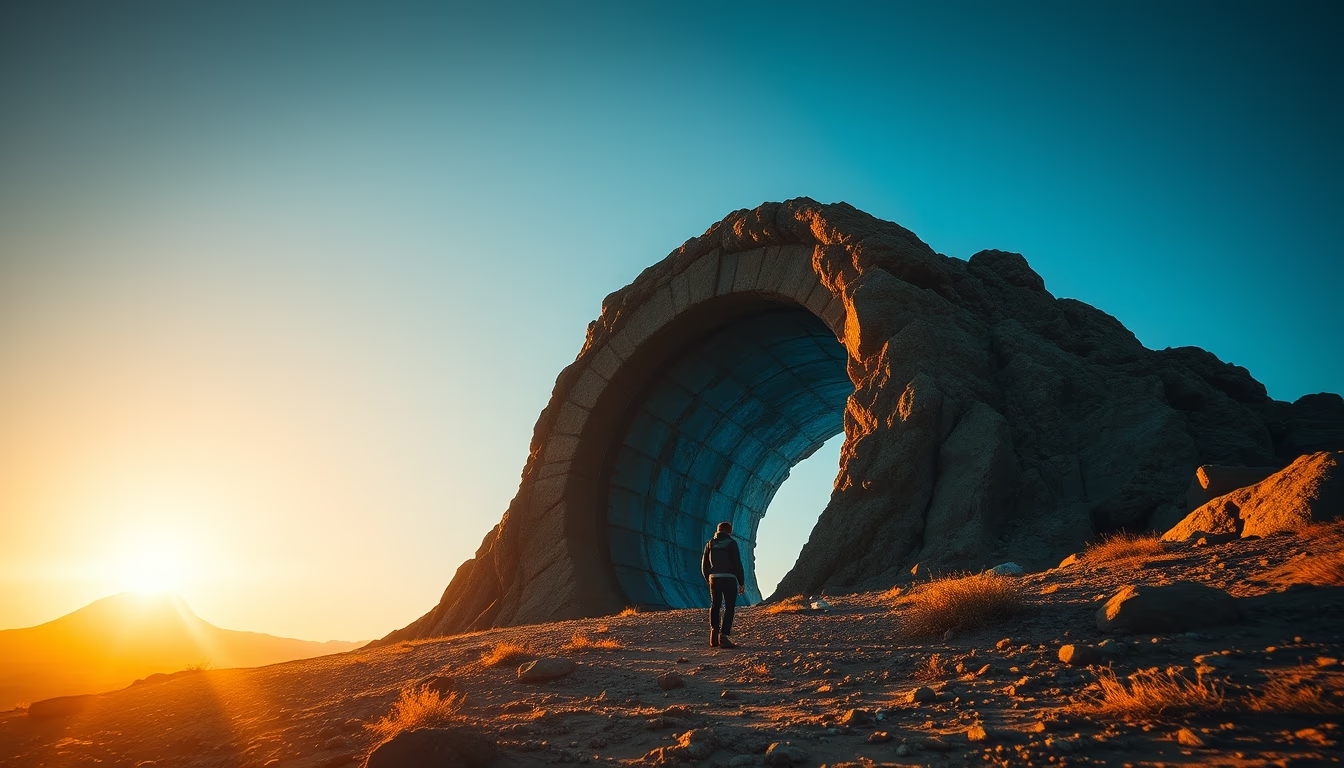
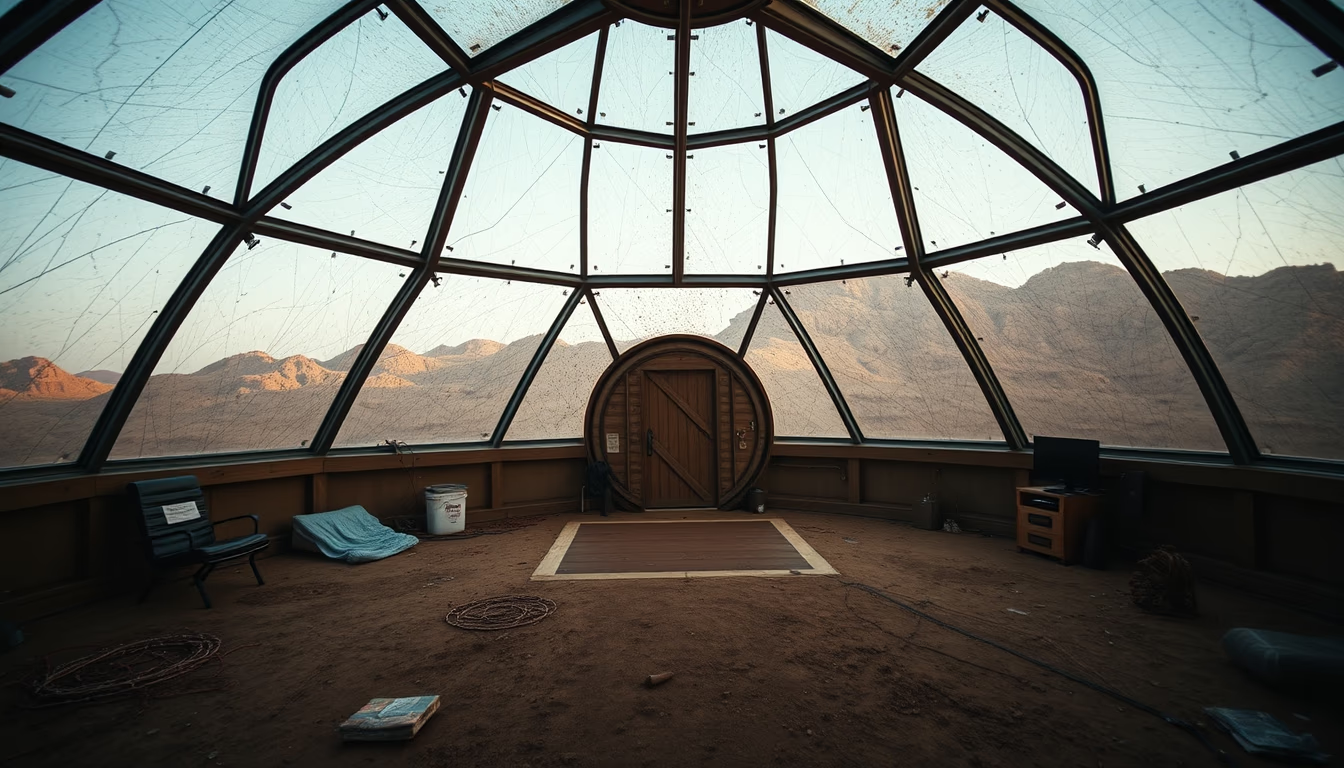
Martian colony dome
1344×768 · AVIF · CC BY 4.0
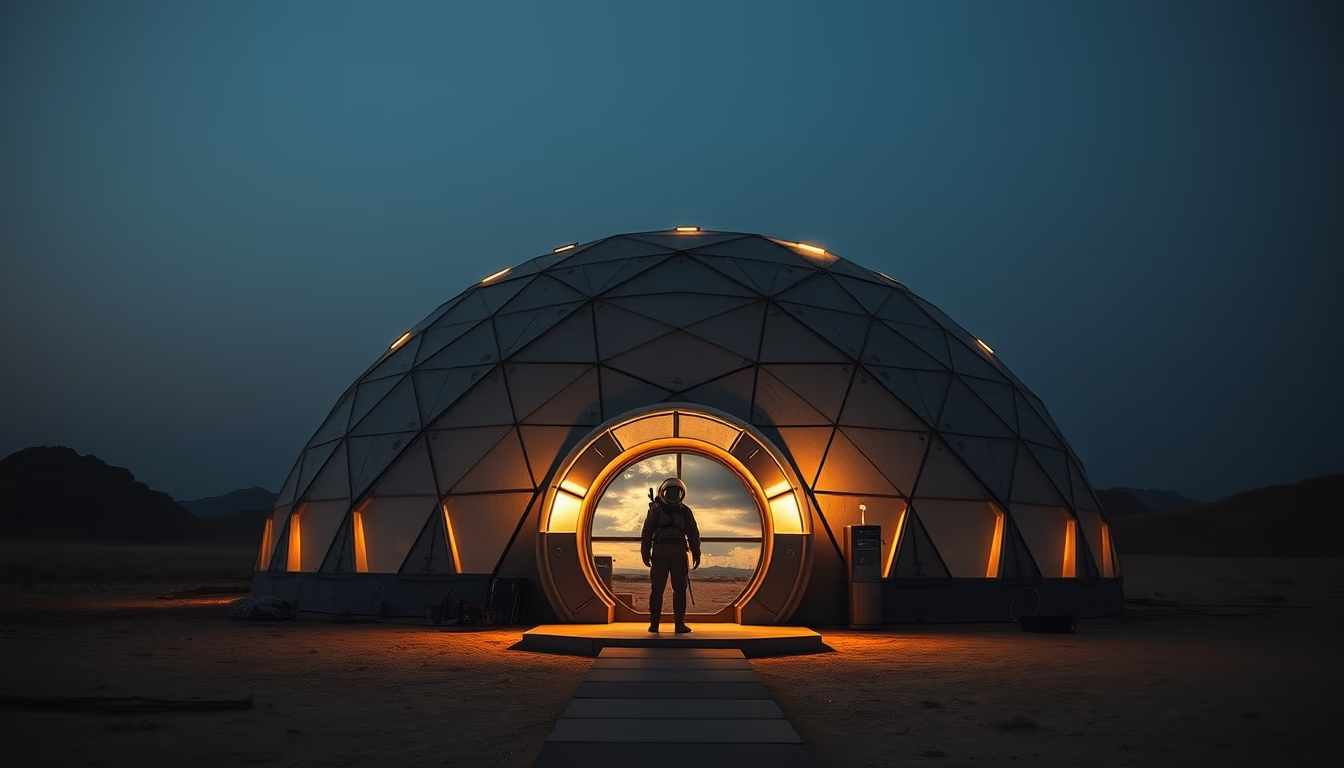
Martian colony domes are structures designed to shelter humans on Mars, protecting against radiation and extreme weather.
About this subject
Martian colony domes are hypothetical habitats essential for human exploration of Mars. Due to the planet's thin atmosphere (about 0.6% of Earth's pressure) and lack of a global magnetic field, the surface is bombarded by cosmic and solar radiation. A dome must block radiation, maintain internal pressure, and withstand temperatures ranging from -140°C to 20°C. Geodesic structures, popularized by Buckminster Fuller, are often proposed for their structural efficiency and stress resistance.
Concepts from NASA and the Mars Society envision inflatable or rigid domes covered with Martian regolith (local soil) for additional shielding. Using in-situ materials reduces transport costs from Earth. However, regolith contains toxic perchlorates, requiring careful sealing. Interestingly, subsurface ice on Mars can be melted for water, integrating life support systems.
Historically, Wernher von Braun described Martian colonies in the 1950s with buried domes for protection. Current designs, like NASA's Mars Ice Home, use ice as a shield. In 2024, SpaceX plans first crewed missions, but dome construction remains challenging: dust storms can last months, requiring remote maintenance and nuclear or solar power.
Martian domes symbolize human resilience and the interplanetary future. They inspire sci-fi films and books, but also drive real engineering research. Colonizing Mars will depend on innovative, self-sustaining habitats where every gram imported from Earth counts.
Frequently Asked Questions
Why are geodesic domes common in Martian colony designs?
Geodesic domes distribute stress evenly, resisting internal pressure changes and external impacts like dust storms. Their shape efficiently covers large areas with less material.
What are the main risks for a dome on Mars?
Solar and cosmic radiation, extreme temperatures, low external atmospheric pressure, and dust storms that can block sunlight and damage structures. Regolith toxicity (perchlorates) also requires robust sealing.
Are there real prototypes of Martian domes being tested?
Yes, the Mars Society runs analog stations in Utah (USA) and the Canadian Arctic, testing inflatable domes. NASA also develops concepts like Mars Ice Home, using ice as a radiation shield.
Direct URL
https://pub-c7d6a6ea828543ac903a74a341ccb2e1.r2.dev/imagens/martian-colony-dome-fine-art-photography-fresh4.avifHow to credit
Include a visible link back to UtilizAí. Copy one of the snippets below:
<a href="https://xn--utiliza-eza.com/en/midia/imagens/martian-colony-dome-fine-art-photography-fresh4">Martian colony dome</a> by <a href="https://xn--utiliza-eza.com">UtilizAí</a>, licensed under <a href="https://creativecommons.org/licenses/by/4.0/">CC BY 4.0</a>.
[Martian colony dome](https://xn--utiliza-eza.com/en/midia/imagens/martian-colony-dome-fine-art-photography-fresh4) by [UtilizAí](https://xn--utiliza-eza.com), CC BY 4.0
License: CC-BY-4.0