Maglev train tokyo
1344×768 · JPG · CC BY 4.0
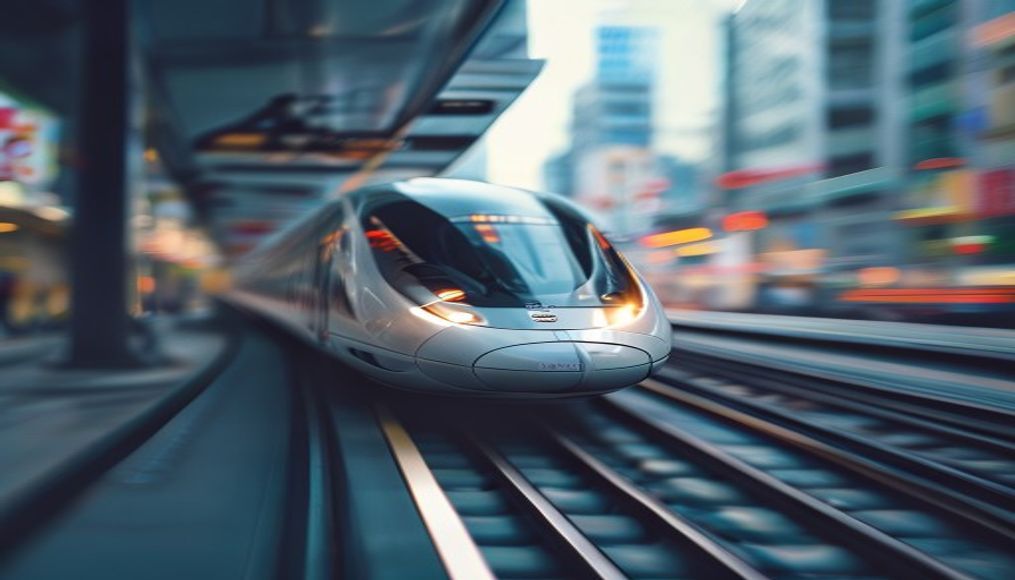
The Tokyo maglev train represents the future of high-speed rail transport, using magnetic levitation to achieve speeds over 600 km/h.
About this subject
The maglev (magnetic levitation) train is a technology that eliminates physical contact between the vehicle and the rails, using superconducting magnets to float and move. In Japan, the L0 Series model, developed by the Central Japan Railway Company (JR Central), is the primary representative of this innovation. It operates on the Chuo Shinkansen line, a new high-speed railway currently under construction that will connect Tokyo to Nagoya and eventually Osaka.
During tests on the Yamanashi test track, the L0 Series reached an impressive 603 km/h in April 2015, becoming the fastest train on rails in the world. This world record demonstrates the maglev's potential to drastically reduce travel time: the Tokyo-Nagoya route, which currently takes about 1h30 by conventional Shinkansen, will be covered in just 40 minutes. The initial segment is scheduled to open in 2027, with extension to Osaka expected by 2045.
In addition to speed, the maglev offers advantages such as lower noise and vibration, higher energy efficiency at high speeds, and less mechanical wear. However, construction costs are extremely high, estimated at over 9 trillion yen for the entire line. The project also faces geological challenges, as it crosses the Japanese Alps with long tunnels, such as the 25 km tunnel under the mountain range.
Outside Japan, China operates the commercial maglev in Shanghai, which reaches 431 km/h and uses the German Transrapid technology. The Japanese maglev, in contrast, uses superconducting electromagnets cooled with liquid helium, a more advanced and expensive system. The global expansion of maglev transport is still limited, but Japan positions itself as a technological leader, exporting knowledge to projects in the US (such as Hyperloop) and other countries.
Frequently Asked Questions
How does a maglev train work?
The maglev uses superconducting magnets to lift the train above the tracks, eliminating friction. Propulsion is provided by a linear motor that accelerates the vehicle along the guideway.
What is the top speed of the Tokyo maglev?
The L0 Series holds the speed record of 603 km/h during tests. In commercial operation, the planned speed is 505 km/h.
When will the Tokyo maglev be operational?
The Tokyo to Nagoya section is scheduled for 2027. The extension to Osaka is expected to be completed by 2045.
Direct URL
https://pub-c7d6a6ea828543ac903a74a341ccb2e1.r2.dev/imagens/maglev-train-tokyo-macro-closeup-p4.jpgHow to credit
Include a visible link back to UtilizAí. Copy one of the snippets below:
<a href="https://xn--utiliza-eza.com/en/midia/imagens/maglev-train-tokyo-macro-closeup-p4">Maglev train tokyo</a> by <a href="https://xn--utiliza-eza.com">UtilizAí</a>, licensed under <a href="https://creativecommons.org/licenses/by/4.0/">CC BY 4.0</a>.
[Maglev train tokyo](https://xn--utiliza-eza.com/en/midia/imagens/maglev-train-tokyo-macro-closeup-p4) by [UtilizAí](https://xn--utiliza-eza.com), CC BY 4.0
License: CC-BY-4.0