Life magazine wwii
1344×768 · AVIF · CC BY 4.0
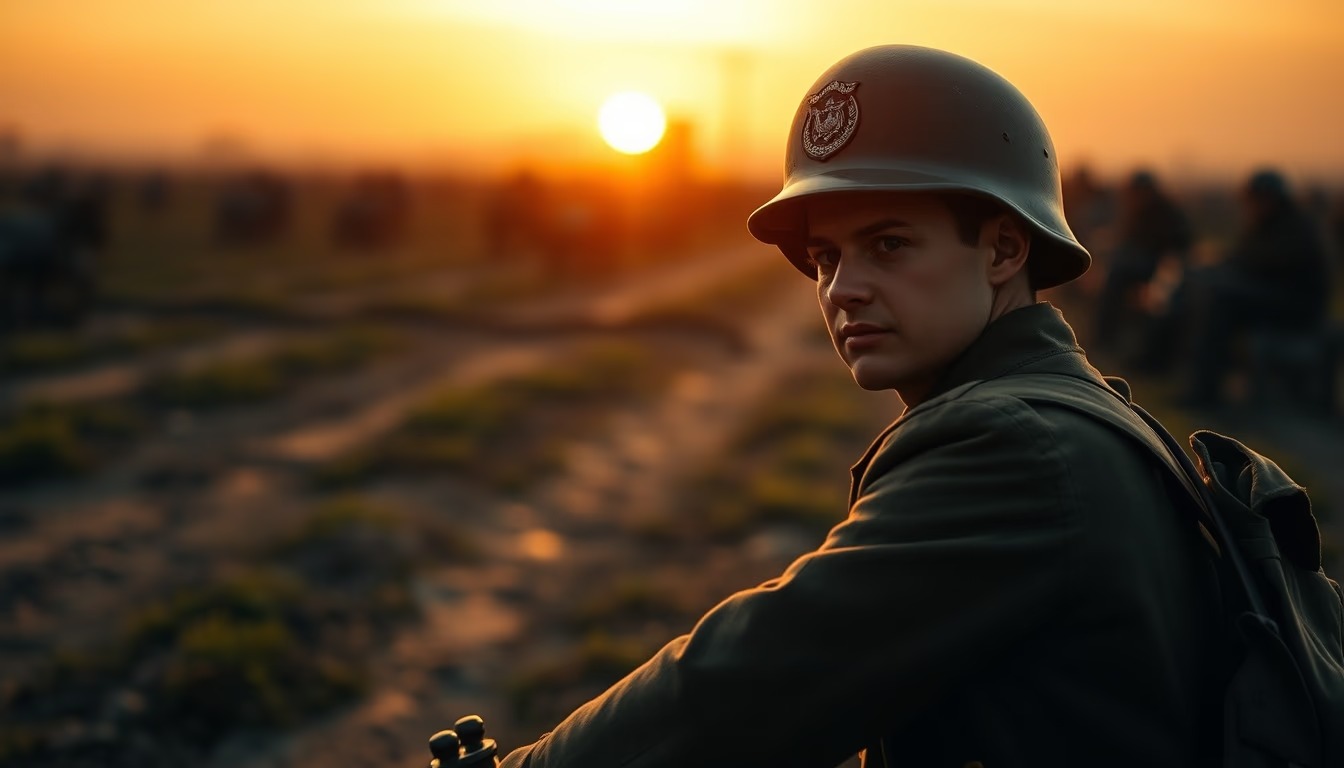
Life Magazine during World War II: photography and reporting that defined the conflict for American and global audiences.
About this subject
During World War II, Life Magazine established itself as the leading illustrated publication in the United States, bringing front-line images into millions of homes. Founded in 1936 by Henry Luce, the magazine pioneered photojournalism by combining large photographs with concise text. Between 1939 and 1945, it sent war correspondents such as Robert Capa, Margaret Bourke-White, and W. Eugene Smith, who captured both the horror of battles and everyday life in war-torn countries.
Life's coverage was broad and strategic. The magazine published special issues on topics like D-Day, the Pacific War, and the liberation of concentration camps. Images were selected to create powerful visual narratives, often requiring minimal captions. In 1945, Alfred Eisenstaedt's photograph of the kiss in Times Square became an iconic symbol of the war's end and was featured in Life's pages.
The impact of Life Magazine on public perception of the war was immense. At its peak, each issue was estimated to be read by about 20 million people. The images helped shape support for American involvement and built a collective memory of the conflict. Additionally, the magazine served as a historical archive, preserving records that remain a reference for historians and researchers today.
Interestingly, Life also faced criticism for bias and for selecting images that often reinforced Allied propaganda. Nevertheless, its legacy as a wartime photojournalism innovator remains unquestioned, influencing publications and documentarians to this day.
Frequently Asked Questions
What was the circulation of Life Magazine during World War II?
At its peak, Life sold about 4 million copies per week, with an estimated readership of 20 million people.
Which Life photographers stood out in World War II coverage?
Robert Capa, Margaret Bourke-White, and W. Eugene Smith were among the most renowned. Capa captured D-Day, Bourke-White documented Buchenwald's liberation, and Smith photographed the Pacific front.
Was Life Magazine censored during the war?
Yes, published images underwent military and government censorship. The magazine followed guidelines from the Office of Censorship to avoid disclosing information that could benefit the enemy.
Direct URL
https://pub-c7d6a6ea828543ac903a74a341ccb2e1.r2.dev/imagens/life-magazine-wwii-cinematic-wide-shot-fresh18.avifHow to credit
Include a visible link back to UtilizAí. Copy one of the snippets below:
<a href="https://xn--utiliza-eza.com/en/midia/imagens/life-magazine-wwii-cinematic-wide-shot-fresh18">Life magazine wwii</a> by <a href="https://xn--utiliza-eza.com">UtilizAí</a>, licensed under <a href="https://creativecommons.org/licenses/by/4.0/">CC BY 4.0</a>.
[Life magazine wwii](https://xn--utiliza-eza.com/en/midia/imagens/life-magazine-wwii-cinematic-wide-shot-fresh18) by [UtilizAí](https://xn--utiliza-eza.com), CC BY 4.0
License: CC-BY-4.0