Lake baikal frozen
1344×768 · AVIF · CC BY 4.0
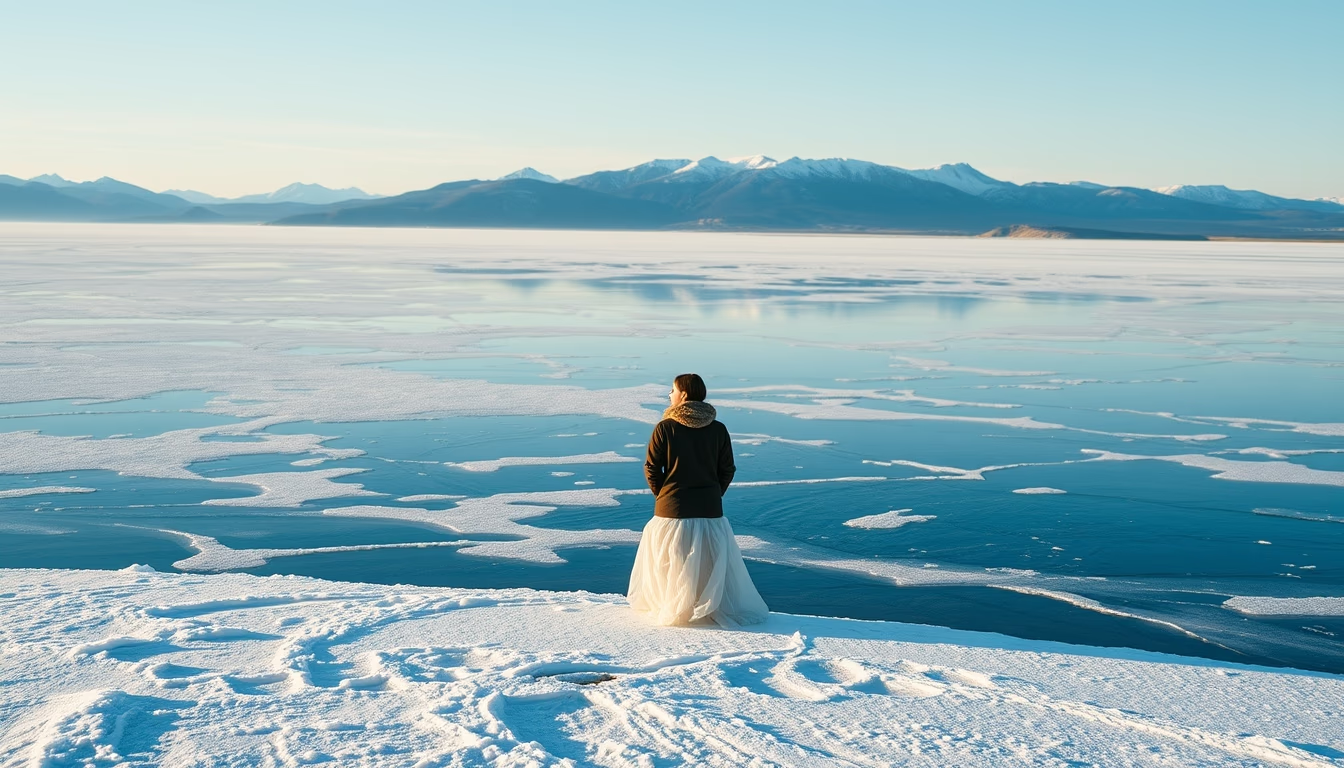
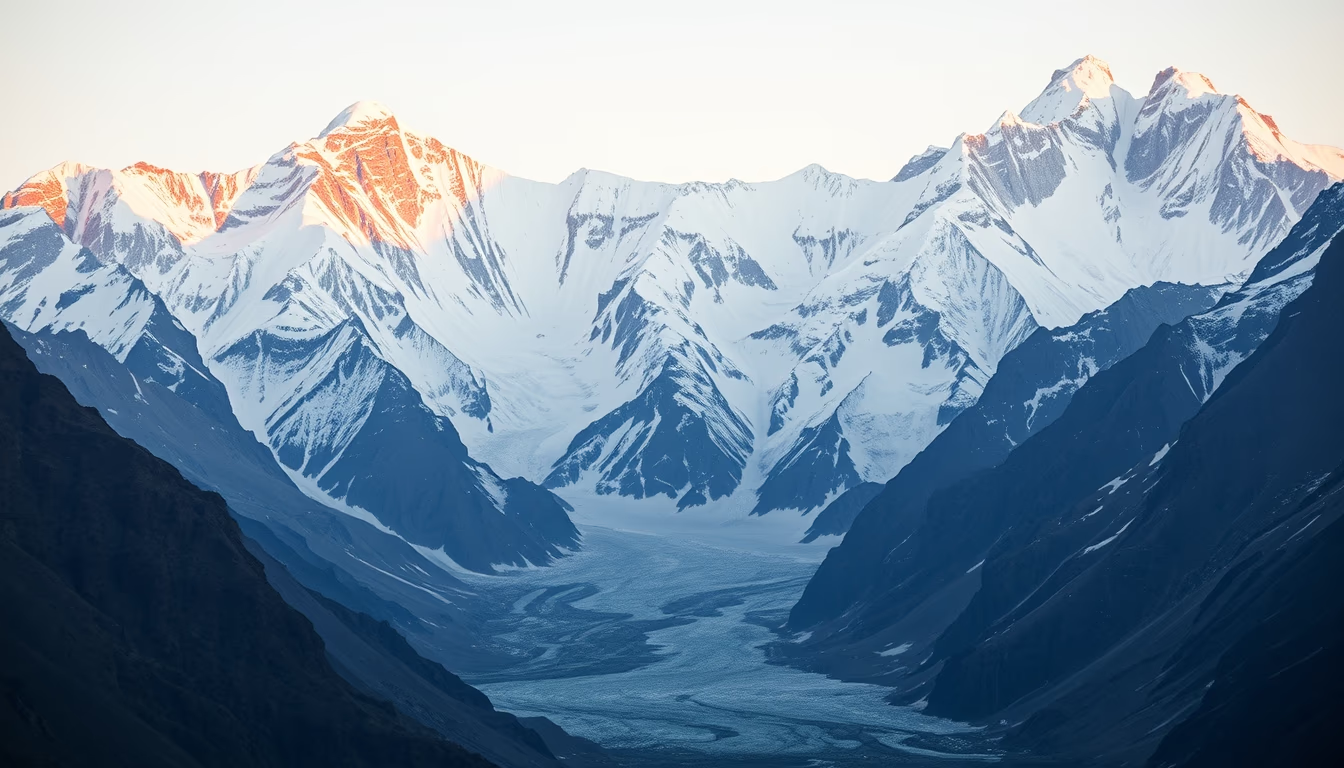
Lake Baikal in Siberia freezes from January to May, creating one of the world's most stunning ice landscapes.
About this subject
Lake Baikal, located in Eastern Siberia, Russia, is the world's deepest and oldest freshwater lake, approximately 25 million years old. Its maximum depth reaches 1,642 meters (5,387 feet), and it holds about 20% of the planet's unfrozen surface freshwater. During winter, from January to May, the lake's surface freezes completely, forming an ice layer that can reach up to two meters in thickness.
The ice's clarity is legendary. In many areas, visibility through the ice extends to 40 meters (130 feet). This occurs because the ice forms slowly, allowing impurities to settle and the crystalline structure to become exceptionally pure. Additionally, the lake displays a unique natural phenomenon: frozen methane bubbles. Methane released by organisms at the lake's bottom becomes trapped in the ice, creating circular patterns and columns that glow when sunlight hits them.
Another striking feature is the huge cracks that form on the frozen surface due to thermal expansion and contraction. These fissures can be several meters wide and produce loud, booming sounds similar to thunder. The landscape is dominated by shades of blue and white, contrasting with the snow-covered surrounding mountains. For local indigenous peoples, such as the Buryats, Baikal is a sacred site, and the ice is seen as a manifestation of nature's power.
Lake Baikal hosts over 1,300 endemic species, including the Baikal seal (nerpa), the world's only exclusively freshwater seal. During winter, seals use cracks in the ice to breathe and reproduce. Winter tourism attracts visitors for ice hiking, biking, and even subglacial diving. Since 1996, the lake has been a UNESCO World Heritage site, protecting its biodiversity and ecological significance.
Frequently Asked Questions
Why is Lake Baikal's ice so transparent?
Baikal's ice is extremely pure because it forms slowly during winter, allowing impurities to settle at the bottom. Additionally, the lake water is exceptionally clean and low in nutrients, resulting in ice crystals with few bubbles or particles.
What animals live in Lake Baikal during winter?
The most famous animal is the Baikal seal or nerpa, the world's only freshwater seal. Other species include the omul fish and various cold-adapted plankton. Many organisms enter dormancy or migrate to deeper water layers.
Is it safe to walk on Lake Baikal's ice?
Yes, during peak winter the ice is usually thick enough to support vehicles and walking. However, it is essential to follow local guides and avoid areas with visible cracks or underwater currents, which can make the ice thinner and unstable.
Direct URL
https://pub-c7d6a6ea828543ac903a74a341ccb2e1.r2.dev/imagens/lake-baikal-frozen-magazine-editorial-p5.avifHow to credit
Include a visible link back to UtilizAí. Copy one of the snippets below:
<a href="https://xn--utiliza-eza.com/en/midia/imagens/lake-baikal-frozen-magazine-editorial-p5">Lake baikal frozen</a> by <a href="https://xn--utiliza-eza.com">UtilizAí</a>, licensed under <a href="https://creativecommons.org/licenses/by/4.0/">CC BY 4.0</a>.
[Lake baikal frozen](https://xn--utiliza-eza.com/en/midia/imagens/lake-baikal-frozen-magazine-editorial-p5) by [UtilizAí](https://xn--utiliza-eza.com), CC BY 4.0
License: CC-BY-4.0