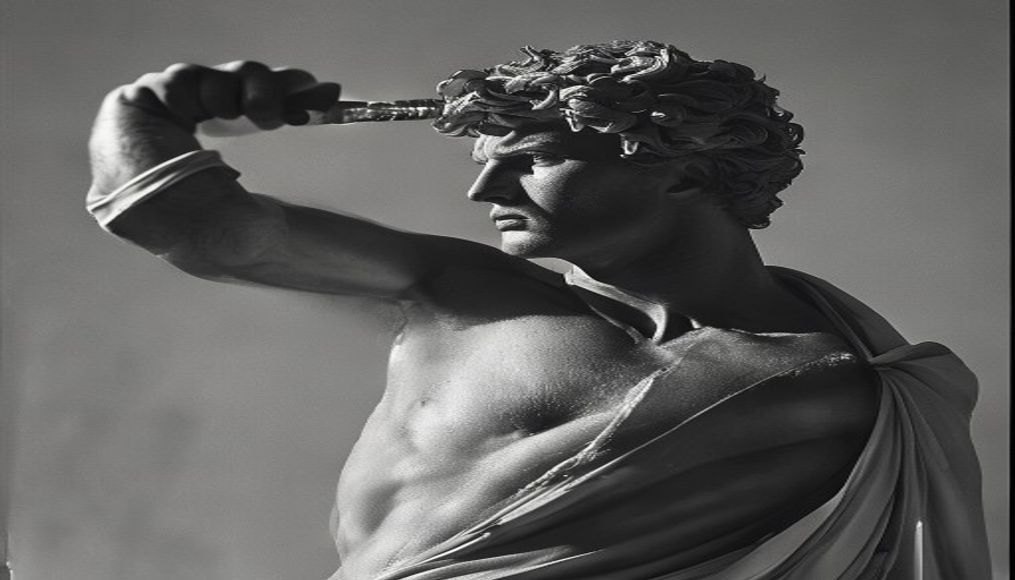
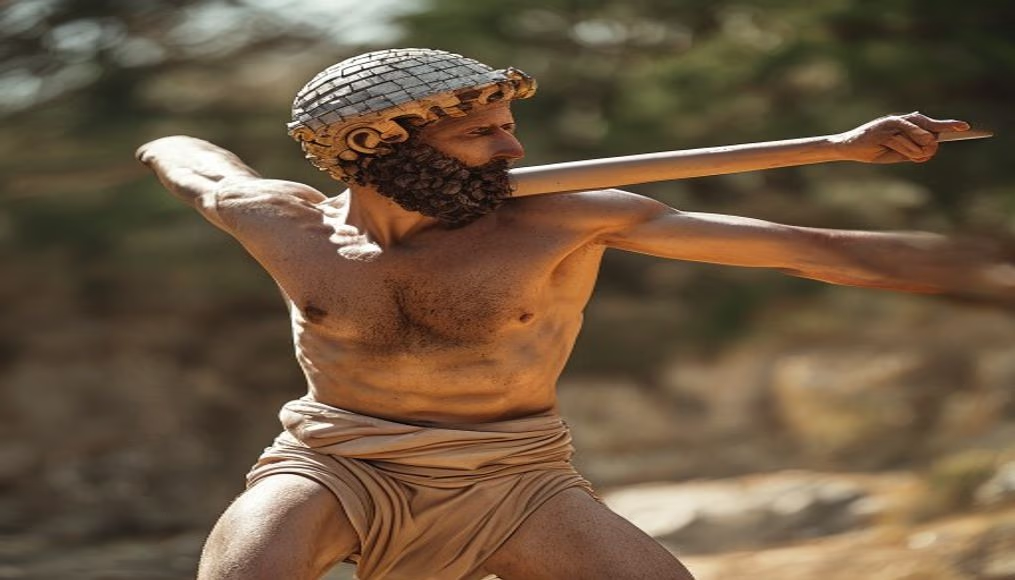
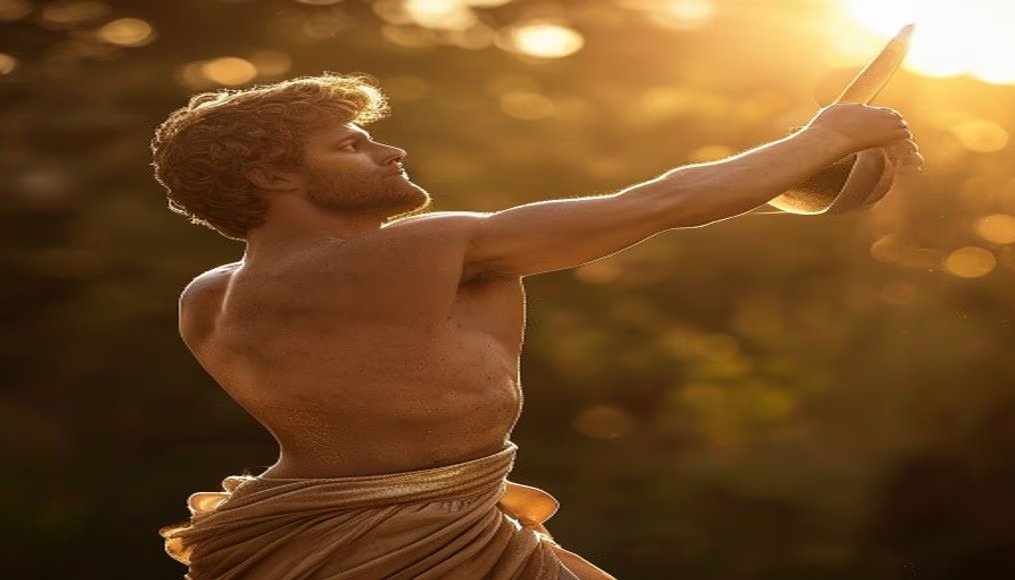
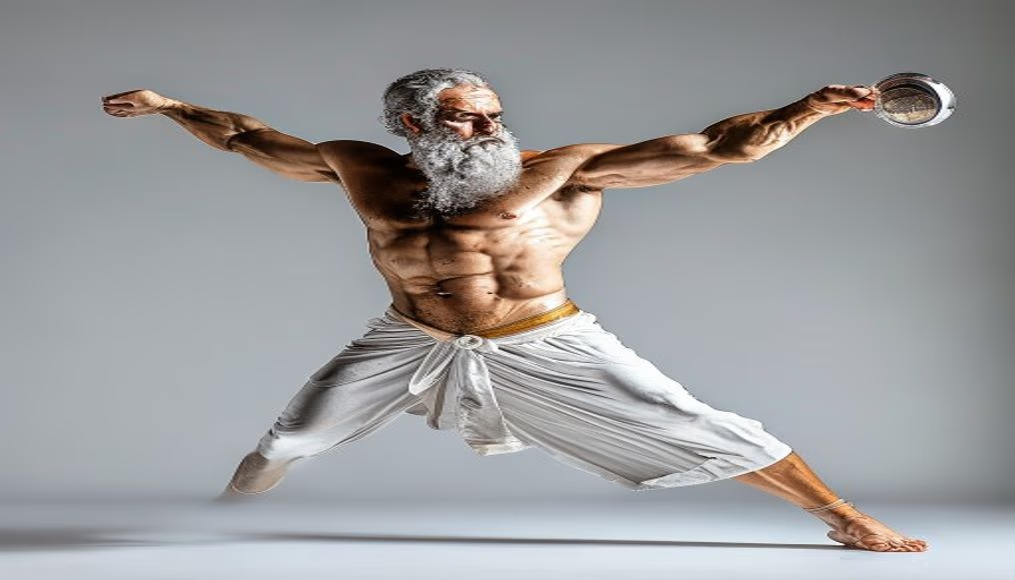
Kouros greek
1344×768 · AVIF · CC BY 4.0

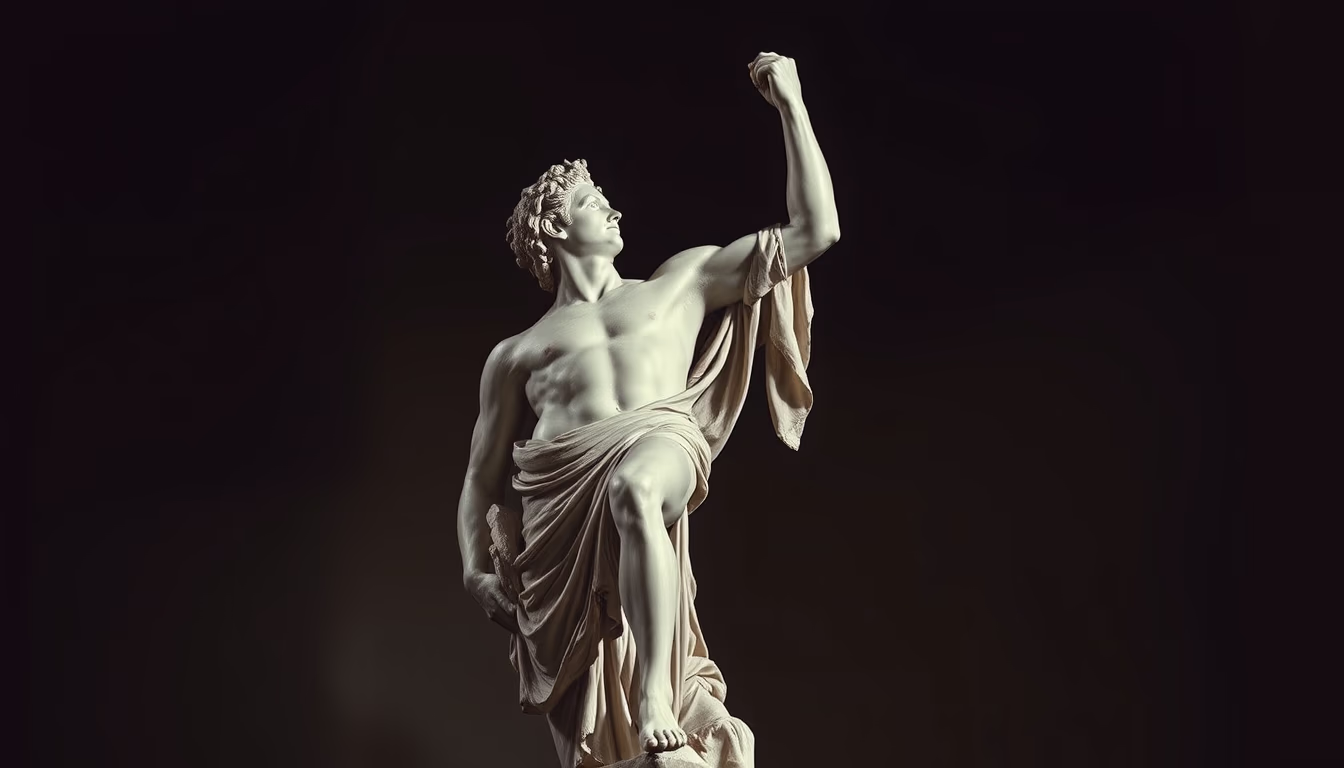
Greek kouros: the archaic statue that inspired generations in fashion and art, merging aesthetic idealization with minimalist symmetry.
About this subject
The kouros (plural kouroi) is a type of ancient Greek statue, produced mainly between the 7th and 5th centuries BC during the Archaic period. It depicts a nude young man, usually standing with his left leg advanced and arms at his sides, in a posture influenced by Egyptian sculpture. These figures were offered as votives in sanctuaries or used as grave markers, symbolizing the ideal of male beauty, youth, and virtue. Kouroi feature the archaic smile, almond-shaped eyes, and stylized hair, elements that reveal a search for a standardized and harmonious representation.
In the 20th century, the aesthetic of the kouros, symmetry, clean lines, absence of excess, was revived by artistic movements such as Neoclassicism and later by minimalist fashion. Designers and fashion photographers began referencing the rigid pose and idealization of the human body, creating editorials that echo Greek sculpture. The formal simplicity of the kouros aligns with the contemporary search for timelessness and elegance, making it a recurring icon in high-fashion campaigns.
Interestingly, kouroi did not represent specific individuals but an archetype. Each statue followed a canon of proportions but varied in regional details, such as hair type or face shape. Famous examples include the Kouros of Anavyssos and the Moscophoros. Despite apparent rigidity, Archaic sculptors began to suggest movement and naturalism, foreshadowing the Classical period. This aesthetic transition fascinates art historians, and in fashion, it inspires collections that play with the tension between static and dynamic.
The use of the kouros in high-fashion editorials reinforces the connection between art and consumption. Photographers often employ dramatic lighting and neutral backgrounds to highlight the sculpture or the model mimicking its pose, creating images that question the eternity of beauty. The editorial piece number 10 (p10) of this series likely explores precisely this intersection: youth immortalized in stone and the ephemeral nature of contemporary fashion.
Frequently Asked Questions
What does the word kouros mean?
Kouros (plural kouroi) is a Greek word meaning 'youth' or 'boy'. In art, it refers to statues of young males from the Archaic period.
What is the difference between a kouros and a kore?
While a kouros depicts a nude young man, a kore (plural korai) is a female statue, usually clothed in elaborate garments with a serene expression.
Why is the kouros used in contemporary fashion?
Its symmetry, formal purity, and idealization of the human body resonate with the minimalist aesthetic of high fashion, evoking a timeless and sophisticated beauty.
Direct URL
https://pub-c7d6a6ea828543ac903a74a341ccb2e1.r2.dev/imagens/kouros-greek-high-fashion-editorial-p10.avifHow to credit
Include a visible link back to UtilizAí. Copy one of the snippets below:
<a href="https://xn--utiliza-eza.com/en/midia/imagens/kouros-greek-high-fashion-editorial-p10">Kouros greek</a> by <a href="https://xn--utiliza-eza.com">UtilizAí</a>, licensed under <a href="https://creativecommons.org/licenses/by/4.0/">CC BY 4.0</a>.
[Kouros greek](https://xn--utiliza-eza.com/en/midia/imagens/kouros-greek-high-fashion-editorial-p10) by [UtilizAí](https://xn--utiliza-eza.com), CC BY 4.0
License: CC-BY-4.0