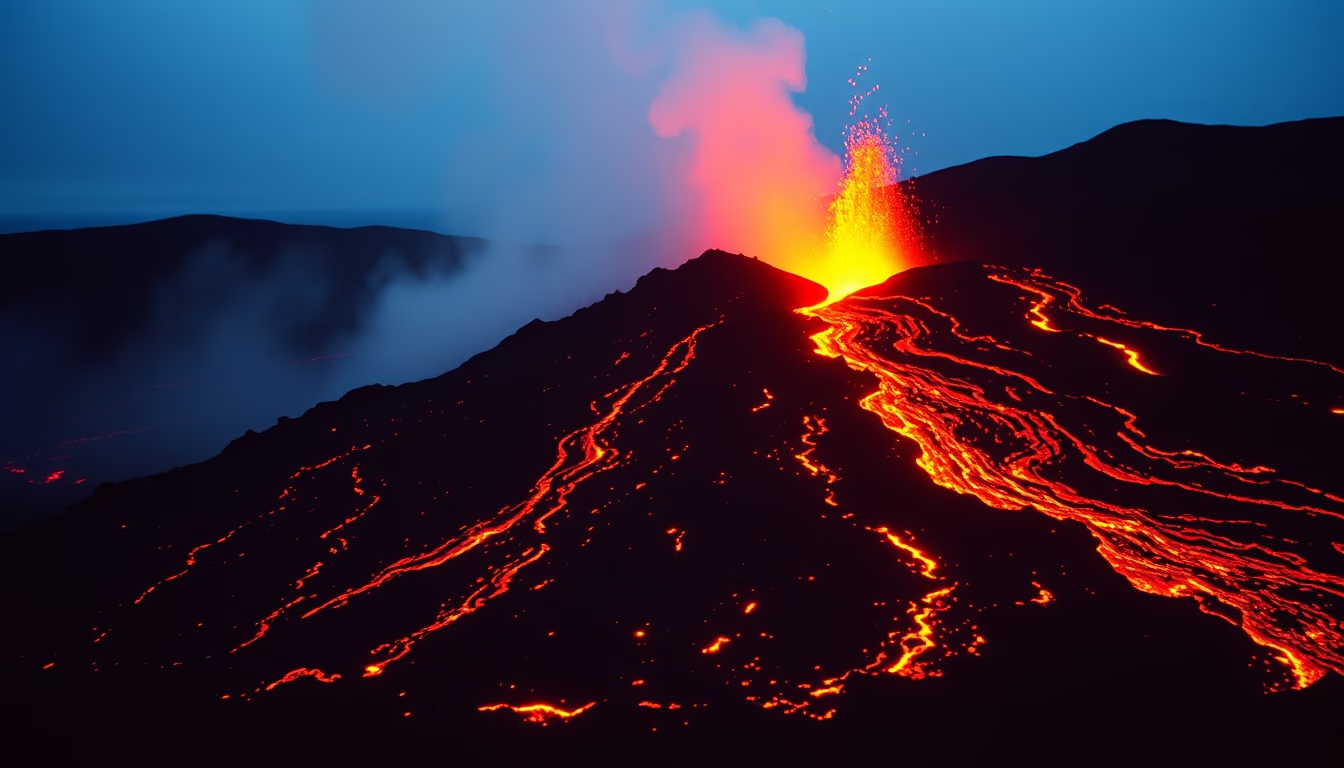
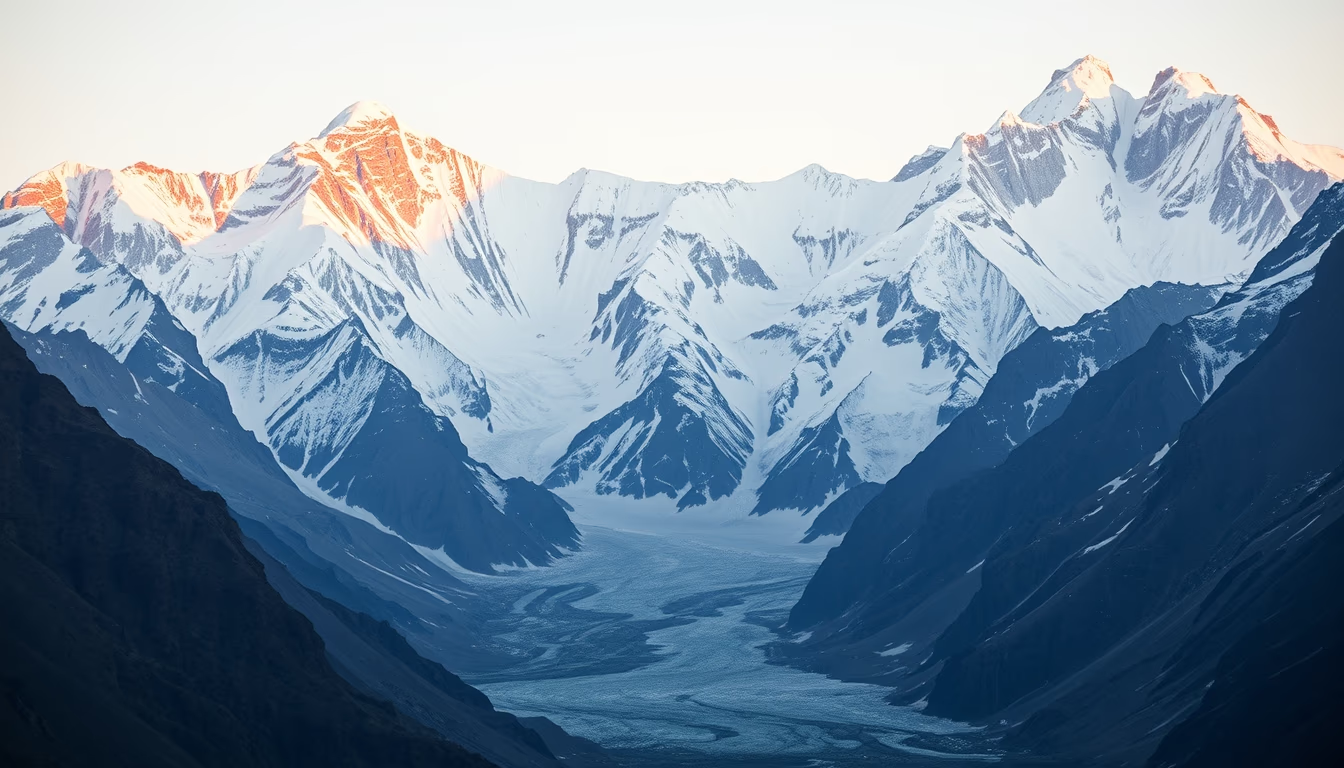
Kilimanjaro tanzania snow
1344×768 · AVIF · CC BY 4.0
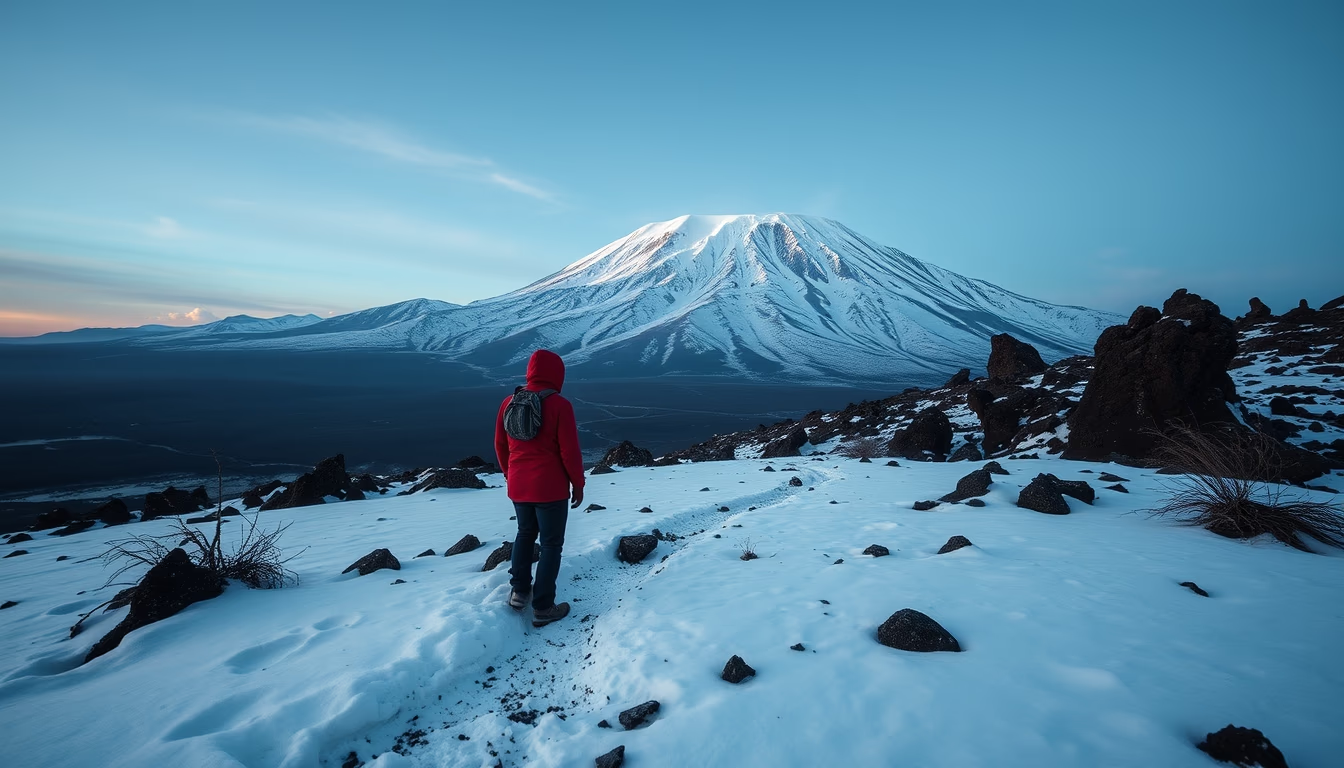
Mount Kilimanjaro in Tanzania features unique tropical glaciers that are rapidly disappearing due to global warming.
About this subject
Mount Kilimanjaro, standing at 5,895 meters, is Africa's highest peak and one of the few equatorial locations with permanent snow. Located in Kilimanjaro National Park in Tanzania, this dormant volcano is renowned for its ice fields and glaciers that cap the summit. These tropical glaciers are remnants of a colder glacial era and have been studied by scientists to understand climate change. Since the early 20th century, Kilimanjaro's ice caps have lost about 85% of their area, and it is estimated that the glaciers could completely disappear by 2050. The accelerated melting is linked to rising global temperatures and reduced snowfall in the region.
The formation of these glaciers is unique because they occur on an isolated mountain near the Equator. The phenomenon is due to high altitude, which keeps temperatures below freezing year-round at the summit. However, warming of the Indian Ocean and changes in atmospheric patterns have disrupted this balance. Satellite data and expeditions show that ice thickness has dramatically decreased, exposing rocks previously covered by centuries of ice. The disappearance of the glaciers affects the local ecosystem and water availability for surrounding communities.
Interestingly, the name Kilimanjaro means "shining mountain" in Swahili, a reference to its snow-capped peak. Beyond scientific value, the white of the summit contrasts with the surrounding savanna and attracts thousands of tourists annually. The loss of this natural heritage serves as a warning about the impacts of human activities on the planet's climate.
Frequently Asked Questions
Why is there snow on Kilimanjaro if it is near the Equator?
Snow persists on Kilimanjaro's summit due to its high altitude, which keeps temperatures below freezing year-round, allowing tropical glaciers to form and be maintained even in an equatorial region.
How many glaciers are there on Mount Kilimanjaro?
Kilimanjaro has several glaciers, including the Furtwängler Glacier, Rebmann Glacier, and Credner Glacier, as well as continuous ice fields. Currently, the ice-covered area is less than 1 km², compared to about 12 km² in the early 20th century.
When will the glaciers of Kilimanjaro completely disappear?
Scientific studies indicate that if current warming trends continue, Kilimanjaro's glaciers could completely disappear between 2030 and 2050, with significant impacts on tourism and local water resources.
Direct URL
https://pub-c7d6a6ea828543ac903a74a341ccb2e1.r2.dev/imagens/kilimanjaro-tanzania-snow-documentary-photography-p0.avifHow to credit
Include a visible link back to UtilizAí. Copy one of the snippets below:
<a href="https://xn--utiliza-eza.com/en/midia/imagens/kilimanjaro-tanzania-snow-documentary-photography-p0">Kilimanjaro tanzania snow</a> by <a href="https://xn--utiliza-eza.com">UtilizAí</a>, licensed under <a href="https://creativecommons.org/licenses/by/4.0/">CC BY 4.0</a>.
[Kilimanjaro tanzania snow](https://xn--utiliza-eza.com/en/midia/imagens/kilimanjaro-tanzania-snow-documentary-photography-p0) by [UtilizAí](https://xn--utiliza-eza.com), CC BY 4.0
License: CC-BY-4.0