Jet ski water spray
1344×768 · AVIF · CC BY 4.0
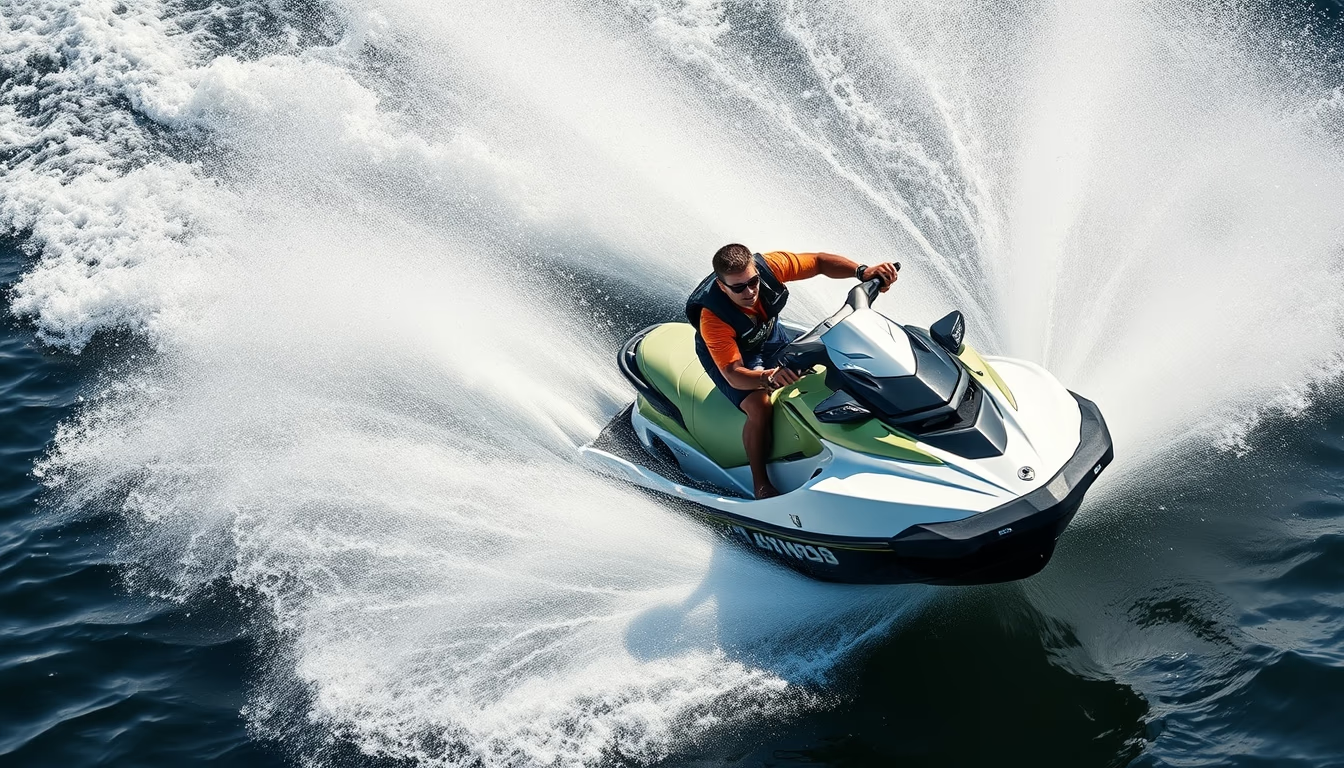
Jet skis are motorized recreational watercraft that combine speed and maneuverability, popular on beaches and lakes worldwide.
About this subject
The jet ski, also known as a personal watercraft, is a motorized vehicle designed for recreation and sports. Its invention dates back to the 1970s, with Kawasaki launching the first commercial model in 1973. Since then, technological evolution has brought more powerful engines and advanced safety systems. Today, there are two main types: sit-down models for long rides and stand-up models for acrobatic maneuvers and competitions.
Jet skis have exploded in popularity, becoming a summer symbol in tourist destinations such as the Brazilian coast, Florida, and the Caribbean. Beyond recreational use, they are employed in water rescues, patrols, and even professional competitions like the world freestyle circuit. In Brazil, spots like Maresias beach (SP) and Lagoa da Conceição (SC) are hotspots for enthusiasts.
However, jet ski use raises environmental concerns. Their gasoline engines generate noise and pollution, affecting marine ecosystems and wildlife. Many regions impose restrictions, such as exclusion zones near preservation areas and limited operating hours. Electric alternatives are emerging, like Yamaha's electric jet ski, which reduces noise and carbon emissions.
Trivia: the world speed record for a jet ski is about 127 km/h, set in 2014. In many countries, a license (e.g., P1 or P2 category) is required to operate a jet ski, and wearing a life jacket is mandatory by law in Brazil.
Frequently Asked Questions
Do I need a license to ride a jet ski in Brazil?
Yes. To pilot a jet ski in Brazilian waters, you need an Arrais Amador license (P1) or Mestre Amador (P2), issued by the Navy. You must be over 18 and carry the vessel's registration documents.
What is the difference between sit-down and stand-up jet skis?
Sit-down jet skis have a motorcycle-like seat, offering stability for cruising and long distances. Stand-up models require balance and body control, used in freestyle maneuvers and competitions.
Are jet skis harmful to the environment?
Yes, especially gasoline-powered models, which produce pollutant emissions and noise. Techniques like four-stroke engines and catalytic converters reduce impact. Electric models, such as Yamaha's electric jet ski, are more sustainable and quieter.
Direct URL
https://pub-c7d6a6ea828543ac903a74a341ccb2e1.r2.dev/imagens/jet-ski-water-spray-magazine-editorial-p6.avifHow to credit
Include a visible link back to UtilizAí. Copy one of the snippets below:
<a href="https://xn--utiliza-eza.com/en/midia/imagens/jet-ski-water-spray-magazine-editorial-p6">Jet ski water spray</a> by <a href="https://xn--utiliza-eza.com">UtilizAí</a>, licensed under <a href="https://creativecommons.org/licenses/by/4.0/">CC BY 4.0</a>.
[Jet ski water spray](https://xn--utiliza-eza.com/en/midia/imagens/jet-ski-water-spray-magazine-editorial-p6) by [UtilizAí](https://xn--utiliza-eza.com), CC BY 4.0
License: CC-BY-4.0