Japanese kanji shodo
1344×768 · AVIF · CC BY 4.0
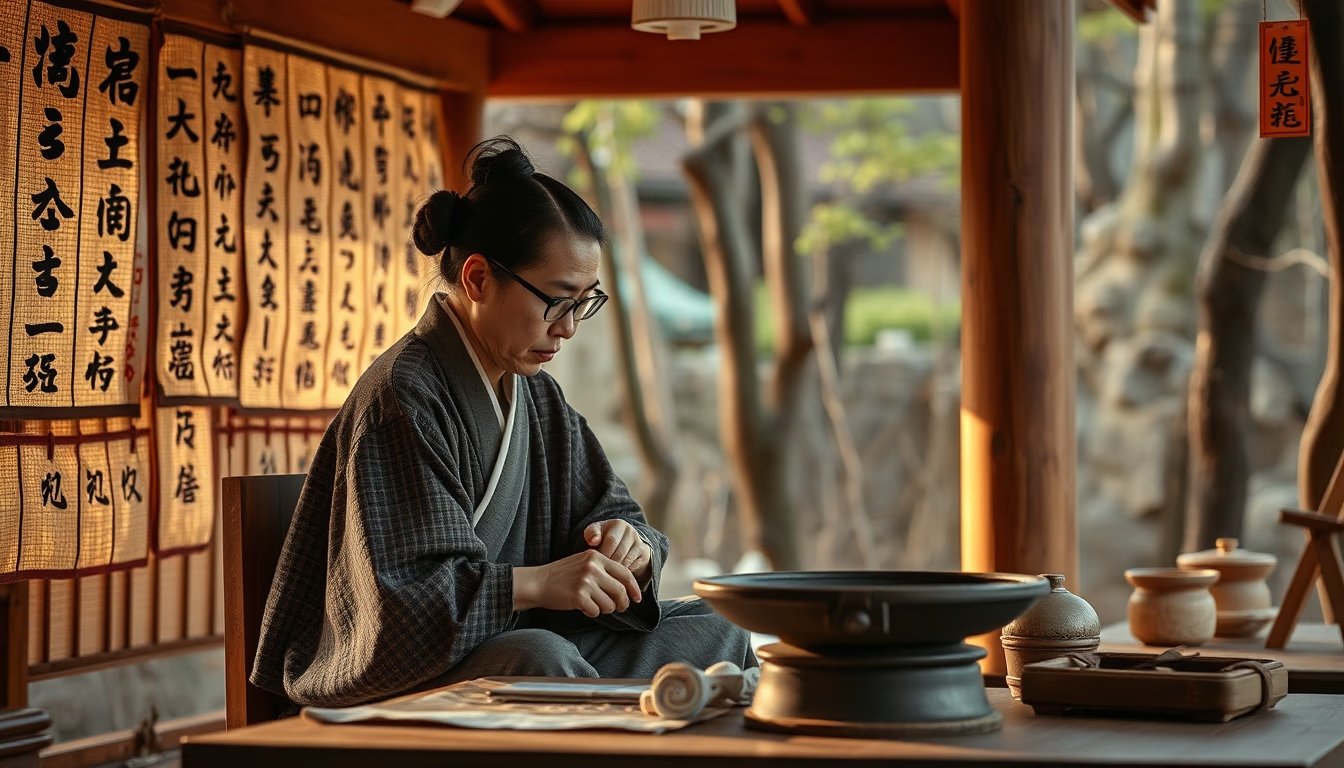
Shodo, the Japanese art of brush calligraphy with sumi ink, combines ancient technique with spiritual expression and aesthetics.
About this subject
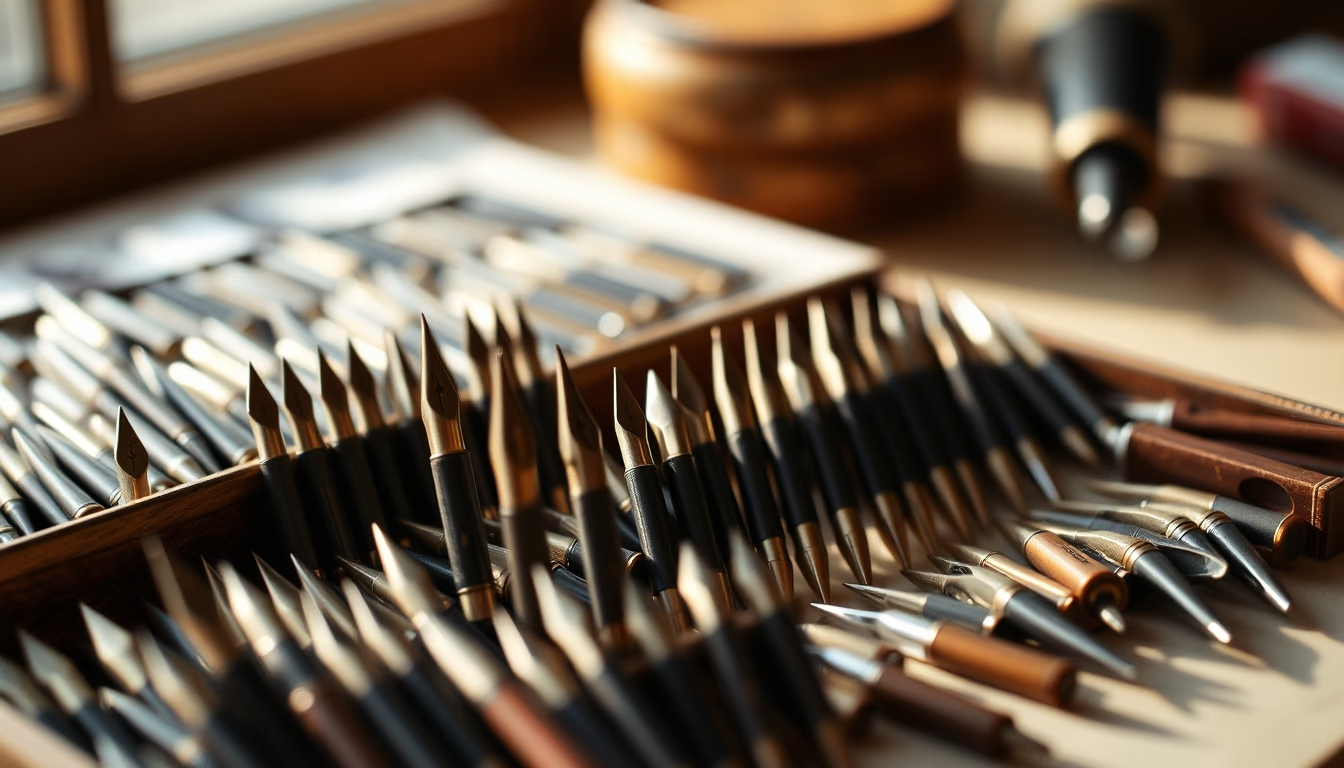
Shodo, meaning 'the way of writing', is a millennia-old Japanese art that transcends mere calligraphy. Originating in China, it was introduced to Japan along with kanji characters around the 5th or 6th century. Initially practiced by Buddhist monks and nobles, it evolved into a discipline integrating meditation, technique, and personal expression. The practice involves using a brush (fude) with natural bristles, sumi ink (solid, ground with water on a suzuri inkstone), washi paper (handmade), and a paperweight (bunchin). The brush movement must be fluid, rhythmic, and precise, reflecting the calligrapher's state of mind.
There are three main styles of shodo: kaisho (square and formal script, ideal for beginners), gyosho (semi-cursive script, faster and more fluid), and sosho (cursive script, highly abbreviated and artistic). Each kanji character has a specific stroke order that must be respected to maintain visual harmony. An incorrect stroke cannot be corrected because the ink penetrates the paper instantly, symbolizing the irreversibility of the gesture.
The cultural importance of shodo in Japan is immense. It is considered one of the most refined traditional arts, alongside tea ceremony (chanoyu) and flower arrangement (ikebana). Formal shodo examinations exist, such as those by the Japan Calligraphy Education Association, granting kyū (grades) and dan (levels). Additionally, national and international exhibitions, like the Mainichi Shodo Exhibition, celebrate the diversity of styles and creators. Many temples and shrines display calligraphic scrolls as decoration or during festivals.
Interestingly, shodo is not limited to recognizable characters: contemporary artists experiment with abstract strokes while maintaining the essence of fluid movement. Regular practice is seen as a way to train concentration, patience, and self-discipline. For the Japanese, each letter carries not only linguistic meaning but also a vital energy (ki) transmitted by the calligrapher.
Frequently Asked Questions
What is shodo and where does it originate?
Shodo is the Japanese art of brush calligraphy with sumi ink. It originated in China and was introduced to Japan around the 5th or 6th century, initially practiced by monks and nobles.
What are the basic materials for practicing shodo?
The essential materials are the brush (fude), sumi ink (in stick form ground with water), washi paper, and a paperweight (bunchin). A inkstone (suzuri) and a water container are also commonly used.
How does shodo differ from Chinese calligraphy?
While shodo derives from Chinese calligraphy, it developed its own styles and philosophy. Japanese shodo emphasizes simplicity, asymmetry, and expression of the moment, whereas Chinese calligraphy values historical accuracy and a variety of classical styles.
Direct URL
https://pub-c7d6a6ea828543ac903a74a341ccb2e1.r2.dev/imagens/japanese-kanji-shodo-documentary-nature-style-fresh11.avifHow to credit
Include a visible link back to UtilizAí. Copy one of the snippets below:
<a href="https://xn--utiliza-eza.com/en/midia/imagens/japanese-kanji-shodo-documentary-nature-style-fresh11">Japanese kanji shodo</a> by <a href="https://xn--utiliza-eza.com">UtilizAí</a>, licensed under <a href="https://creativecommons.org/licenses/by/4.0/">CC BY 4.0</a>.
[Japanese kanji shodo](https://xn--utiliza-eza.com/en/midia/imagens/japanese-kanji-shodo-documentary-nature-style-fresh11) by [UtilizAí](https://xn--utiliza-eza.com), CC BY 4.0
License: CC-BY-4.0