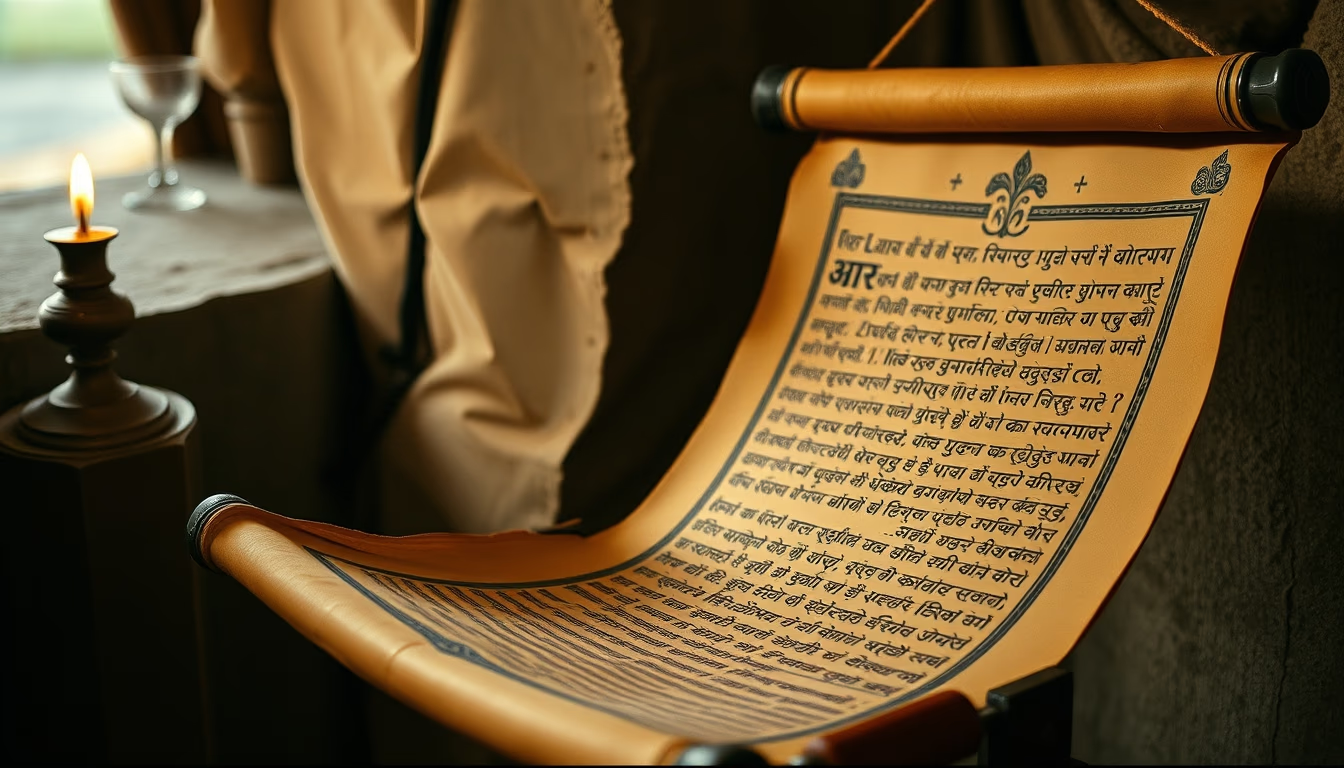
Indian devanagari sanskrit
1344×768 · AVIF · CC BY 4.0
Devanagari is the syllabic writing system used to record Sanskrit, an Indian classical language with origins dating back to the second millennium BCE.
About this subject
Devanagari (देवनागरी) is an abugida or syllabic writing system, where each character represents a syllable. It derives from Brahmi, the common ancestor of nearly all writing systems of India and Southeast Asia. The current form of Devanagari began to crystallize around the 7th century CE, becoming the main medium for Sanskrit, the vehicle of vast philosophical, religious, poetic, and scientific literature.
The Devanagari alphabet has 47 primary characters: 14 vowels and 33 consonants. Letters are written from left to right and a horizontal line (shirorekha) connects the letters of a word, giving the script its distinctive visual appearance. The traditional order of consonants follows a phonetic logic based on the point of articulation in the mouth: gutturals, palatals, retroflexes, dentals, and bilabials.
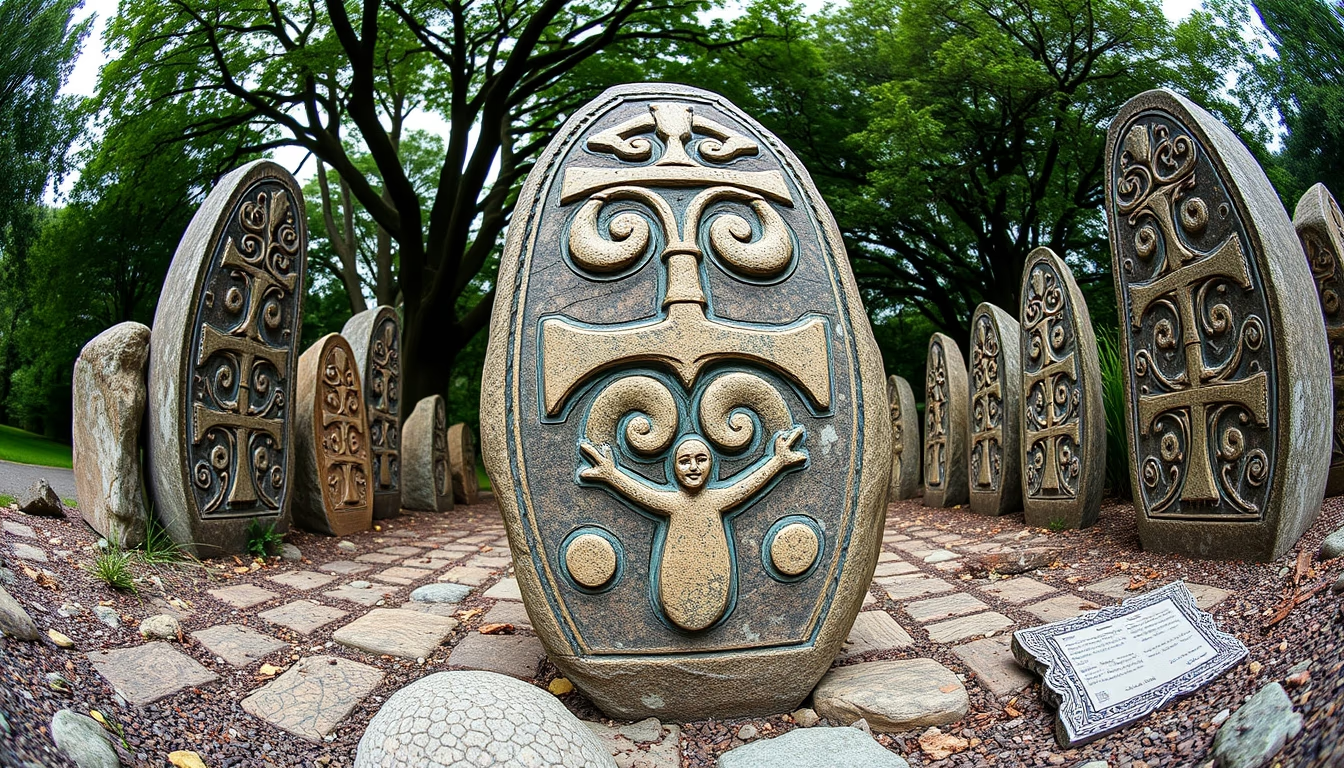
Historically, Sanskrit was recorded in various scripts, but Devanagari became the most widespread from the Middle Ages onward. Besides Sanskrit, Devanagari is currently used to write Hindi, Marathi, Nepali, and other Indo-Aryan languages. Devanagari inscriptions are found on temples, palm-leaf manuscripts, and rock carvings across India. The script is also used for transliterating Vedic mantras and texts of the Vedas, Upanishads, and epics like the Mahabharata and Ramayana.
A notable fact: the term Devanagari means 'script of the city of gods' (deva = god, nagari = city), reflecting the sacred association of Sanskrit and its writing. Today, with digitization, Devanagari is fully integrated into Unicode and supported on all modern devices, ensuring the preservation and access to this millennial linguistic heritage.
Frequently Asked Questions
What is the difference between Devanagari and the Latin alphabet?
Devanagari is an abugida, where each character represents a syllable (consonant + inherent vowel), whereas the Latin alphabet is a pure alphabet with letters representing individual phonemes. Additionally, Devanagari has a continuous horizontal line at the top of words.
Is Devanagari used only for Sanskrit?
No. Although it is the primary script for Sanskrit, Devanagari is also used to write Hindi, Marathi, Nepali, Konkani, and other Indo-Aryan languages. It is one of the most widespread scripts in the Indian subcontinent.
How many letters are in the Devanagari alphabet?
The standard Devanagari alphabet has 47 primary characters: 14 vowels (svaras) and 33 consonants (vyanjanas). There are also additional symbols for conjunct consonants and diacritical marks.
Direct URL
https://pub-c7d6a6ea828543ac903a74a341ccb2e1.r2.dev/imagens/indian-devanagari-sanskrit-long-exposure-fresh15.avifHow to credit
Include a visible link back to UtilizAí. Copy one of the snippets below:
<a href="https://xn--utiliza-eza.com/en/midia/imagens/indian-devanagari-sanskrit-long-exposure-fresh15">Indian devanagari sanskrit</a> by <a href="https://xn--utiliza-eza.com">UtilizAí</a>, licensed under <a href="https://creativecommons.org/licenses/by/4.0/">CC BY 4.0</a>.
[Indian devanagari sanskrit](https://xn--utiliza-eza.com/en/midia/imagens/indian-devanagari-sanskrit-long-exposure-fresh15) by [UtilizAí](https://xn--utiliza-eza.com), CC BY 4.0
License: CC-BY-4.0