Incubator lab petri
1344×768 · AVIF · CC BY 4.0

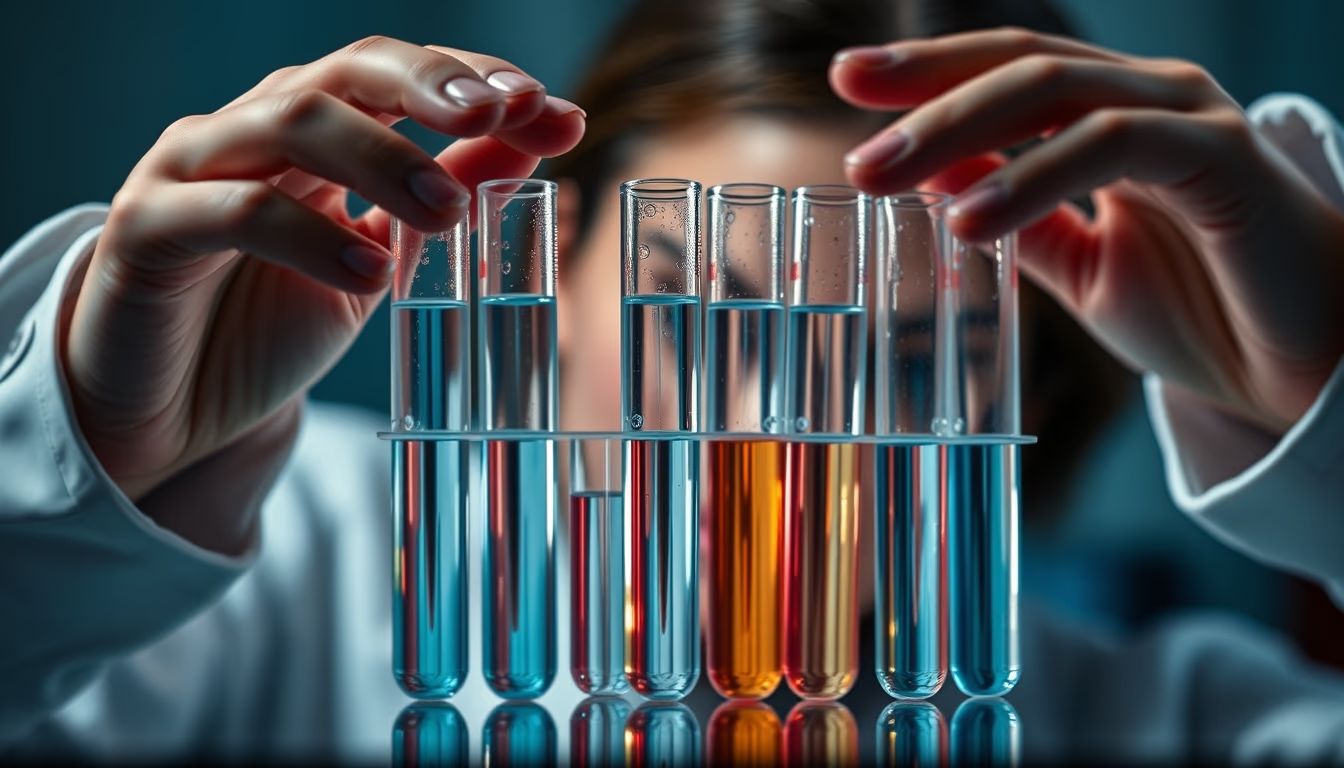
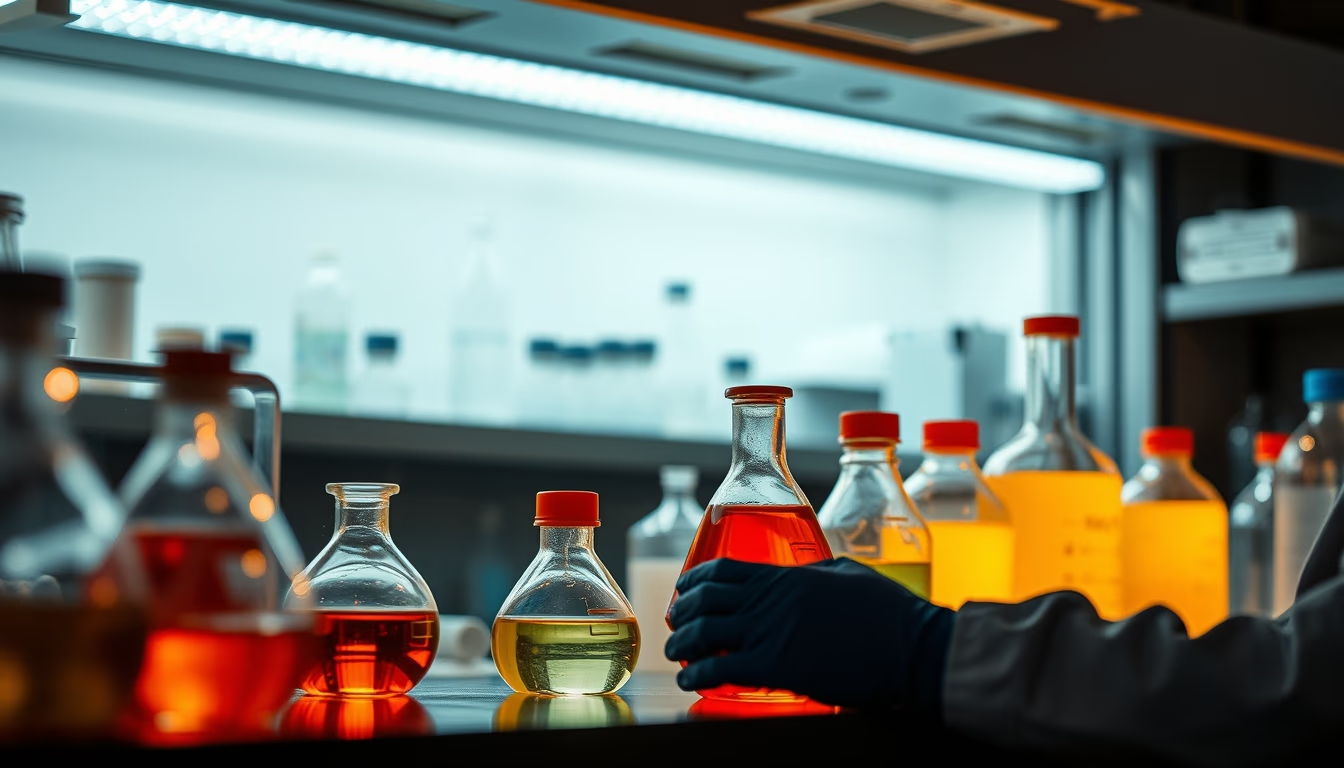
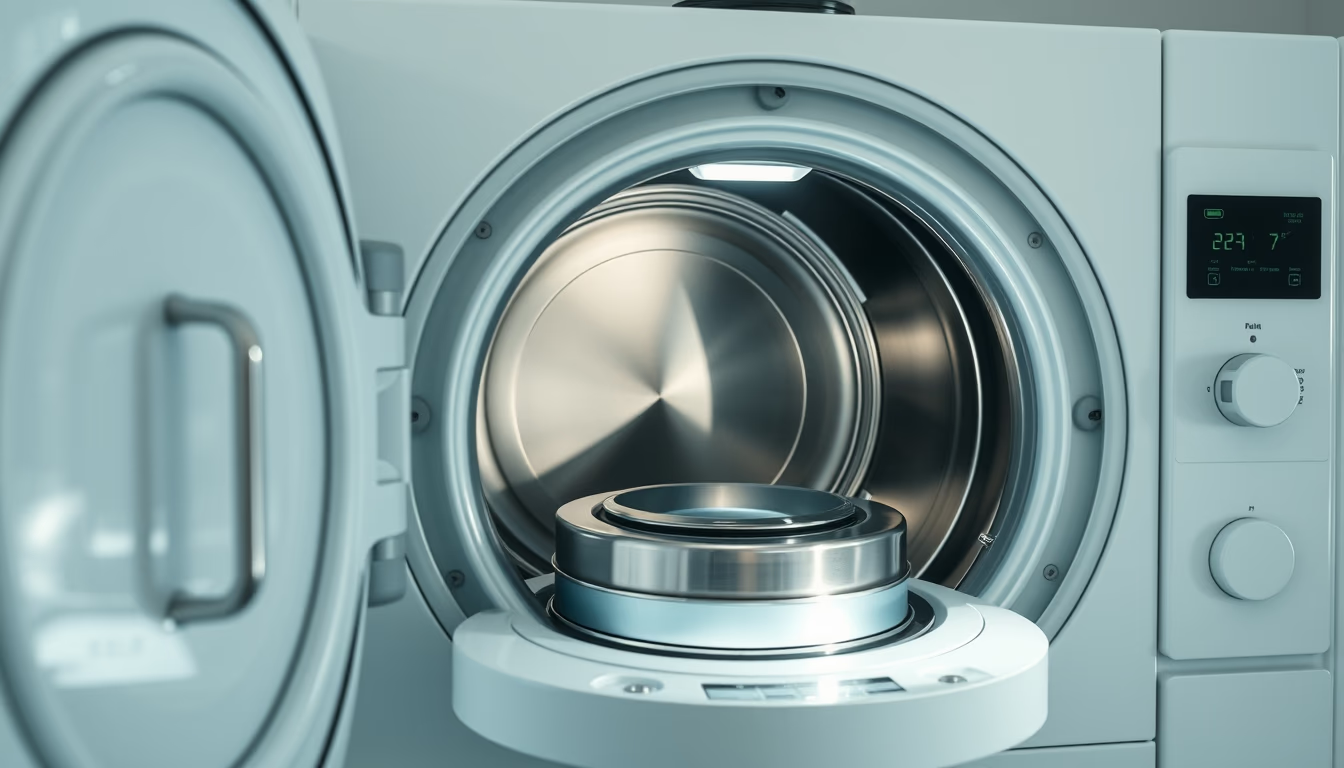
Laboratory incubator with Petri dishes, essential equipment for culturing microorganisms and cells under controlled temperature and atmosphere conditions.
About this subject
A laboratory incubator is a fundamental piece of equipment in microbiology, cell biology, and molecular biology. It maintains constant temperature, humidity, and in advanced models, CO2 levels, creating the ideal environment for the growth of bacterial, fungal, or animal cell cultures. Petri dishes, invented by German bacteriologist Julius Richard Petri in 1887, are shallow glass or plastic containers that hold solid culture medium, where microorganisms develop into visible colonies. The combination of these two elements allows controlled isolation, identification, and study of microbes.
Modern incubators come in two main types: gravity convection (basic) and forced-air circulation, which ensures uniform temperature distribution. CO2 incubators are essential for mammalian cell culture, maintaining a stable pH through an atmosphere of 5-10% CO2. Precise temperature control, typically between 30°C and 37°C for mesophilic microorganisms and 37°C for human cells, is critical for experimental reproducibility.
The history of Petri dishes traces back to Robert Koch's assistant, who developed them to replace sliced potatoes used as solid medium. This breakthrough enabled pure bacterial culture, revolutionizing bacteriology. Today, dishes are made of polystyrene or borosilicate glass, sterilized by gamma radiation or autoclaving. The standard diameter is 90 mm, but variations exist for different applications, such as 60 mm dishes for agar diffusion assays.
Globally, incubators and Petri dishes are ubiquitous in clinical research labs, food and pharmaceutical quality control, and microbiological diagnostics. Standardization of incubation conditions, such as time and temperature, is defined by international protocols like those from the Clinical and Laboratory Standards Institute (CLSI). Maintaining sterility during handling is crucial to avoid cross-contamination, and techniques like using biological safety cabinets are commonly employed.
Frequently Asked Questions
What is the ideal temperature for incubating bacteria on Petri dishes?
The ideal temperature varies by species. Mesophilic bacteria, like Escherichia coli, grow well at 37°C. Psychrophilic bacteria prefer 4°C to 10°C, while thermophiles require 50°C to 60°C.
How long does it take for a bacterial culture to grow on a Petri dish?
Visible colonies typically appear within 18 to 24 hours under optimal conditions. Fungi may take 48 to 72 hours, and slow-growing bacteria like mycobacteria can take up to 2 weeks.
Why is it important to use an incubator with CO2 control?
For mammalian cell culture, CO2 maintains the pH of the culture medium through the bicarbonate buffer system. Without this control, pH fluctuates, compromising cell growth and viability.
Direct URL
https://pub-c7d6a6ea828543ac903a74a341ccb2e1.r2.dev/imagens/incubator-lab-petri-film-grain-authentic-fresh6.avifHow to credit
Include a visible link back to UtilizAí. Copy one of the snippets below:
<a href="https://xn--utiliza-eza.com/en/midia/imagens/incubator-lab-petri-film-grain-authentic-fresh6">Incubator lab petri</a> by <a href="https://xn--utiliza-eza.com">UtilizAí</a>, licensed under <a href="https://creativecommons.org/licenses/by/4.0/">CC BY 4.0</a>.
[Incubator lab petri](https://xn--utiliza-eza.com/en/midia/imagens/incubator-lab-petri-film-grain-authentic-fresh6) by [UtilizAí](https://xn--utiliza-eza.com), CC BY 4.0
License: CC-BY-4.0