Icebreaker arctic ship
1344×768 · AVIF · CC BY 4.0
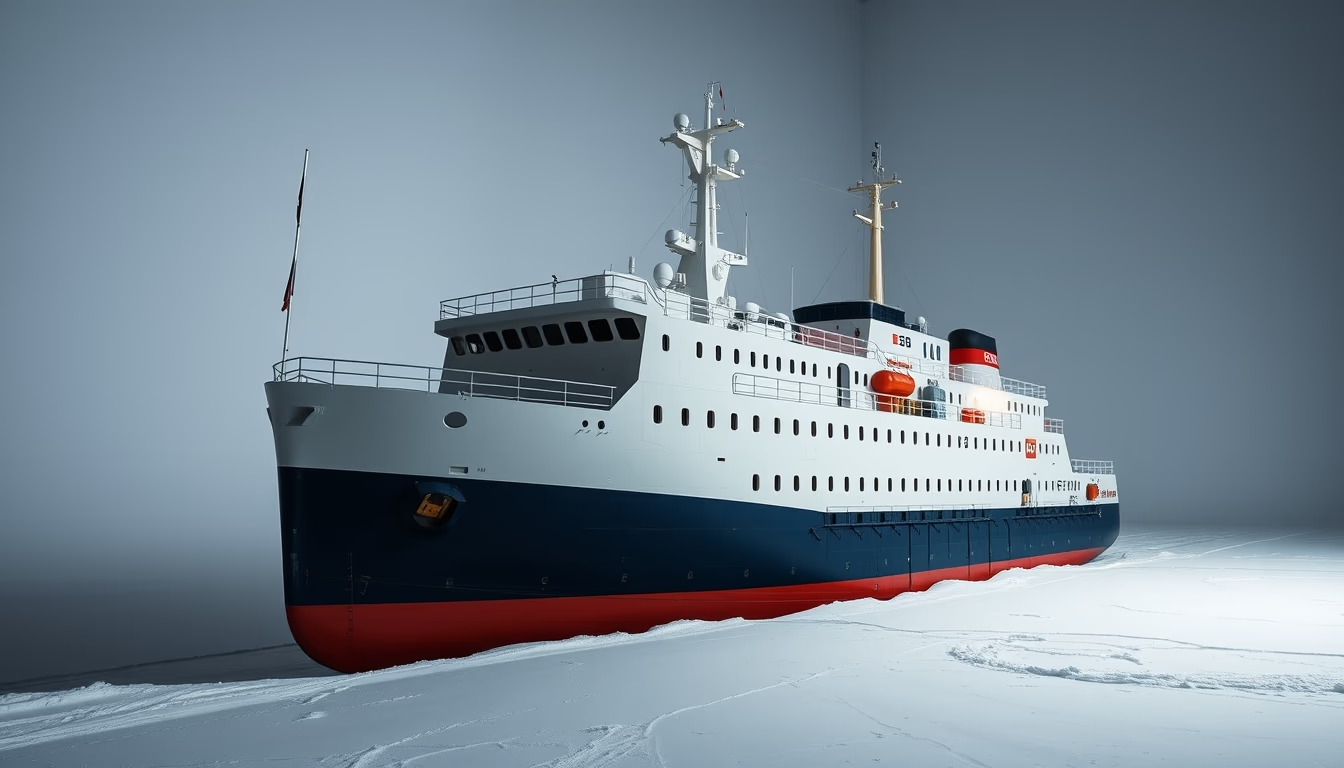
Icebreaker ship navigating the Arctic, essential for scientific research and commercial routes in polar regions, with robust design.
About this subject
An icebreaker is a ship specifically designed to navigate and clear paths through ice-covered waters. These vessels are critical for logistics and research in polar regions, where ice can block routes and isolate remote communities and scientific stations. The development of modern icebreakers dates back to the late 19th century, with Russia building one of the first, the "Ermak", in 1898, featuring a steel hull and powerful steam engines to break ice.
Today, icebreakers serve multiple purposes: escorting cargo ships and tankers through icy seas, resupplying remote military and scientific bases, conducting oceanographic and climate research, and patrolling sovereignty claims in disputed maritime areas. The world's largest icebreaker is Russia's "Arktika", a nuclear-powered vessel measuring 173 meters in length and capable of breaking ice up to 2.8 meters thick. Russia leads the global icebreaker fleet, especially with nuclear-powered ships, but other countries such as Canada, the United States, Finland, and China also operate these vessels.
The design of an icebreaker is unique: the hull has a rounded and sloped shape, allowing the ship to ride up onto the ice and use its weight to break it. Propellers and rudders are reinforced and protected to prevent damage. Many modern icebreakers also feature dynamic positioning systems and electric propulsion for precise maneuvering in extreme conditions. Arctic routes, such as the Northern Sea Route, are becoming more navigable due to ice melt, increasing demand for these ships in global trade.
Interestingly, icebreakers are also used in frozen lakes and rivers in cold countries like Canada and Russia to keep waterways open during winter. Some icebreakers are designed to operate in both poles, such as Germany's "Polarstern", which conducts transantarctic scientific expeditions. The strategic and environmental importance of these vessels grows as the Arctic opens up to new economic activities.
Frequently Asked Questions
How does an icebreaker manage to sail through ice?
An icebreaker has a specially designed hull with a rounded, sloped shape that allows it to ride up onto the ice and break it using the ship's weight. Propellers and rudders are reinforced to withstand impacts.
What is the largest icebreaker in the world?
The largest icebreaker in the world is Russia's Arktika, a nuclear-powered vessel measuring 173 meters in length, capable of breaking ice up to 2.8 meters thick.
Are icebreakers only used in the Arctic?
No. While most common in the Arctic, icebreakers also operate in Antarctica and in regions with seasonal ice, such as the Baltic Sea, frozen lakes, and rivers in Canada and Russia.
Direct URL
https://pub-c7d6a6ea828543ac903a74a341ccb2e1.r2.dev/imagens/icebreaker-arctic-ship-studio-editorial-portrait-p6.avifHow to credit
Include a visible link back to UtilizAí. Copy one of the snippets below:
<a href="https://xn--utiliza-eza.com/en/midia/imagens/icebreaker-arctic-ship-studio-editorial-portrait-p6">Icebreaker arctic ship</a> by <a href="https://xn--utiliza-eza.com">UtilizAí</a>, licensed under <a href="https://creativecommons.org/licenses/by/4.0/">CC BY 4.0</a>.
[Icebreaker arctic ship](https://xn--utiliza-eza.com/en/midia/imagens/icebreaker-arctic-ship-studio-editorial-portrait-p6) by [UtilizAí](https://xn--utiliza-eza.com), CC BY 4.0
License: CC-BY-4.0