Icebreaker arctic ship
1344×768 · AVIF · CC BY 4.0
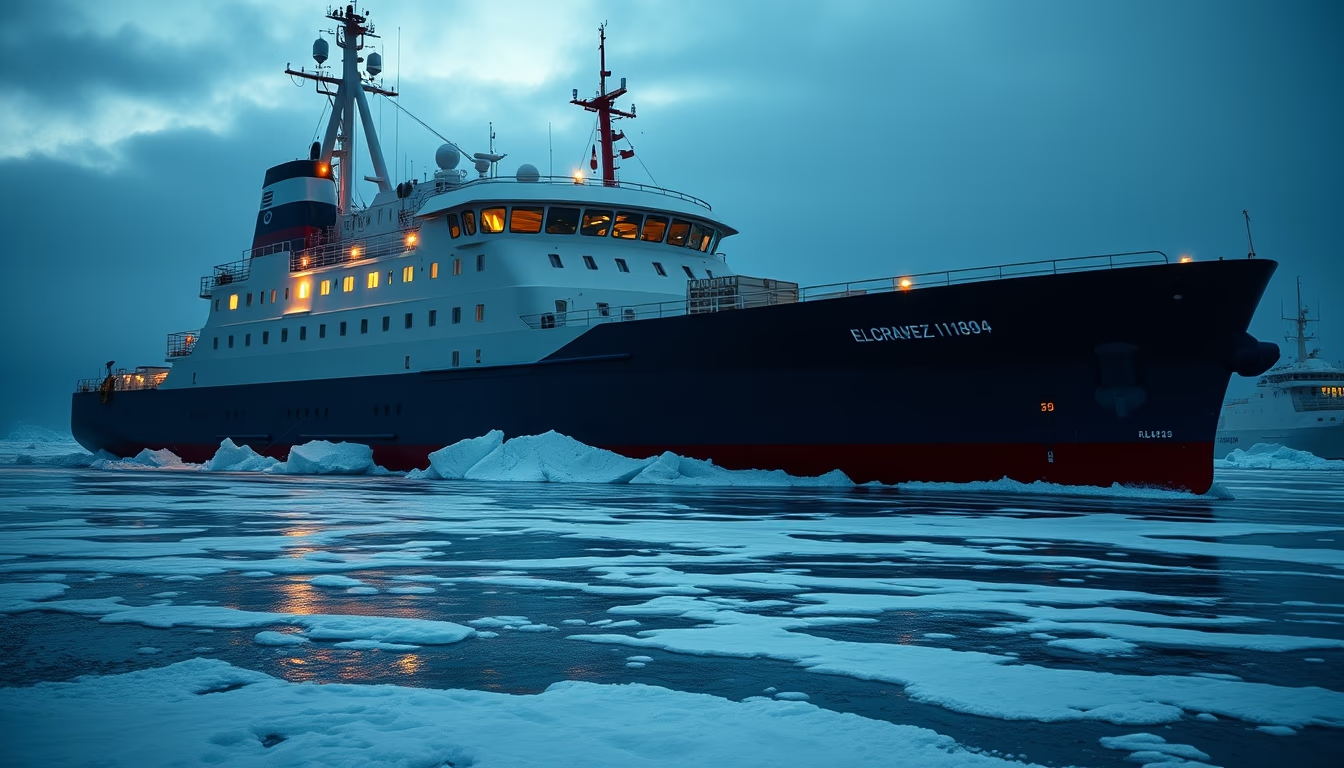
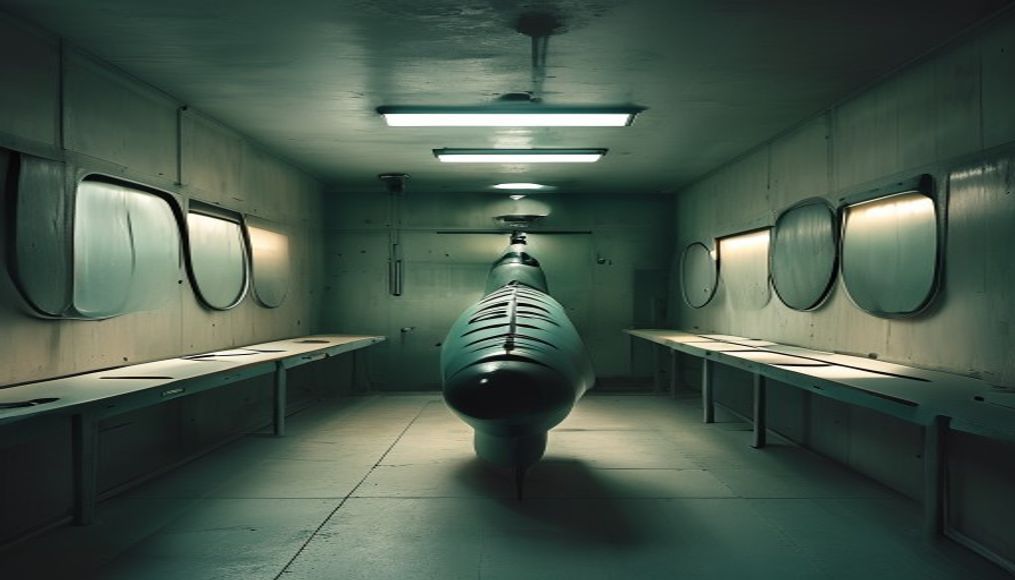
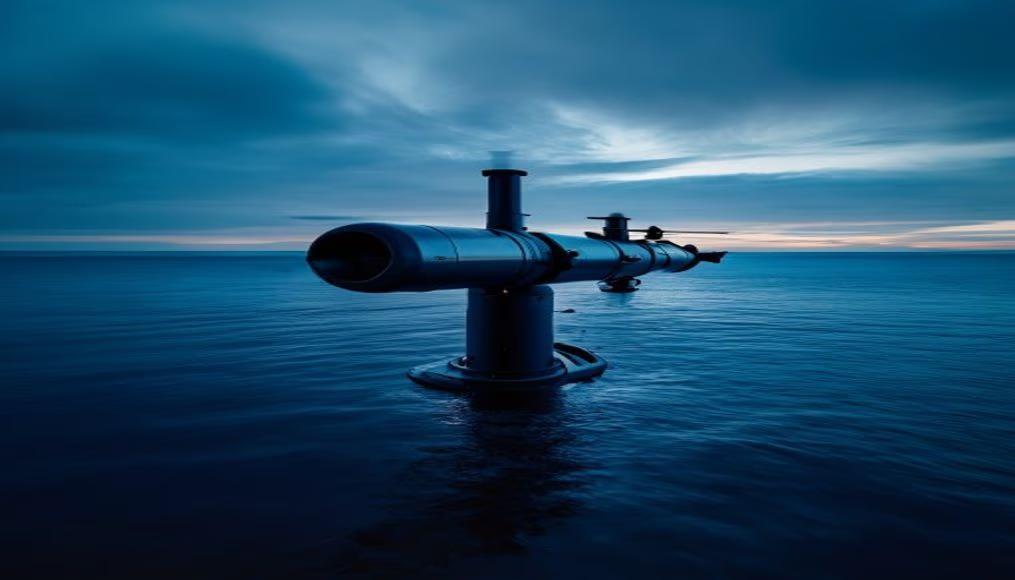
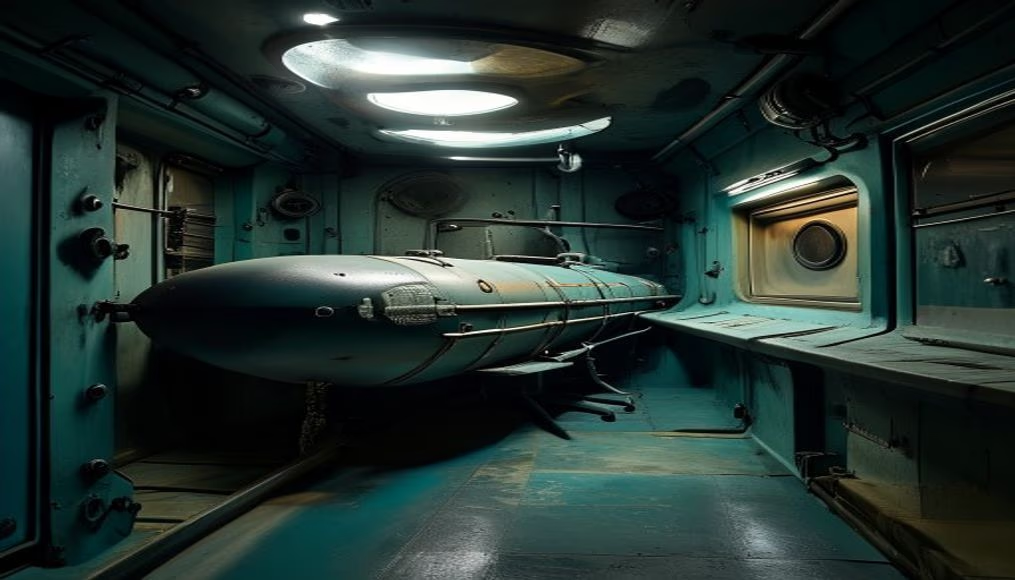
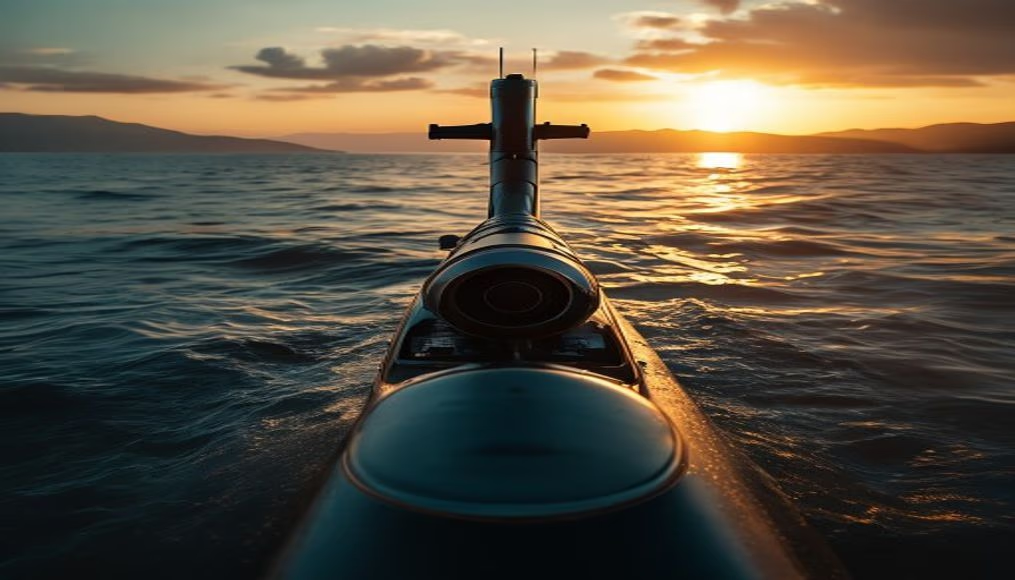
An icebreaker vessel designed to navigate through frozen Arctic waters, breaking sea ice to maintain trade routes and enable scientific research in polar regions.
About this subject
Icebreakers are specially designed vessels that navigate through ice-covered waters using reinforced hulls and powerful propulsion. In the Arctic, where sea ice can reach several meters in thickness, these ships are vital for transporting supplies, exploiting natural resources, and supporting scientific stations. Russia operates the largest fleet of icebreakers, including nuclear-powered ones like "50 Let Pobedy", capable of breaking ice up to 2.8 meters thick. Other countries with significant fleets include Canada, the United States, Finland, and Sweden. The spoon-shaped hull allows the vessel to ride up on the ice and break it under its weight, while air-bubbling systems reduce friction. Operation requires specialized crew and equipment resistant to extreme cold.
The history of modern icebreakers dates back to the late 19th century with the launch of "Yermak" in 1899, built under the supervision of Russian admiral Stepan Makarov. Since then, technology has evolved: steam engines were replaced by diesel-electric and later nuclear power. The first nuclear icebreaker, "Lenin", entered service in 1959. Nuclear reactors provide near-unlimited endurance and high power, essential for long missions in thick ice. In 1977, the nuclear icebreaker "Arktika" became the first surface ship to reach the North Pole, a milestone in polar exploration. Today, Russia is developing the LK-60Ya class, capable of breaking ice up to 3 meters.
Besides Arctic use, icebreakers operate in Antarctica and regions like the Baltic Sea and the Gulf of Saint Lawrence, where ports freeze in winter. The opening of new routes due to sea ice retreat, such as the Northern Sea Route, increases demand for these vessels. However, Arctic navigation poses environmental risks, such as oil spills and disturbance of fragile ecosystems. Thus, modern icebreakers incorporate advanced safety systems and strict environmental standards. They also play crucial roles in search and rescue operations and in oceanographic and climate research, collecting data on the cryosphere and marine life.
Frequently Asked Questions
What is the maximum ice thickness an icebreaker can break?
It depends on the ship class. Russian nuclear icebreakers of the Arktika class can break continuous ice up to 2.8 meters thick, while smaller models used in the Baltic break ice up to 1 meter.
How many nuclear icebreakers are currently in operation?
Russia operates the world's only fleet of nuclear icebreakers, with five active vessels: "Arktika", "Sibir", "Ural", "Yamal", and "50 Let Pobedy". Others are under construction.
Are icebreakers only used in the Arctic?
No. They also operate in Antarctica, seas such as the Baltic, the Sea of Okhotsk, and the Gulf of Saint Lawrence, and in frozen lakes like Lake Baikal during winter.
Direct URL
https://pub-c7d6a6ea828543ac903a74a341ccb2e1.r2.dev/imagens/icebreaker-arctic-ship-fine-art-photography-p10.avifHow to credit
Include a visible link back to UtilizAí. Copy one of the snippets below:
<a href="https://xn--utiliza-eza.com/en/midia/imagens/icebreaker-arctic-ship-fine-art-photography-p10">Icebreaker arctic ship</a> by <a href="https://xn--utiliza-eza.com">UtilizAí</a>, licensed under <a href="https://creativecommons.org/licenses/by/4.0/">CC BY 4.0</a>.
[Icebreaker arctic ship](https://xn--utiliza-eza.com/en/midia/imagens/icebreaker-arctic-ship-fine-art-photography-p10) by [UtilizAí](https://xn--utiliza-eza.com), CC BY 4.0
License: CC-BY-4.0