Hieroglyphs egyptian wall
1344×768 · AVIF · CC BY 4.0
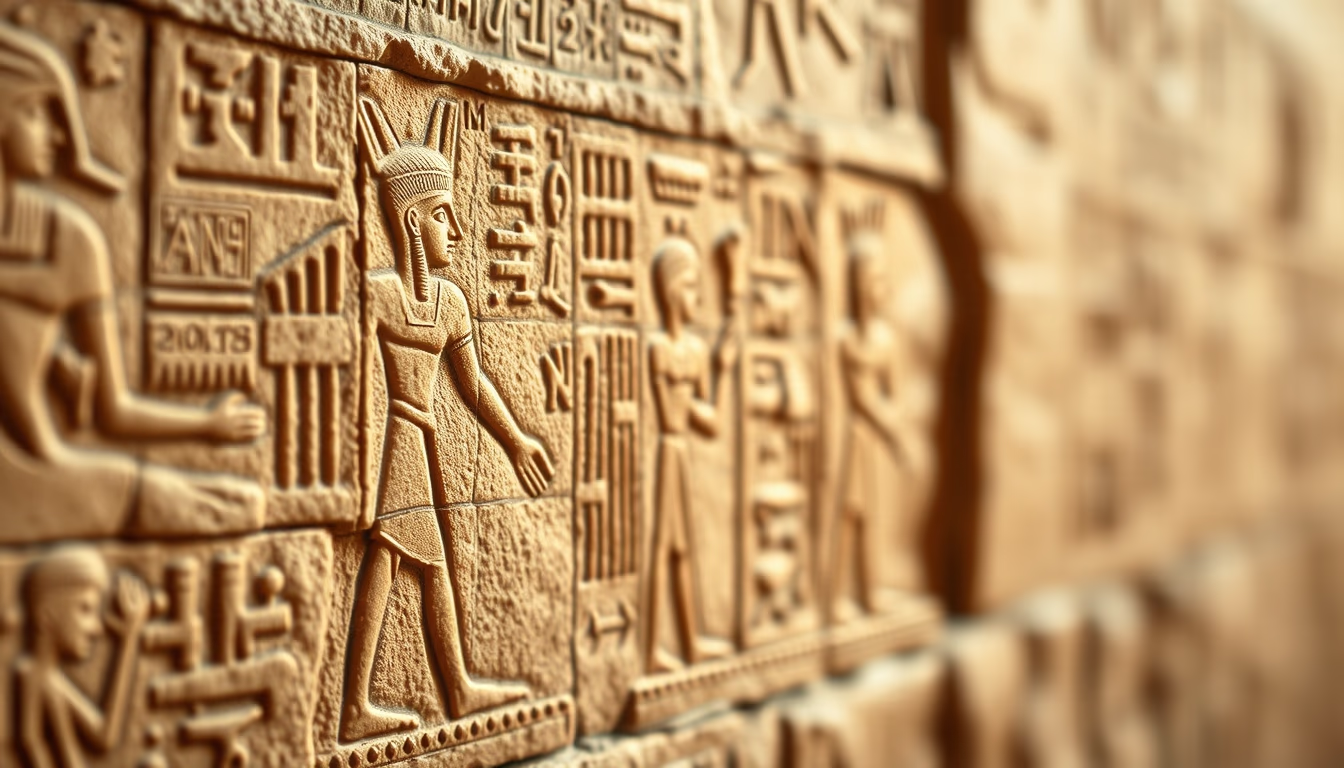
Egyptian hieroglyphs are one of the oldest writing systems in the world, combining logographic and alphabetic elements used for over 3,500 years.
About this subject
Egyptian hieroglyphs emerged around 3200 BCE and remained in use until the 4th century CE, when the spread of Christianity and the closure of pagan temples led to the abandonment of the script. The writing system comprised hundreds of signs, including ideograms (representing ideas), phonograms (representing sounds), and determinatives (clarifying meaning). Egyptian scribes, trained in special schools, mastered around 700 signs during the classical period.
The term “hieroglyph” comes from Greek hieros (sacred) and glyphein (to carve), as Greeks saw these inscriptions mainly on religious monuments. In fact, Egyptians used three scripts: hieroglyphic (monumental), hieratic (cursive for papyri), and demotic (popular and simplified). The Rosetta Stone, discovered in 1799, was crucial for decipherment: it presented the same text in Greek, demotic, and hieroglyphic, allowing Jean-François Champollion to decipher hieroglyphs in 1822.
Hieroglyphs were written right-to-left, left-to-right, or top-to-bottom. Direction was indicated by the orientation of human and animal figures: they faced the start of the line. Beyond religious and royal texts, hieroglyphs recorded accounting, literature, and even jokes. It was believed that inscribed words held magical power, especially in tombs and temples.
Today, hieroglyphs are studied by Egyptologists and fascinate the public. Many museums worldwide exhibit artifacts with hieroglyphic inscriptions, and knowledge continues to grow with new archaeological discoveries. The system influenced other alphabets, such as Proto-Sinaitic, ancestor of the Phoenician alphabet and ultimately the Latin alphabet.
Frequently Asked Questions
How were hieroglyphs deciphered?
Decipherment was made possible by the Rosetta Stone, which contains the same decree in Ancient Greek, Demotic, and Hieroglyphic. Jean-François Champollion compared the texts and identified sounds and meanings, publishing the reading key in 1822.
How many symbols are there in hieroglyphs?
The system is estimated to have between 700 and 800 signs in the classical period, but the number varied over centuries. It includes logograms, phonograms, and determinatives.
Are hieroglyphs still used today?
Not as a functional script, but they are widely reproduced in art, decoration, and tourism. Egyptologists study them to translate ancient texts, and they are occasionally used in symbolic or mystical contexts.
Direct URL
https://pub-c7d6a6ea828543ac903a74a341ccb2e1.r2.dev/imagens/hieroglyphs-egyptian-wall-tilt-shift-miniature-fresh3.avifHow to credit
Include a visible link back to UtilizAí. Copy one of the snippets below:
<a href="https://xn--utiliza-eza.com/en/midia/imagens/hieroglyphs-egyptian-wall-tilt-shift-miniature-fresh3">Hieroglyphs egyptian wall</a> by <a href="https://xn--utiliza-eza.com">UtilizAí</a>, licensed under <a href="https://creativecommons.org/licenses/by/4.0/">CC BY 4.0</a>.
[Hieroglyphs egyptian wall](https://xn--utiliza-eza.com/en/midia/imagens/hieroglyphs-egyptian-wall-tilt-shift-miniature-fresh3) by [UtilizAí](https://xn--utiliza-eza.com), CC BY 4.0
License: CC-BY-4.0