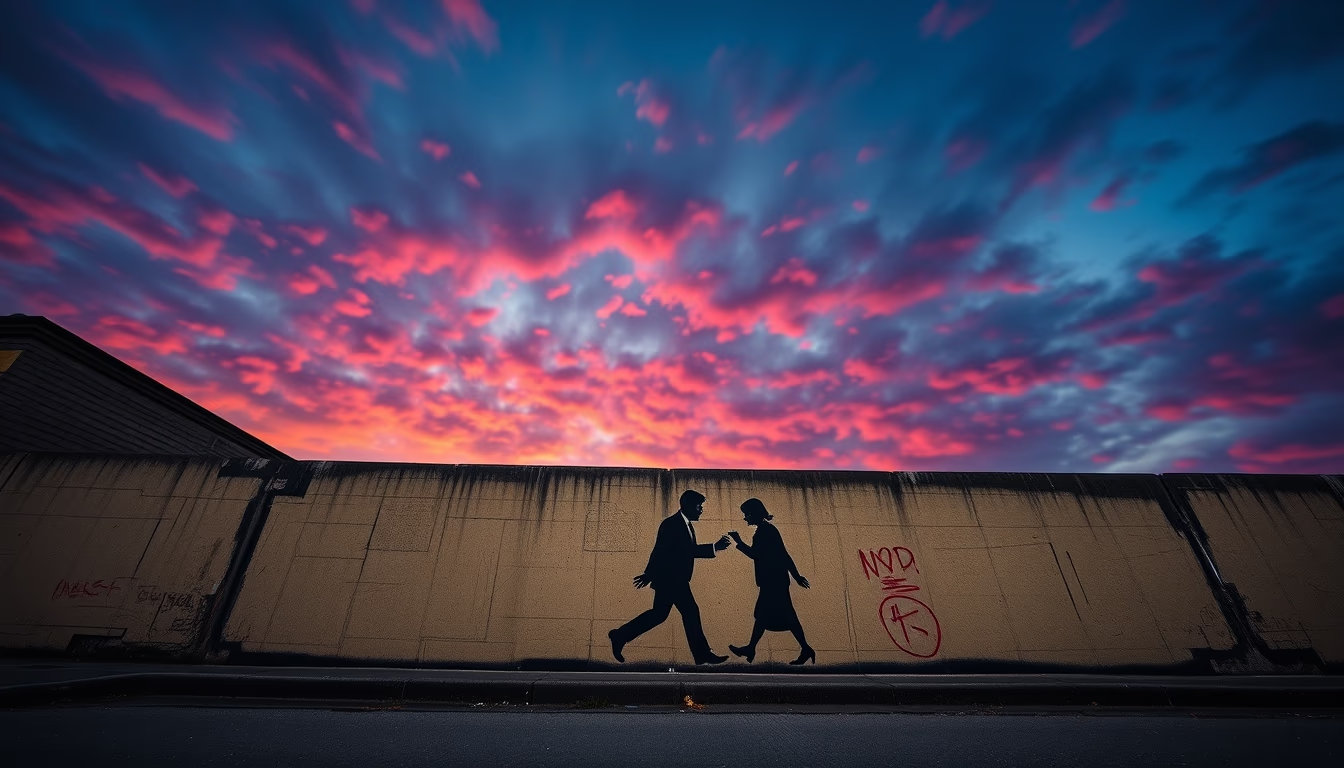
Henry moore abstract
1344×768 · AVIF · CC BY 4.0

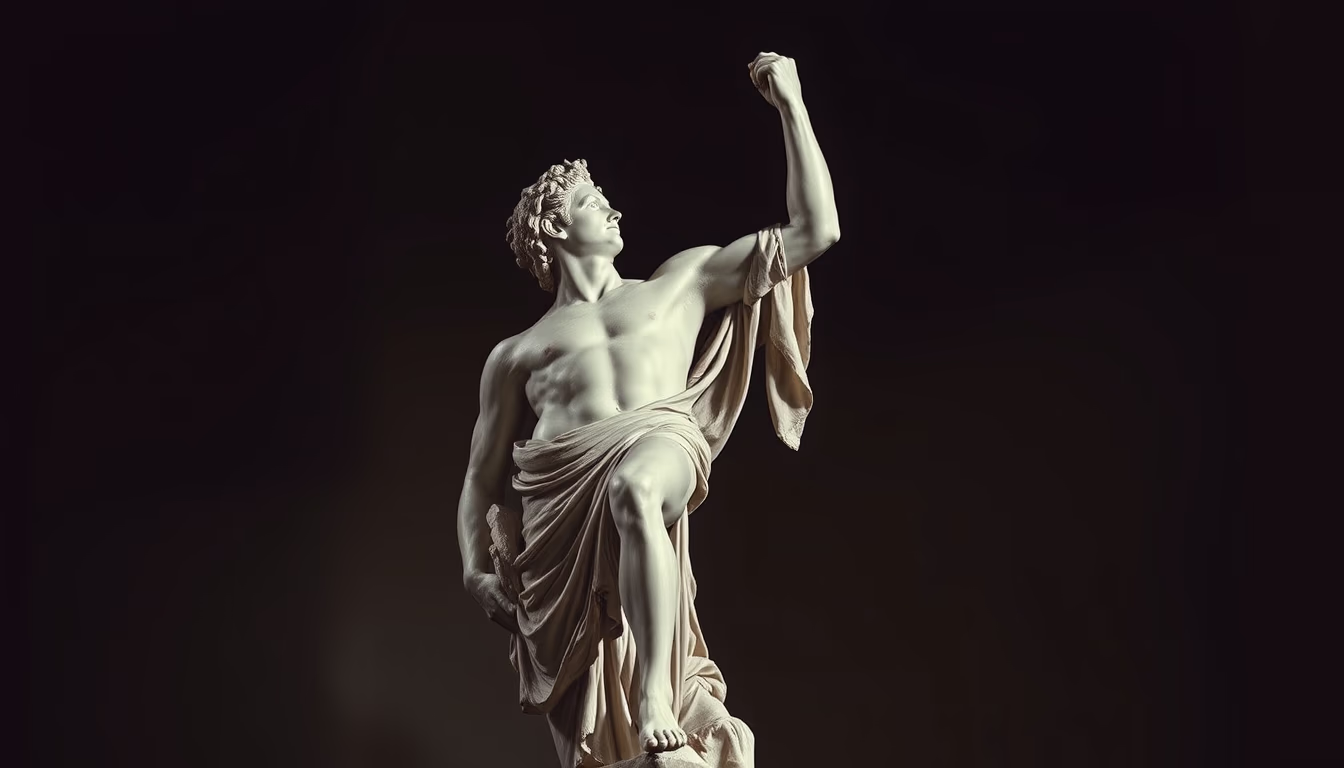
Henry Moore's abstract sculptures explore organic forms and voids, defining 20th-century British modernism.
About this subject
Henry Moore (1898-1986) was a British sculptor renowned for his abstract, biomorphic forms that evoke human figures and landscapes. His works often feature perforations and negative spaces, creating a dialogue between mass and void. Moore was influenced by primitive art, especially pre-Columbian and African sculptures, as well as Surrealism and Cubism.
Moore's career gained international prominence after World War II, when his sculptures were commissioned for public spaces. Iconic pieces like "Reclining Figure" and "Large Two Forms" exemplify his style. He worked with materials such as bronze, stone, and wood, and his monumental pieces can be found in parks and museums worldwide.
Moore believed sculpture should integrate with the natural environment, so he often created works for outdoor display. His fluid, undulating forms contrast with the rigidity of industrial modernism, offering a sense of movement and life. The artist was also a prolific draftsman, producing thousands of preparatory studies that reveal his obsession with anatomy and the relationship between body and space.
Today, Henry Moore remains a crucial figure in abstract art, influencing generations of sculptors. His innovative treatment of void as an active sculptural element redefined the possibilities of three-dimensionality in modern art.
Frequently Asked Questions
What are the main characteristics of Henry Moore's sculptures?
Henry Moore's sculptures are known for abstract, organic forms, perforations creating voids, use of materials like bronze and stone, and integration with the natural environment.
Where can I see Henry Moore's works in Brazil?
In Brazil, Moore's works can be found in museums like MASP in São Paulo and in private collections. Public pieces are more common in Europe and the USA.
How did Surrealism influence Henry Moore's work?
Surrealism influenced Moore's exploration of the subconscious and formal freedom, resulting in distorted, fluid figures that challenge conventional anatomy.
Direct URL
https://pub-c7d6a6ea828543ac903a74a341ccb2e1.r2.dev/imagens/henry-moore-abstract-macro-closeup-p1.avifHow to credit
Include a visible link back to UtilizAí. Copy one of the snippets below:
<a href="https://xn--utiliza-eza.com/en/midia/imagens/henry-moore-abstract-macro-closeup-p1">Henry moore abstract</a> by <a href="https://xn--utiliza-eza.com">UtilizAí</a>, licensed under <a href="https://creativecommons.org/licenses/by/4.0/">CC BY 4.0</a>.
[Henry moore abstract](https://xn--utiliza-eza.com/en/midia/imagens/henry-moore-abstract-macro-closeup-p1) by [UtilizAí](https://xn--utiliza-eza.com), CC BY 4.0
License: CC-BY-4.0