Hangul korean ancient
1344×768 · AVIF · CC BY 4.0
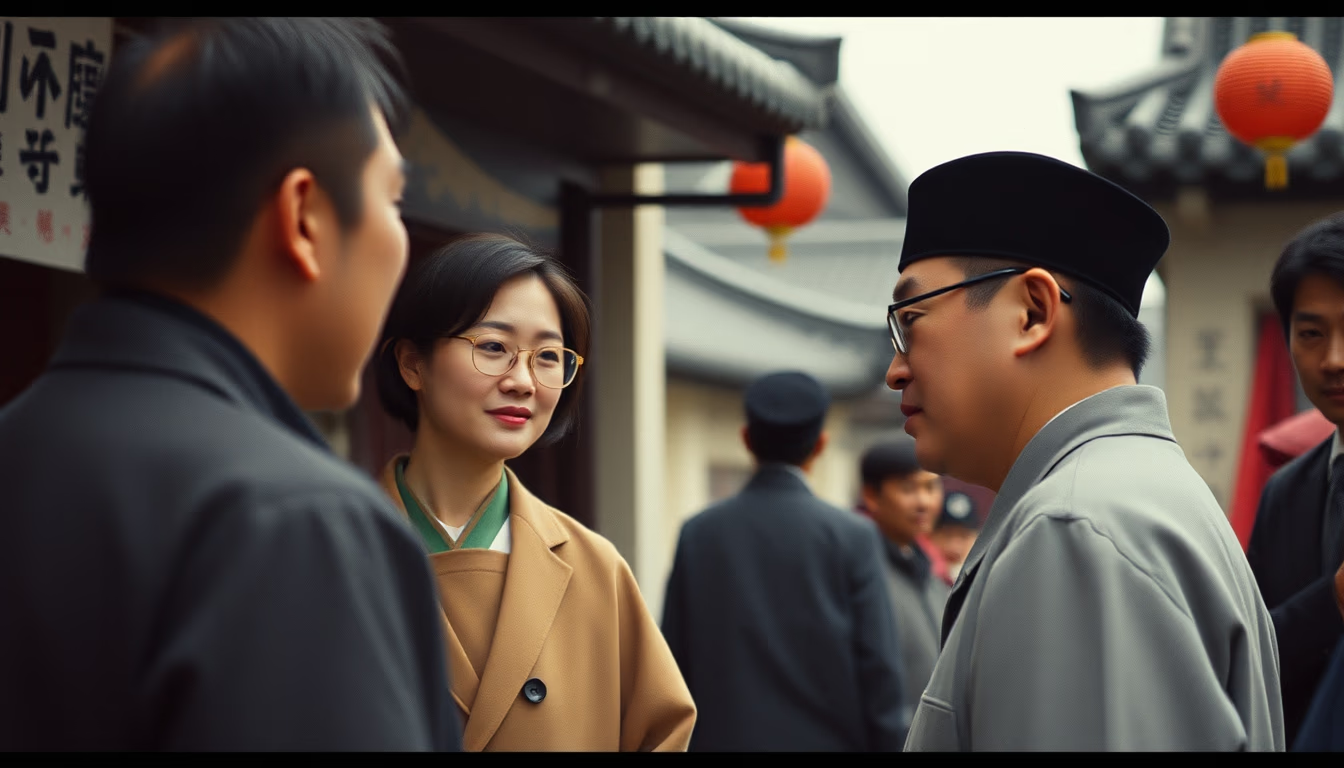
Hangul, the Korean alphabet created in the 15th century by King Sejong, is one of the most scientific and innovative writing systems in history.
About this subject
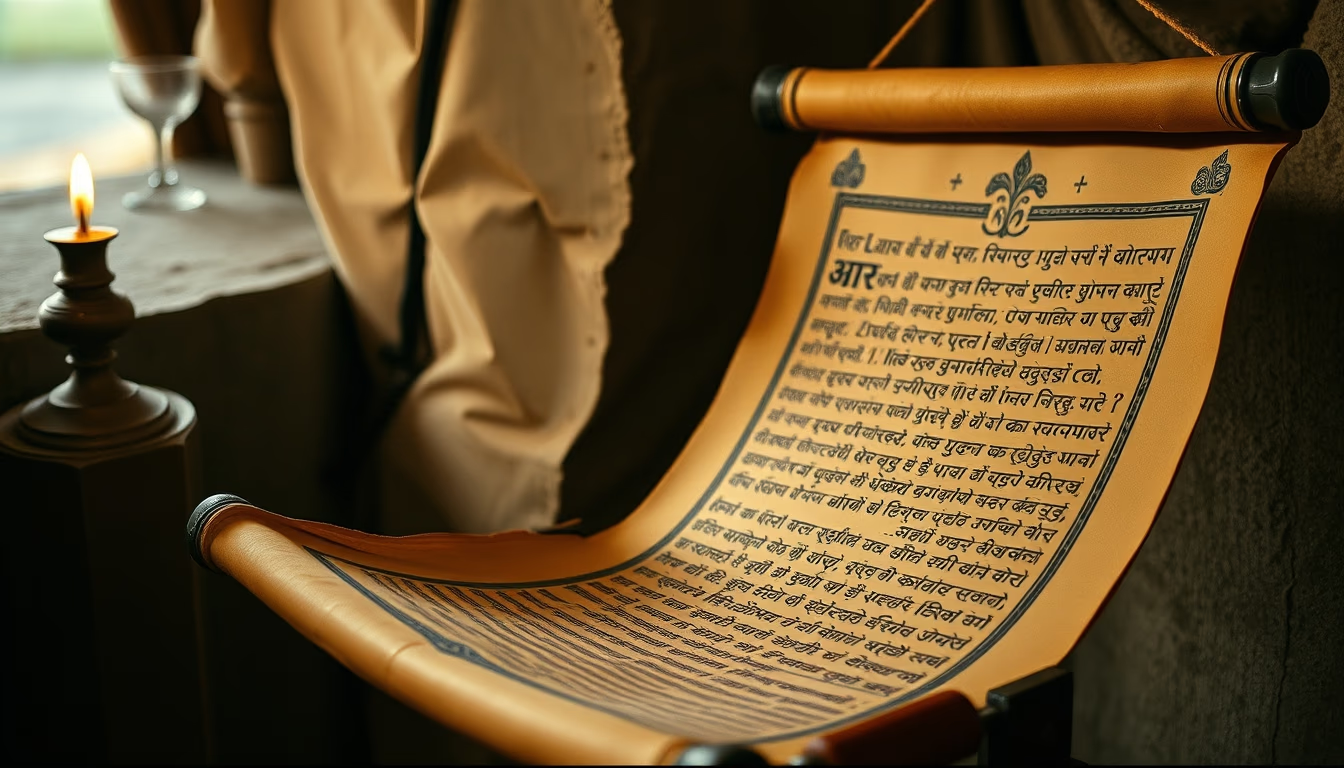
Hangul was promulgated in 1446 by King Sejong of the Joseon dynasty through the document Hunminjeongeum, meaning "The Correct Sounds for the Instruction of the People." Sejong recognized that Chinese characters were too difficult for most people and created a simple phonetic alphabet consisting of 28 original letters (now 24). Consonants were designed to imitate the shape of the speech organs: the tongue, palate, and throat. Vowels combine elements representing heaven, earth, and man, forming syllabic blocks that fit together perfectly.
Linguists consider Hangul's structure revolutionary. Each character is composed of an initial consonant, a vowel, and optionally a final consonant. This organization allows thousands of Korean sounds to be represented with just a few dozen symbols. The alphabet is so logical that it can be learned in a few hours, contributing to one of the world's highest literacy rates.
Culturally, Hangul is a symbol of resistance and identity. During the Japanese occupation (1910-1945), Korean language use was suppressed, but the alphabet survived and flourished after liberation. In 1997, the Hunminjeongeum manuscripts were inscribed on the UNESCO Memory of the World Register. Today, Hangul Day (October 9) is a national holiday in South Korea. The script has also spread globally with the Korean Wave, appearing in K-pop lyrics, e-sports team emblems, and even tattoos.
Currently, Hangul is used in both South and North Korea, with minor orthographic differences. Its versatility extends to the digital world: it is easily adapted to keyboards, fonts, and natural language processing algorithms. Korean-language pages account for a significant portion of the internet, and the alphabet is studied by linguists as an example of intentional design and efficiency.
Frequently Asked Questions
When and by whom was Hangul created?
Hangul was created in 1443 by King Sejong of the Joseon dynasty and promulgated in 1446 through the document Hunminjeongeum. Its purpose was to provide a writing system accessible to all Koreans, including the lower classes.
How is Hangul structured?
Hangul consists of 24 basic letters: 14 consonants and 10 vowels. Consonants are shaped based on the articulation organs, and vowels represent the principles of heaven, earth, and man. Letters are grouped into syllabic blocks.
What is the importance of Hangul in contemporary Korean culture?
Hangul is a symbol of national identity and cultural pride. It is celebrated on Hangul Day (October 9) and has been crucial for Korea's high literacy rate. Today, the alphabet drives the global spread of Korean culture through K-pop, dramas, and technology.
Direct URL
https://pub-c7d6a6ea828543ac903a74a341ccb2e1.r2.dev/imagens/hangul-korean-ancient-film-grain-authentic-fresh12.avifHow to credit
Include a visible link back to UtilizAí. Copy one of the snippets below:
<a href="https://xn--utiliza-eza.com/en/midia/imagens/hangul-korean-ancient-film-grain-authentic-fresh12">Hangul korean ancient</a> by <a href="https://xn--utiliza-eza.com">UtilizAí</a>, licensed under <a href="https://creativecommons.org/licenses/by/4.0/">CC BY 4.0</a>.
[Hangul korean ancient](https://xn--utiliza-eza.com/en/midia/imagens/hangul-korean-ancient-film-grain-authentic-fresh12) by [UtilizAí](https://xn--utiliza-eza.com), CC BY 4.0
License: CC-BY-4.0