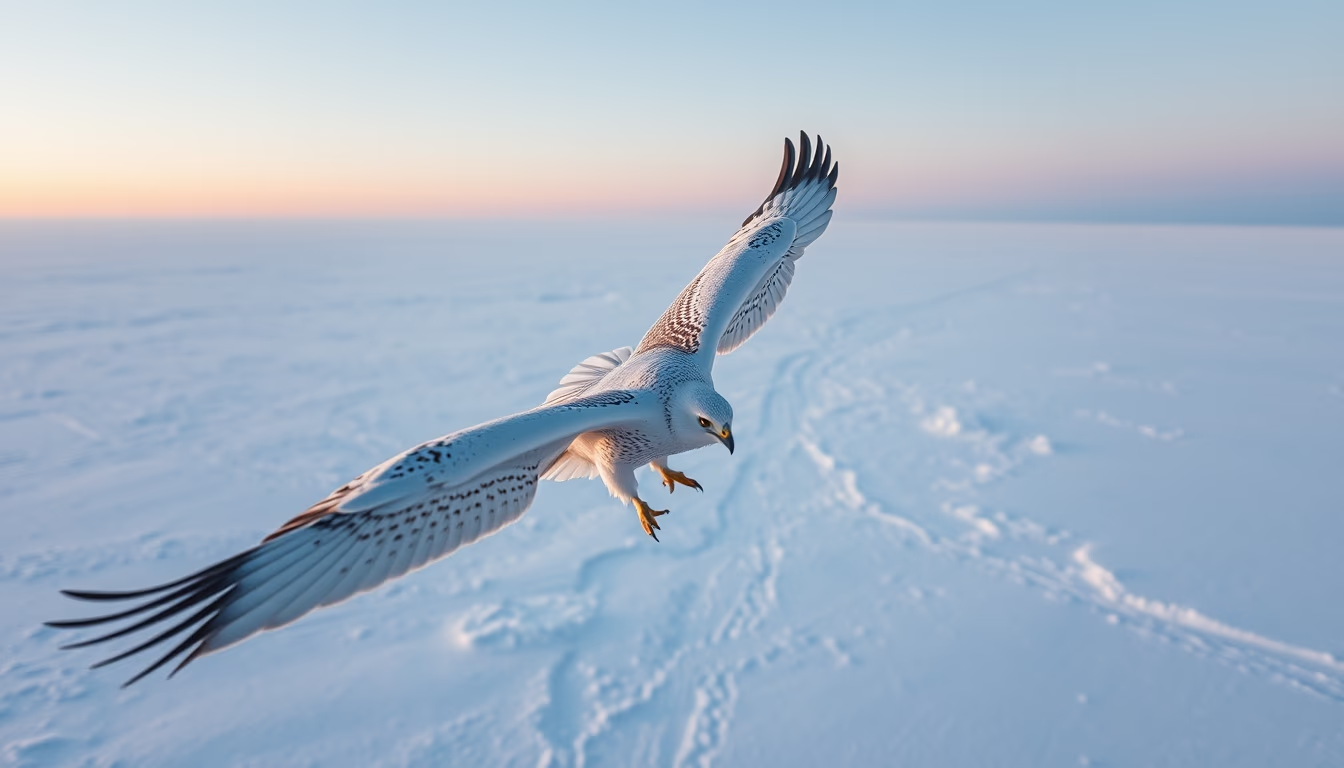
Gyrfalcon white snow
1344×768 · AVIF · CC BY 4.0
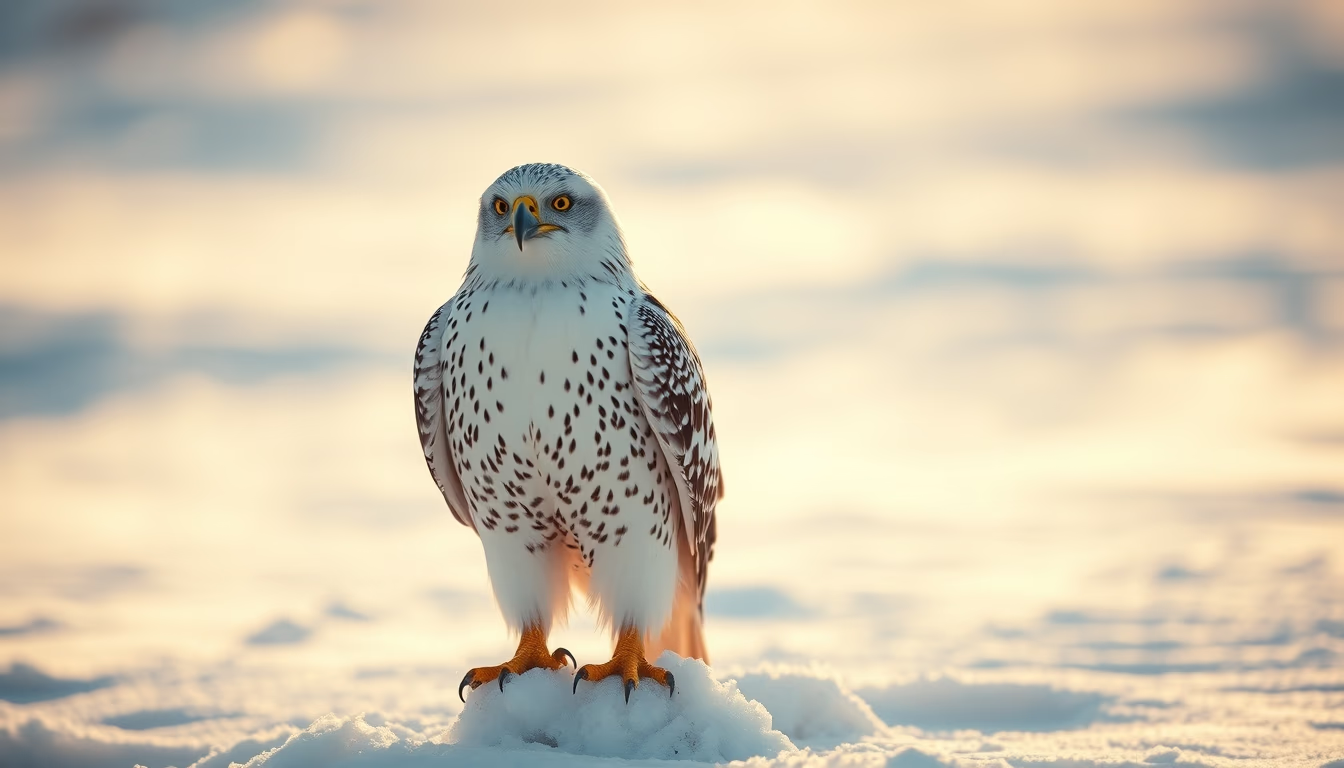
The white Gyrfalcon, the world's largest falcon, thrives in the Arctic and has been a symbol of power in medieval falconry.
About this subject
The Gyrfalcon (Falco rusticolus) is the largest falcon species on Earth, with a wingspan that can reach 1.6 meters. Its white plumage, known as the white morph, is an adaptation to the Arctic snow, where it inhabits regions such as Greenland, Canada, Iceland, and Norway. Unlike other falcons, the Gyrfalcon has feathers covering even its nostrils, protecting it from extreme cold. Its diet includes ptarmigans, ducks, and even seabirds, which it hunts in fast, low flights.
Historically, white Gyrfalcons were highly prized in medieval European falconry. Only kings and nobles were allowed to own them, making them symbols of status and power. Emperors and sultans traded specimens for gold and territories. Today, the species is protected by international laws, though it still suffers from climate change affecting its habitat and prey.
Biologically, the Gyrfalcon is an apex predator. Its exceptional eyesight allows it to spot prey from kilometers away. During winter, some individuals migrate to lower latitudes, but most remain in the Arctic. Interestingly, the white morph is more common in populations from Greenland and eastern Canada, while gray and brown morphs dominate in other areas.
The Gyrfalcon also holds cultural significance for the Inuit, who call it 'the great falcon'. Its feathers are used in traditional ceremonies. Despite its strength, the species is vulnerable to human disturbances such as oil exploration and uncontrolled tourism. Conservationists monitor its populations to ensure this magnificent predator continues to soar over the frozen northern skies.
Frequently Asked Questions
How large is the Gyrfalcon compared to other falcons?
The Gyrfalcon is the largest falcon in the world, with a wingspan of up to 1.6 meters and a weight reaching 2.1 kg. It is significantly larger than the Peregrine Falcon.
Why are white Gyrfalcons so rare and valuable?
The white morph is a rare genetic variation, more common in isolated Arctic populations. In medieval falconry, it was a symbol of royal status, often traded for gold.
How does the Gyrfalcon adapt to extreme Arctic cold?
It has dense plumage, feathered nostrils, and a fat layer for insulation. Its legs are feathered down to the talons to prevent heat loss.
Direct URL
https://pub-c7d6a6ea828543ac903a74a341ccb2e1.r2.dev/imagens/gyrfalcon-white-snow-cinematic-wide-shot-fresh16.avifHow to credit
Include a visible link back to UtilizAí. Copy one of the snippets below:
<a href="https://xn--utiliza-eza.com/en/midia/imagens/gyrfalcon-white-snow-cinematic-wide-shot-fresh16">Gyrfalcon white snow</a> by <a href="https://xn--utiliza-eza.com">UtilizAí</a>, licensed under <a href="https://creativecommons.org/licenses/by/4.0/">CC BY 4.0</a>.
[Gyrfalcon white snow](https://xn--utiliza-eza.com/en/midia/imagens/gyrfalcon-white-snow-cinematic-wide-shot-fresh16) by [UtilizAí](https://xn--utiliza-eza.com), CC BY 4.0
License: CC-BY-4.0