Gondola venice canal
1344×768 · AVIF · CC BY 4.0
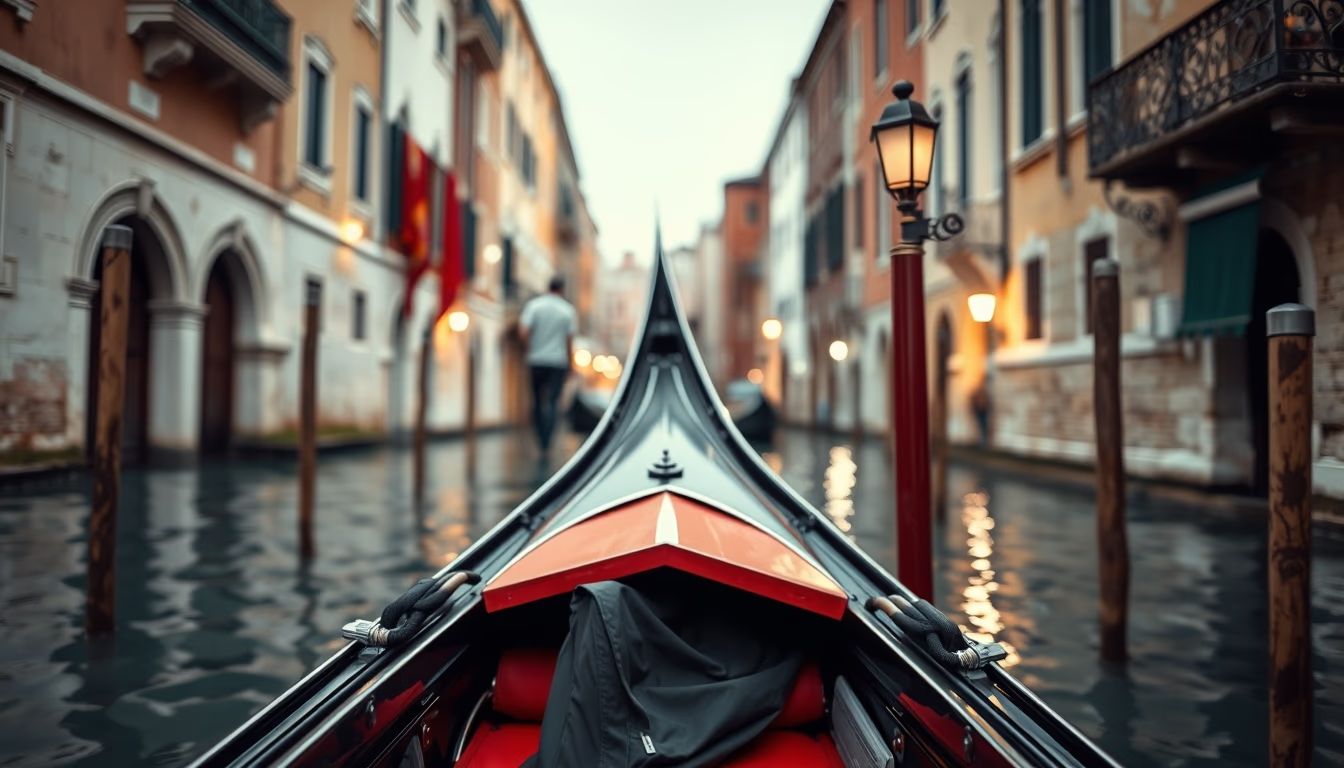
The Venetian gondola, an iconic symbol of Venice's canals, carries centuries of history and tradition in its asymmetrical structure and elegant design.
About this subject
The gondola is a typical Venetian boat, used for transportation through the city's canals. Its elongated, asymmetrical shape, about 11 meters long and 1.4 meters wide, is designed to navigate narrow, winding waterways with ease. The bow and stern are raised, and the left side is wider than the right to compensate for the gondolier's weight, who rows standing up. The tradition of the gondola dates back to the 11th century, but the current design was standardized in the 19th century. There are about 400 gondolas in operation in Venice today, far fewer than the thousands that existed in the 16th century when they were the main mode of transport. Currently, they are mainly used for tourists, on romantic rides or crossings in smaller canals.
The gondola is built in a shipyard called a squero, using eight different types of wood: elm, oak, lime, larch, walnut, mahogany, cherry, and fir. The construction process takes about two months. Each gondola has about 280 hand-carved pieces. The iron at the bow, called the ferro da gondola, has six teeth representing the six sestieri (districts) of Venice. The gondolier, now a predominantly male profession but open to women since 2010, must undergo rigorous training and licensing. The Gondoliers' Association regulates the activity.
The Grand Canal is Venice's main waterway, 3.8 km long, lined with historic palaces. Although the vaporetto is the most common public transport, the gondola is a cultural symbol immortalized by artists like Canaletto and mentioned in literature from Shakespeare to Thomas Mann. Unfortunately, rising sea levels and overtourism threaten the preservation of Venice and its gondolas. The city has implemented Mose barriers to protect against high tides that can damage the boats.
Frequently Asked Questions
How many gondolas are in Venice today?
There are about 400 gondolas in operation in Venice, a sharp decline from the thousands that existed in the 16th century.
How is a gondola built and what materials are used?
The gondola is built in a shipyard called a squero, using eight types of wood: elm, oak, lime, larch, walnut, mahogany, cherry, and fir. The process takes about two months.
What does the iron at the bow of the gondola represent?
The iron at the bow, called the ferro da gondola, has six teeth representing the six districts (sestieri) of Venice. It also serves as a counterweight and protection.
Direct URL
https://pub-c7d6a6ea828543ac903a74a341ccb2e1.r2.dev/imagens/gondola-venice-canal-studio-editorial-portrait-p9.avifHow to credit
Include a visible link back to UtilizAí. Copy one of the snippets below:
<a href="https://xn--utiliza-eza.com/en/midia/imagens/gondola-venice-canal-studio-editorial-portrait-p9">Gondola venice canal</a> by <a href="https://xn--utiliza-eza.com">UtilizAí</a>, licensed under <a href="https://creativecommons.org/licenses/by/4.0/">CC BY 4.0</a>.
[Gondola venice canal](https://xn--utiliza-eza.com/en/midia/imagens/gondola-venice-canal-studio-editorial-portrait-p9) by [UtilizAí](https://xn--utiliza-eza.com), CC BY 4.0
License: CC-BY-4.0