Geothermal plant steam
1344×768 · AVIF · CC BY 4.0
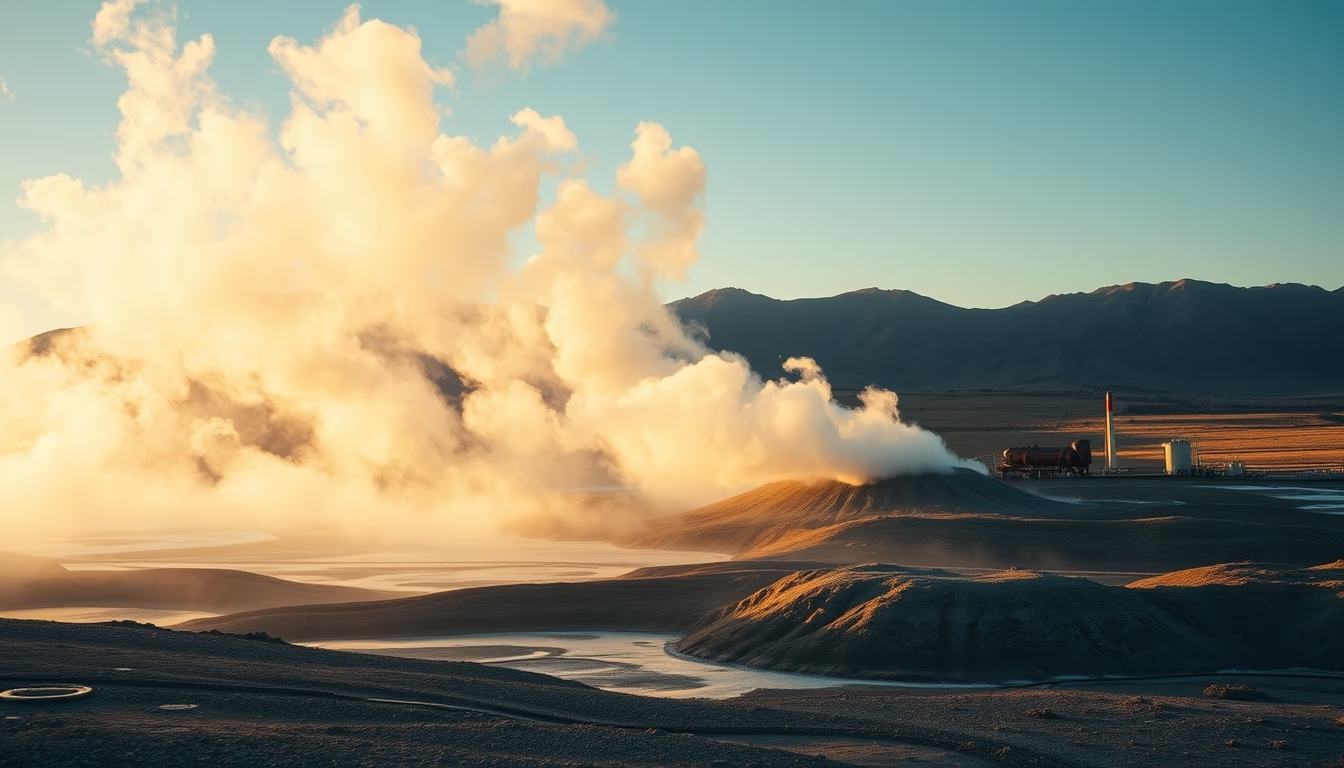
Geothermal power plants generate electricity by harnessing natural steam from underground, providing a constant and renewable energy source.
About this subject
The visible steam rising from cooling towers or production wells is the outward sign of Earth's internal heat. In a geothermal power plant, deep wells are drilled into underground aquifers heated by magma or hot rock. The hot water, often above 150°C, rises under pressure and, when released, flashes into steam that spins turbines connected to electric generators.
This type of plant is most common in tectonically active regions, such as the Pacific Ring of Fire. The United States has the world's largest geothermal complex, The Geysers in northern California, which produces about 1.5 GW. Iceland obtains roughly 25% of its electricity from geothermal sources, leveraging its abundant volcanic resources. Other notable countries include the Philippines, Indonesia, Kenya, and Italy, where the first experimental geothermal plant was built in 1904.
Geothermal energy provides reliable baseload power, with a capacity factor above 80%, much higher than solar or wind. However, its expansion is limited by geographic location and high drilling costs. Emissions of gases such as sulfur dioxide can occur but are controlled with condensate injection systems. Research into hot dry rock and enhanced geothermal systems (EGS) may expand its potential in the future.
Frequently Asked Questions
How does a geothermal power plant work?
Deep wells tap into underground reservoirs of hot water or steam. The steam is separated and directed to turbines to generate electricity, while the condensed water is reinjected into the reservoir to sustain the cycle.
What are the advantages of geothermal energy?
It is renewable, low-carbon, and provides baseload power 24/7 with a capacity factor above 80%. It requires less land than solar or wind farms and can create local jobs.
Are there geothermal plants in Brazil?
Brazil currently has no large-scale commercial geothermal plants, though research projects exist, such as in Caldas Novas (Goiás). The country has low-enthalpy geothermal potential for heating and spas.
Direct URL
https://pub-c7d6a6ea828543ac903a74a341ccb2e1.r2.dev/imagens/geothermal-plant-steam-magazine-editorial-p1.avifHow to credit
Include a visible link back to UtilizAí. Copy one of the snippets below:
<a href="https://xn--utiliza-eza.com/en/midia/imagens/geothermal-plant-steam-magazine-editorial-p1">Geothermal plant steam</a> by <a href="https://xn--utiliza-eza.com">UtilizAí</a>, licensed under <a href="https://creativecommons.org/licenses/by/4.0/">CC BY 4.0</a>.
[Geothermal plant steam](https://xn--utiliza-eza.com/en/midia/imagens/geothermal-plant-steam-magazine-editorial-p1) by [UtilizAí](https://xn--utiliza-eza.com), CC BY 4.0
License: CC-BY-4.0