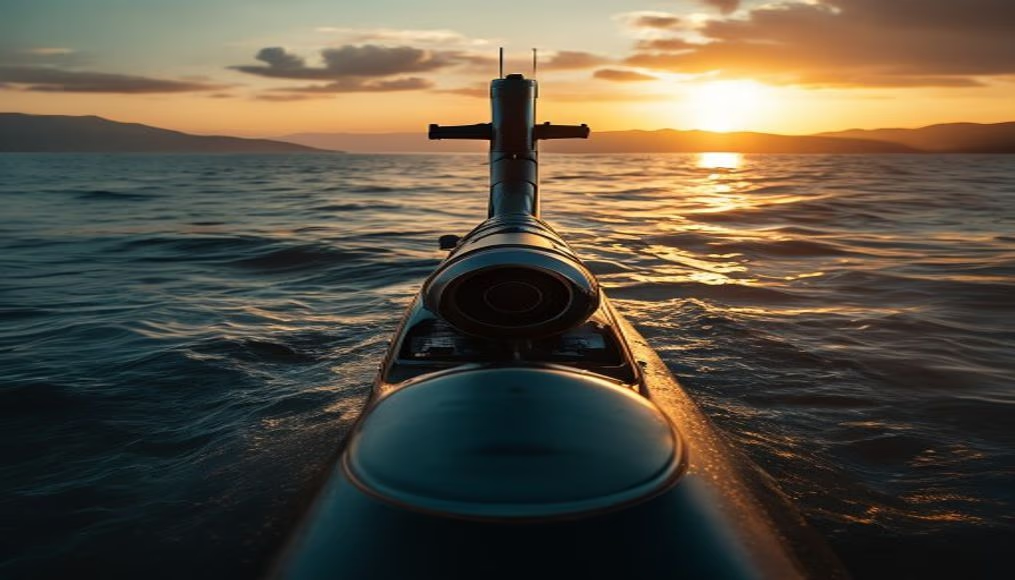
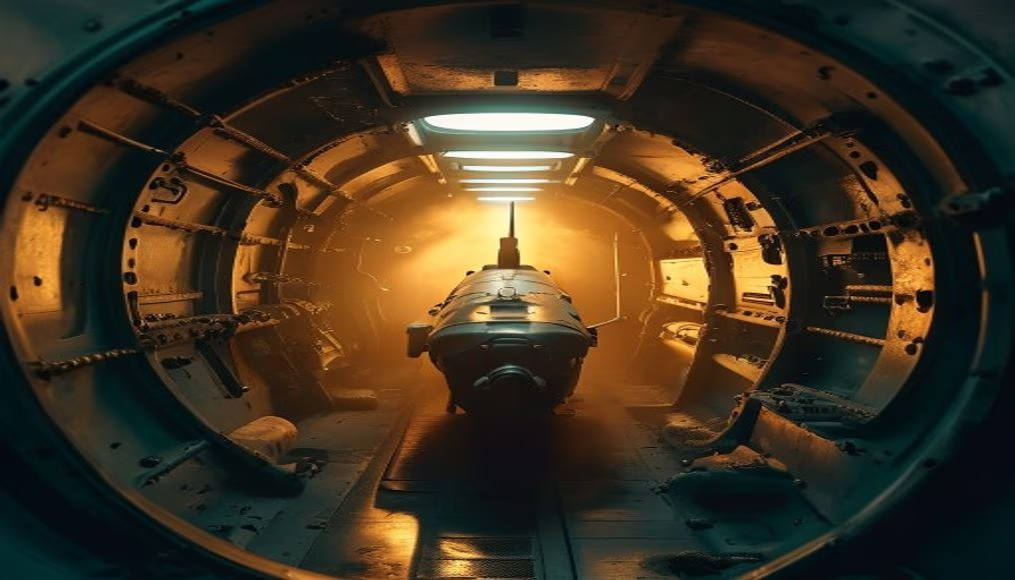
Galleon spanish ancient
1344×768 · AVIF · CC BY 4.0

Spanish galleons were warships and merchant vessels that dominated the seas between the 16th and 18th centuries, essential for transporting wealth from the Americas to Europe.
About this subject
Spanish galleons represent one of the most iconic ship types of the Age of Discovery. Developed from caravels and carracks, these vessels combined cargo capacity with firepower, becoming the backbone of the Spanish Treasure Fleet that transported gold, silver, and other colonial goods from the Americas to Spain. Typical galleons had three to four masts, a high forecastle, and an even higher aftercastle, features that made them easily recognizable.
Built mainly in Basque and Andalusian shipyards, galleons were constructed from robust woods like oak and pine. Their displacement ranged from 300 to 1,000 tons, with lengths of 30 to 50 meters. The crew could number up to 200 men, including sailors, soldiers, and gunners. Famous galleons include the "San José," which sank in 1708 with a cargo estimated at billions of dollars in gold and silver, and the "Nuestra Señora de Atocha," discovered in 1985 after centuries on the seabed.
The historical importance of galleons extends beyond trade. They were crucial for defending Spanish maritime routes against pirates and corsairs from England, France, and the Netherlands. The Battle of Lepanto (1571), though involving galleys, marked a transition to sailing ships. However, galleons faced challenges: they were slow and difficult to maneuver in storms, and many succumbed to hurricanes in the Caribbean. Still, their design influenced generations of warships until the advent of ironclads.
Interestingly, the term "galleon" may derive from the Italian "galeone," meaning large galley, but the ship was essentially a sailing vessel. Constructing these ships required advanced knowledge of naval carpentry and navigation. Today, replicas like the "Galeón Andalucía" travel the world, allowing the public to experience life on board. The image of an ancient Spanish galleon evokes not only adventure but a complex chapter of global history, marked by exploration, wealth, and conflict.
Frequently Asked Questions
What was the typical size of a Spanish galleon?
Galleons ranged from 300 to 1,000 tons displacement, with lengths of 30 to 50 meters and heights up to 50 meters. They could carry dozens of cannons and a crew of up to 200 people.
Why were Spanish galleons so important to Spain?
They were essential for transporting gold, silver, and other colonial goods from the Americas to Spain, forming the Treasure Fleet. They also protected these routes from pirates and rival powers, sustaining the Spanish economy for centuries.
Are there any original galleons preserved today?
No original galleons survive intact. However, sailing replicas like the Galeón Andalucía have been built based on historical plans, allowing the public to see what these ships were like. Wrecked remains, such as the San José, continue to be studied by archaeologists.
Direct URL
https://pub-c7d6a6ea828543ac903a74a341ccb2e1.r2.dev/imagens/galleon-spanish-ancient-studio-editorial-portrait-p11.avifHow to credit
Include a visible link back to UtilizAí. Copy one of the snippets below:
<a href="https://xn--utiliza-eza.com/en/midia/imagens/galleon-spanish-ancient-studio-editorial-portrait-p11">Galleon spanish ancient</a> by <a href="https://xn--utiliza-eza.com">UtilizAí</a>, licensed under <a href="https://creativecommons.org/licenses/by/4.0/">CC BY 4.0</a>.
[Galleon spanish ancient](https://xn--utiliza-eza.com/en/midia/imagens/galleon-spanish-ancient-studio-editorial-portrait-p11) by [UtilizAí](https://xn--utiliza-eza.com), CC BY 4.0
License: CC-BY-4.0