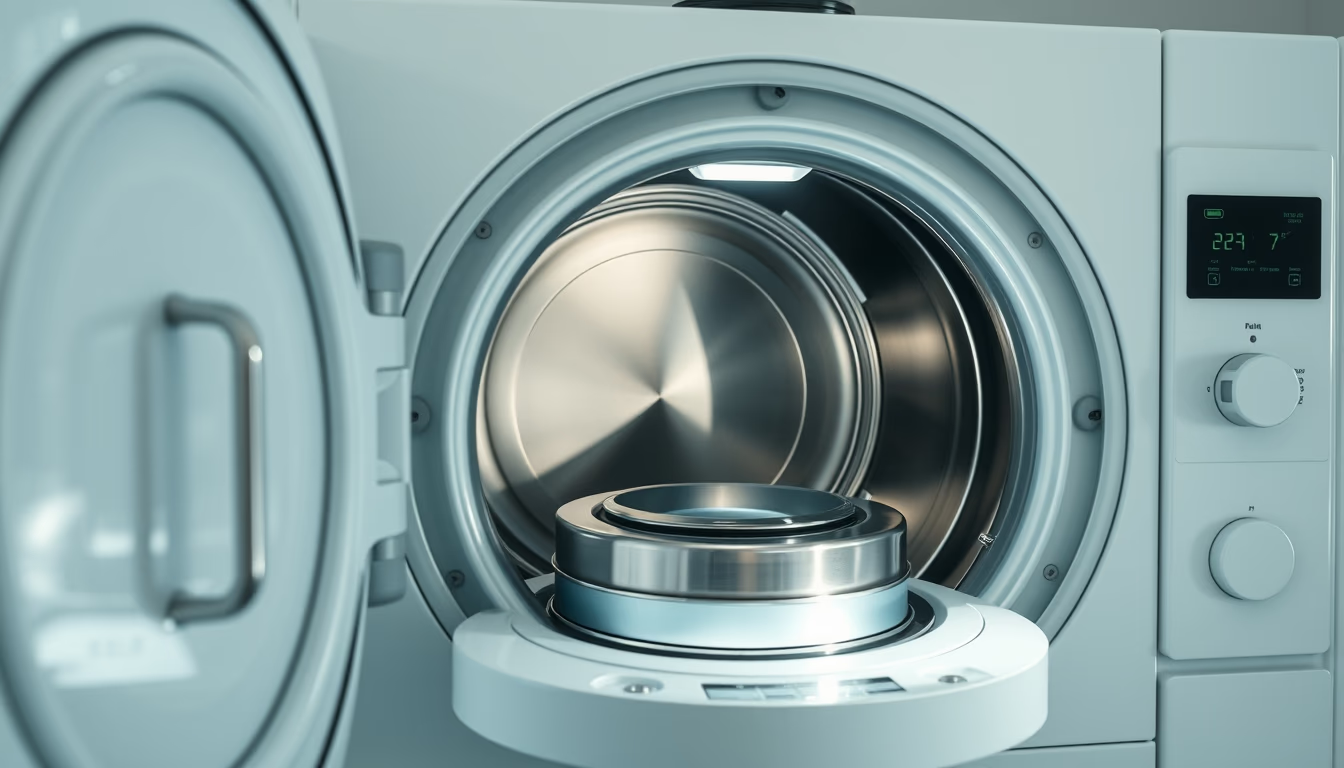
Fume hood chemistry
1344×768 · AVIF · CC BY 4.0

The fume hood is essential laboratory equipment that protects chemists from toxic vapors and hazardous reactions.
About this subject
A fume hood, also called a chemical hood or exhaust hood, is a local ventilation device that removes hazardous gases, vapors, and particles from the work area. Its operating principle relies on drawing contaminated air through a front opening, typically equipped with a sliding glass sash that allows access to substances without direct exposure. International standards such as ANSI/ASHRAE 110 and EN 14175 define performance and safety criteria for fume hoods.
Historically, the use of fume hoods dates back to the early days of modern chemistry, when scientists like Robert Boyle and Antoine Lavoisier improvised ventilation systems to handle toxic gases. However, the first truly functional fume hood was patented in 1923 by William H. Walker, an American chemical engineer. Since then, it has evolved to include HEPA filters, airflow monitoring systems, and corrosion-resistant materials such as polypropylene and stainless steel.
The importance of the fume hood extends beyond personal protection. It also prevents cross-contamination of experiments and the spread of volatile substances to other laboratory areas. In many institutions, proper use of a fume hood is mandatory when handling volatile organic compounds, concentrated acids, and biological hazards. Regular maintenance, including periodic checks of face velocity and filter replacement, is critical to ensure effectiveness.
Interestingly, fume hoods have inspired architectural designs in modern laboratories, with integrated central exhaust systems and intelligent sensors that automatically adjust airflow. The presence of a fume hood is one of the first indicators of a well-equipped and safe laboratory, and it is a recurring topic in chemical safety training.
Frequently Asked Questions
What is the difference between a fume hood and a biological safety cabinet?
A fume hood protects the user from toxic chemicals by exhausting vapors outside. A biological safety cabinet protects both the user and the sample using HEPA filters to trap biological particles. Airflow also differs: fume hoods exhaust air outdoors, while safety cabinets may recirculate a portion.
How can I tell if a fume hood is working properly?
Check the airflow monitor, which should indicate a face velocity between 0.4 and 0.6 m/s (80 to 120 feet per minute) per standards. Also, perform smoke tests periodically to see if air is drawn in and there are no leaks. Preventive maintenance should include filter inspections and exhaust system checks.
Is it safe to store chemicals inside a fume hood?
No, it is not recommended. The fume hood should be used only during handling of hazardous substances. Storing items inside can obstruct airflow, reduce system efficiency, and create risks of vapor accumulation. Chemicals should be stored in appropriate ventilated cabinets.
Direct URL
https://pub-c7d6a6ea828543ac903a74a341ccb2e1.r2.dev/imagens/fume-hood-chemistry-rembrandt-lighting-dramatic-shadows-fresh11.avifHow to credit
Include a visible link back to UtilizAí. Copy one of the snippets below:
<a href="https://xn--utiliza-eza.com/en/midia/imagens/fume-hood-chemistry-rembrandt-lighting-dramatic-shadows-fresh11">Fume hood chemistry</a> by <a href="https://xn--utiliza-eza.com">UtilizAí</a>, licensed under <a href="https://creativecommons.org/licenses/by/4.0/">CC BY 4.0</a>.
[Fume hood chemistry](https://xn--utiliza-eza.com/en/midia/imagens/fume-hood-chemistry-rembrandt-lighting-dramatic-shadows-fresh11) by [UtilizAí](https://xn--utiliza-eza.com), CC BY 4.0
License: CC-BY-4.0