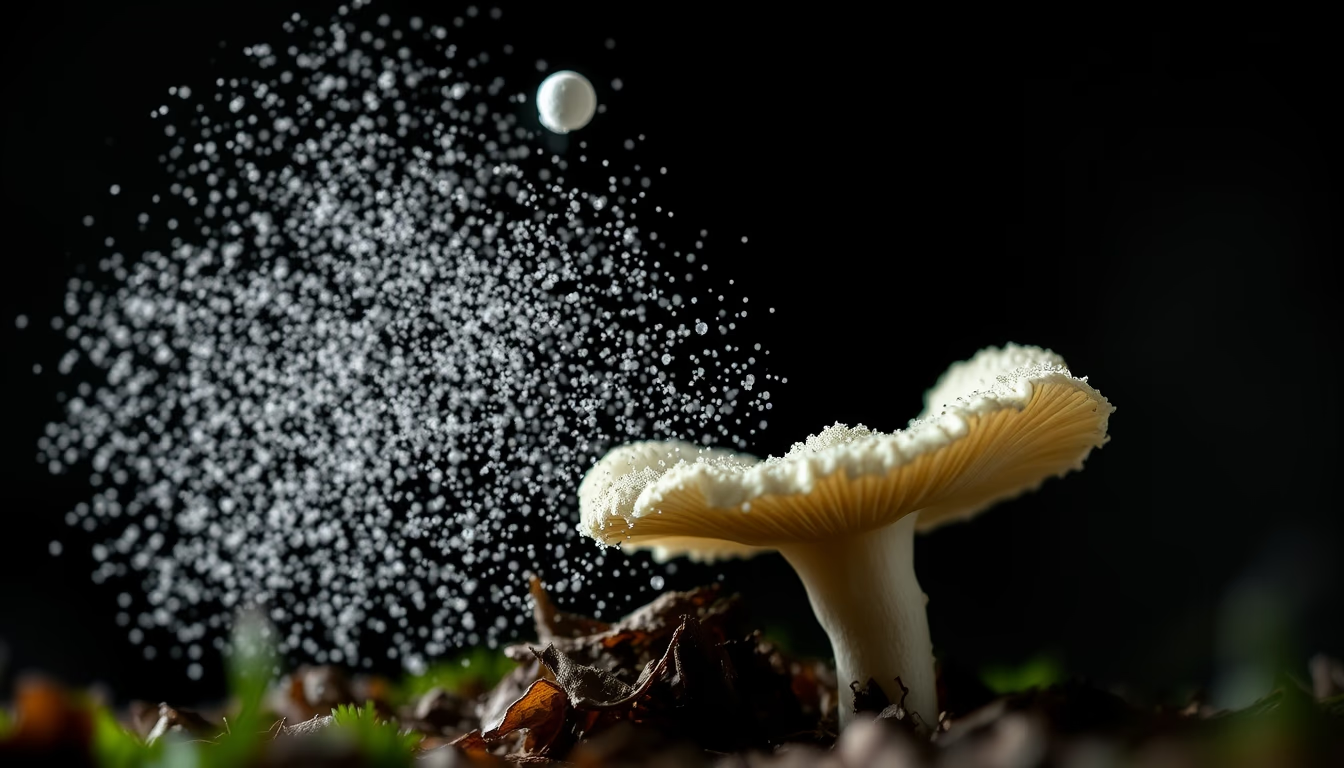
Fly agaric forest floor
1344×768 · AVIF · CC BY 4.0

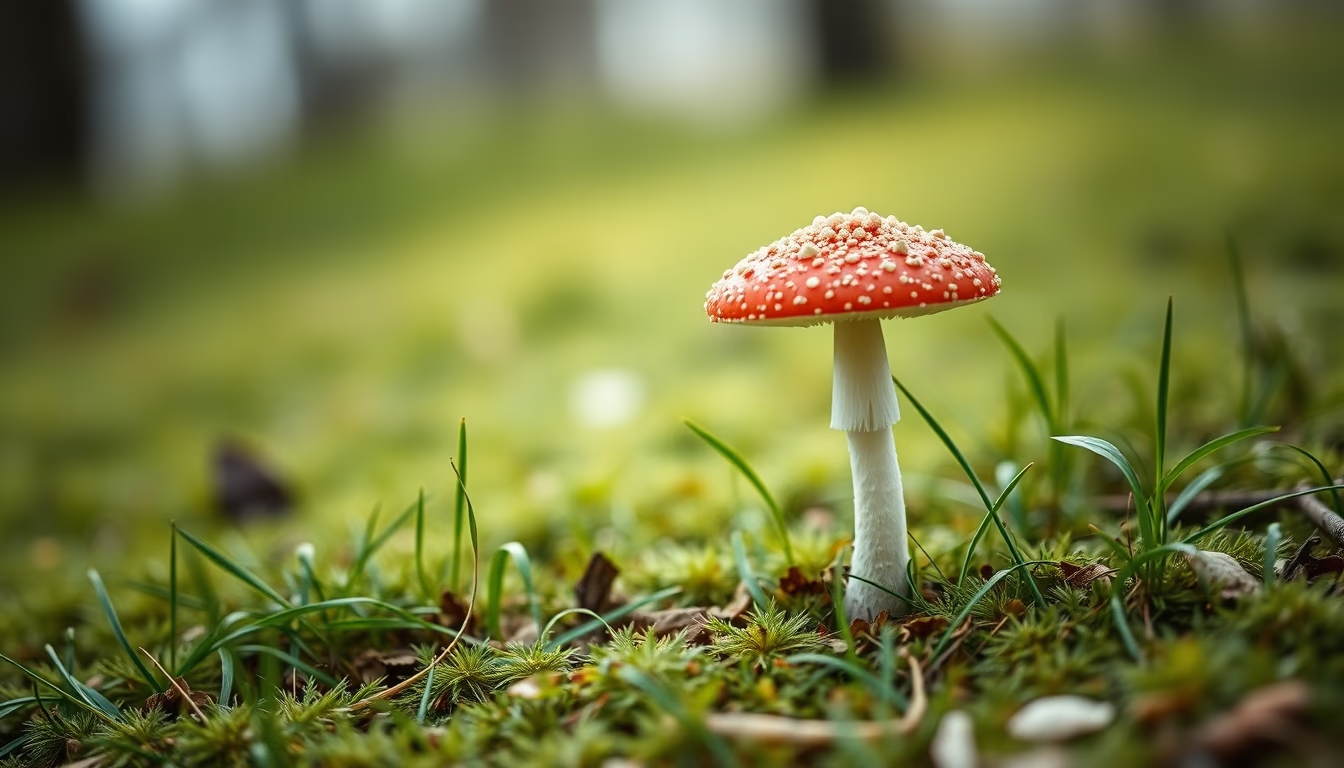
Amanita muscaria, the fly agaric mushroom, on a forest floor, highlighting its red cap with white spots and its ecological and cultural significance.
About this subject
Amanita muscaria, commonly known as the fly agaric, is a fungus easily recognized by its bright red cap adorned with white warts. Belonging to the family Amanitaceae, this species is native to temperate and boreal regions of the Northern Hemisphere but has been introduced elsewhere, including Brazil, where it grows in association with trees like pines and birches through mycorrhizal symbiosis.
Ecologically, the fly agaric plays a vital role in nutrient cycling within forests, aiding in the decomposition of organic matter and forming symbiotic relationships with tree roots. Its life cycle involves an underground mycelium that, under proper moisture and temperature, produces the aboveground mushrooms. The presence of moss and leaf litter on the forest floor is typical habitat for this species.
Culturally, Amanita muscaria is renowned for its psychoactive properties, containing compounds such as ibotenic acid and muscimol. In Siberia, shamans used the mushroom in rituals to induce altered states of consciousness. Its iconic image is also associated with gnomes and Santa Claus in European Christmas traditions, stemming from its striking appearance. Despite historical use, ingestion is dangerous: the fungus is toxic and can cause symptoms like nausea, hallucinations, and confusion, requiring medical attention in case of poisoning.
The tilt-shift technique applied to the image creates a miniature effect, giving the mushroom a scale reminiscent of a fairy tale scene. This visual feature does not alter biological information but invites the viewer to appreciate the details of the cap's texture and warts, as well as the surrounding environment with moss and dry leaves forming a natural carpet.
Frequently Asked Questions
Is Amanita muscaria poisonous?
Yes, the fly agaric is toxic. Although not usually lethal, ingestion can cause symptoms such as nausea, vomiting, hallucinations, and confusion. Medical attention is recommended in case of poisoning.
Where is Amanita muscaria found?
The mushroom is native to temperate regions of the Northern Hemisphere but has been introduced to many countries, including Brazil, where it grows under pines and eucalyptus trees, typically in acidic, moist soils.
Why is it called fly agaric?
The name derives from its historical use as an insecticide. Pieces of the mushroom were placed in milk to attract and kill flies, due to its neurotoxic properties.
Direct URL
https://pub-c7d6a6ea828543ac903a74a341ccb2e1.r2.dev/imagens/fly-agaric-forest-floor-tilt-shift-miniature-p5.avifHow to credit
Include a visible link back to UtilizAí. Copy one of the snippets below:
<a href="https://xn--utiliza-eza.com/en/midia/imagens/fly-agaric-forest-floor-tilt-shift-miniature-p5">Fly agaric forest floor</a> by <a href="https://xn--utiliza-eza.com">UtilizAí</a>, licensed under <a href="https://creativecommons.org/licenses/by/4.0/">CC BY 4.0</a>.
[Fly agaric forest floor](https://xn--utiliza-eza.com/en/midia/imagens/fly-agaric-forest-floor-tilt-shift-miniature-p5) by [UtilizAí](https://xn--utiliza-eza.com), CC BY 4.0
License: CC-BY-4.0