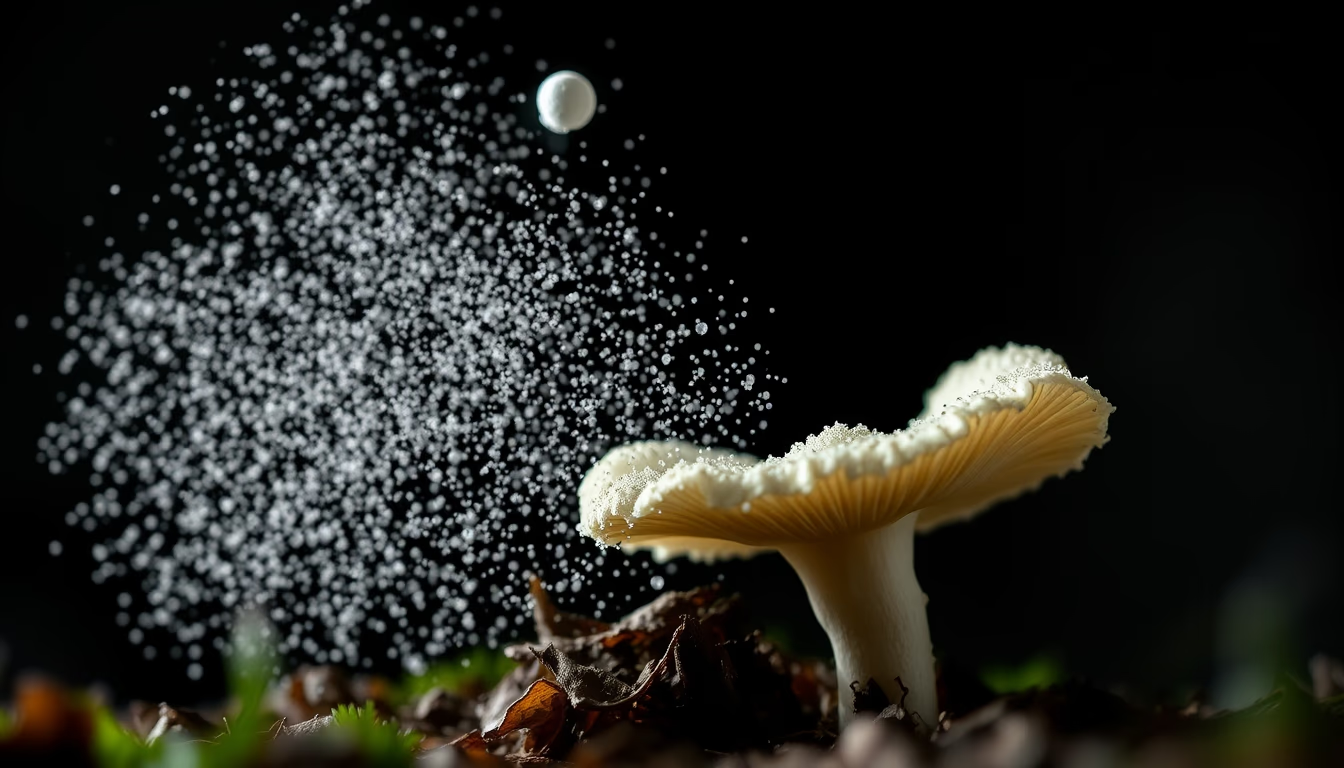
Fly agaric forest floor
1344×768 · AVIF · CC BY 4.0

O cogumelo Amanita muscaria, conhecido como agário-das-moscas, é um dos fungos mais icônicos do mundo, frequentemente associado a florestas temperadas e boreais.
Sobre o tema
O Amanita muscaria, popularmente chamado de agário-das-moscas ou cogumelo-das-moscas, pertence à família Amanitaceae. É reconhecido por seu chapéu vermelho vivo coberto por pintas brancas (restos do véu universal), que podem ser removidas pela chuva ou com o tempo. Esse fungo forma associações micorrízicas com raízes de árvores, principalmente bétulas, pinheiros e abetos, sendo comum em florestas temperadas e boreais do Hemisfério Norte. Também foi introduzido acidentalmente em regiões como Austrália, Nova Zelândia e América do Sul, incluindo o Brasil, onde aparece em áreas de clima ameno ou com árvores exóticas. Sua toxicidade se deve a compostos como ácido ibotênico e muscimol, que provocam efeitos psicoativos e alucinógenos, mas raramente são fatais. Historicamente, foi usado por povos siberianos e lapões em rituais xamânicos, além de ter forte presença no folclore europeu, associado a fadas e duendes. Embora impróprio para consumo, pode ser preparado por processos específicos para reduzir sua toxicidade, prática comum em algumas culturas da Europa Oriental. O nome "fly agaric" deriva de seu uso antigo como inseticida, pois era colocado em leite para atrair e matar moscas.
Perguntas frequentes
O cogumelo Amanita muscaria é comestível?
Não é recomendado. Contém toxinas neuroativas que causam intoxicação. Embora alguns métodos de preparo possam reduzir a toxicidade, o consumo é arriscado e pode levar a alucinações, náuseas e outros sintomas.
Onde o agário-das-moscas é encontrado?
É comum em florestas temperadas e boreais do Hemisfério Norte, associado a bétulas, pinheiros e abetos. Foi introduzido em outras regiões, como partes da América do Sul, Austrália e Nova Zelândia.
Quais os efeitos do consumo de Amanita muscaria?
Os efeitos incluem alucinações visuais e auditivas, sonolência, confusão mental e, em casos extremos, convulsões. O início ocorre em 30 a 90 minutos e pode durar várias horas.
URL direta
https://pub-c7d6a6ea828543ac903a74a341ccb2e1.r2.dev/imagens/fly-agaric-forest-floor-long-exposure-p2.avifComo creditar
Inclua um link visível de volta pro UtilizAí. Copie um dos snippets abaixo:
<a href="https://xn--utiliza-eza.com/midia/imagens/fly-agaric-forest-floor-long-exposure-p2">Fly agaric forest floor</a> by <a href="https://xn--utiliza-eza.com">UtilizAí</a>, licensed under <a href="https://creativecommons.org/licenses/by/4.0/">CC BY 4.0</a>.
[Fly agaric forest floor](https://xn--utiliza-eza.com/midia/imagens/fly-agaric-forest-floor-long-exposure-p2) by [UtilizAí](https://xn--utiliza-eza.com), CC BY 4.0
Licença: CC-BY-4.0