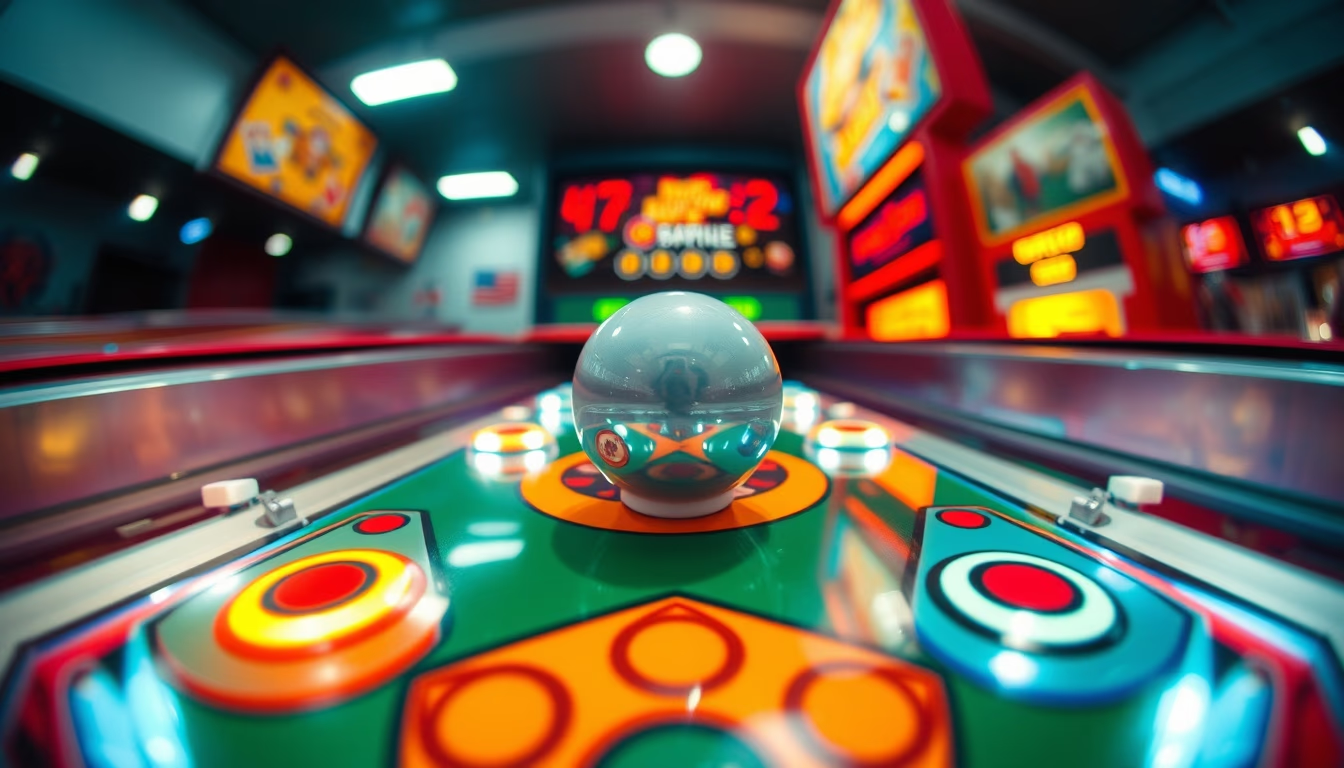
Flippers pinball closeup
1344×768 · AVIF · CC BY 4.0
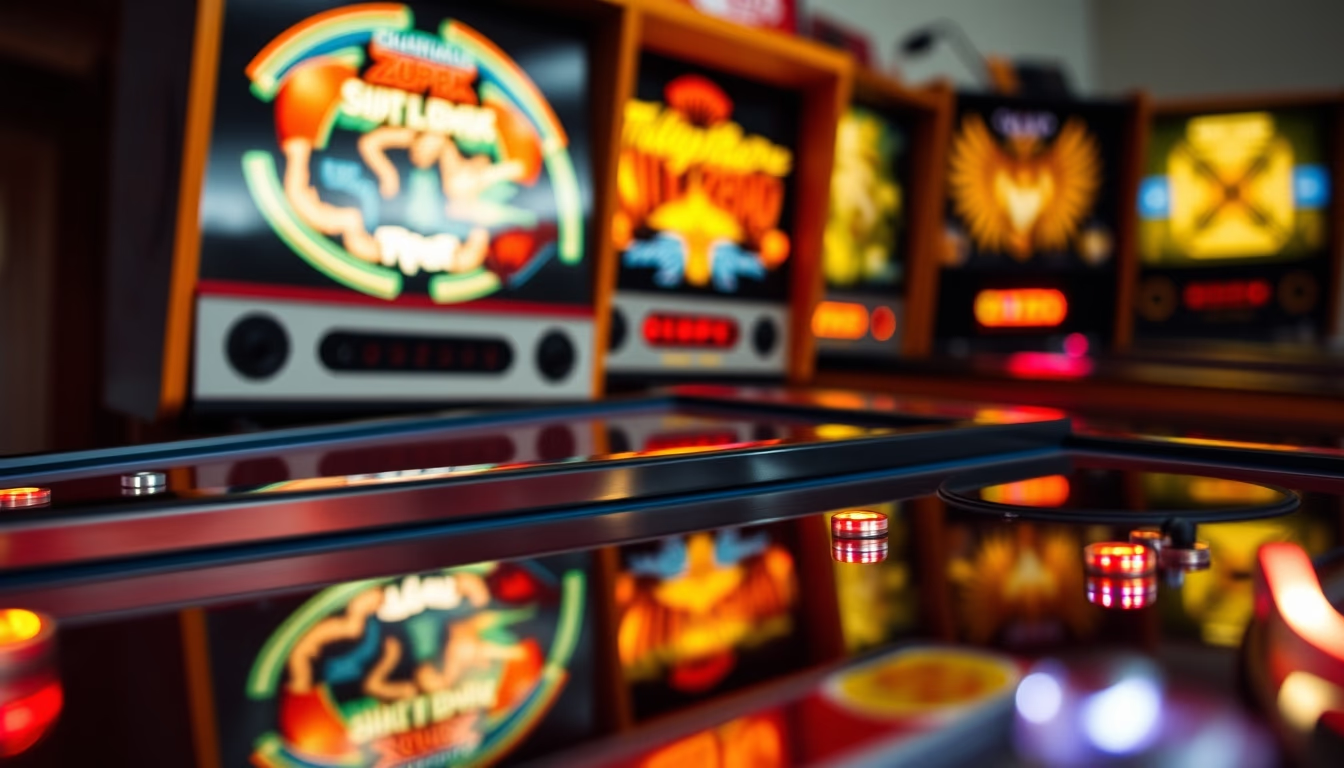
Pinball flippers: the essential mechanism that turned the game from mere luck into skill. Learn about its history and operation.
About this subject
Flippers, also known as paddles, are fundamental components of pinball machines. Introduced in 1947 by Harry Mabs in the game 'Humpty Dumpty', they revolutionized the industry by allowing players to actively hit the ball instead of just watching it. Before that, pinball games were purely mechanical and luck-based, with the ball rolling down an inclined field without player intervention. The innovation of flippers marked the birth of modern pinball as a game of skill and strategy.
Each flipper is activated by a solenoid or linear actuator, controlled by a lateral button on the machine. The movement is fast and precise, capable of propelling the ball at considerable speeds. Typical setups include two flippers at the bottom of the playfield, but more complex machines may have three or more, positioned at different angles to create varied challenges. Durability is crucial; flippers constantly suffer wear from steel ball impacts. Therefore, many manufacturers use resistant metal alloys and special coatings to extend their lifespan.
Culturally, pinball peaked in the 1970s and 1980s, becoming an icon of arcades. In Brazil, machines were popular in bars and snack bars, often smuggled due to import restrictions. Although video games reduced their presence, pinball maintains a dedicated fan base, with world tournaments and collectors restoring vintage machines. Maintaining flippers is an art: adjusting tension, alignment, and electrical contact sensitivity can turn a mediocre machine into an exceptional gaming experience.
Interesting fact: the term 'flipper' originates from the English verb 'to flip', meaning to flick or turn quickly, a perfect description of the paddle's rapid motion. Famous machines like 'The Addams Family' (1992) or 'Medieval Madness' (1997) are examples where flipper placement and angle are meticulously calibrated to create unique and memorable gameplay flows.
Frequently Asked Questions
Who invented pinball flippers?
Pinball flippers were invented by Harry Mabs in 1947 for the game Humpty Dumpty, manufactured by Gottlieb. This addition transformed pinball from a game of chance into a game of skill.
How do flippers work?
Each flipper is driven by a solenoid that, when a side button is pressed, quickly pushes the metal lever. The movement is short and powerful, allowing the ball to be hit with precision.
Why did pinball lose popularity?
The decline of pinball came mainly with the rise of home video games and digital arcades in the 1990s. However, there are still active communities of collectors and tournaments, keeping pinball culture alive.
Direct URL
https://pub-c7d6a6ea828543ac903a74a341ccb2e1.r2.dev/imagens/flippers-pinball-closeup-magazine-editorial-fresh8.avifHow to credit
Include a visible link back to UtilizAí. Copy one of the snippets below:
<a href="https://xn--utiliza-eza.com/en/midia/imagens/flippers-pinball-closeup-magazine-editorial-fresh8">Flippers pinball closeup</a> by <a href="https://xn--utiliza-eza.com">UtilizAí</a>, licensed under <a href="https://creativecommons.org/licenses/by/4.0/">CC BY 4.0</a>.
[Flippers pinball closeup](https://xn--utiliza-eza.com/en/midia/imagens/flippers-pinball-closeup-magazine-editorial-fresh8) by [UtilizAí](https://xn--utiliza-eza.com), CC BY 4.0
License: CC-BY-4.0