Fishing trawler sea
1344×768 · AVIF · CC BY 4.0
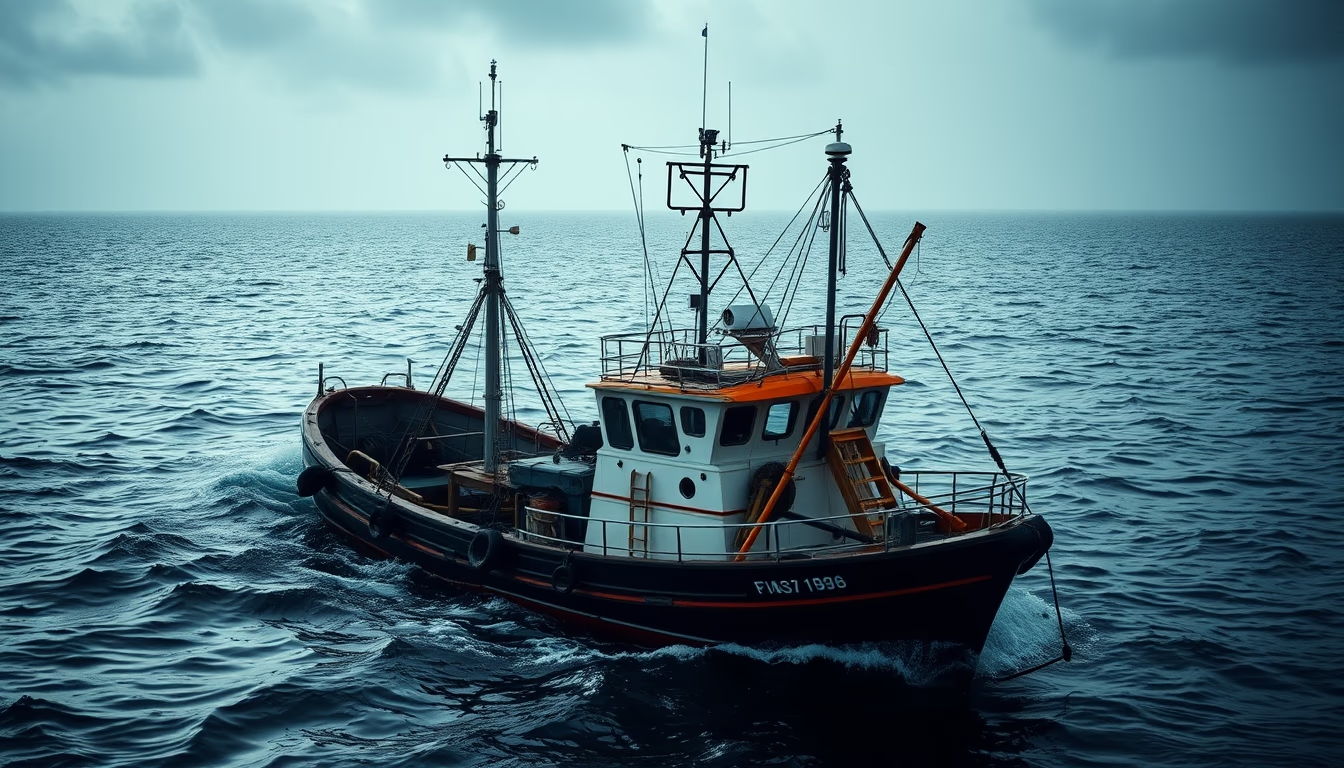
Fishing trawler at sea: industrial vessels that sweep the oceans, responsible for a large share of global fish catch, but also at the center of sustainability debates.
About this subject
A fishing trawler is a vessel designed to tow a trawl net, a large funnel-shaped net that can be dragged along the seabed (bottom trawling) or through midwater (pelagic trawling). This method accounts for about 25% of the world's marine fish catch, according to the FAO. Bottom trawling is particularly controversial due to its impact on seafloor habitats, crushing corals and disturbing sediments, while also catching non-target species known as bycatch. Pelagic trawling targets species like tuna and mackerel and generally has less physical impact on the ecosystem. Trawlers range from small inshore boats to large factory ships that process and freeze catch on board, allowing trips lasting weeks.
Environmental concerns have led to stricter regulations and technological innovations. Bycatch reduction devices (BRDs) and turtle excluder devices (TEDs) are now mandatory in many fisheries. The United Nations has called for a ban on bottom trawling in vulnerable marine ecosystems, particularly in international waters. Some countries have implemented marine protected areas (MPAs) where trawling is prohibited. The European Union's Common Fisheries Policy imposes quotas and effort limits to prevent overfishing. Despite these measures, illegal, unreported and unregulated (IUU) trawling remains a problem, especially in West Africa and the South China Sea.
The history of trawling dates back to the 14th century in Europe, but modern trawlers emerged with steam power in the late 19th century. The introduction of otter boards (trawl doors) in the 1890s revolutionized net opening. Today, advanced sonar and GPS allow precise net positioning. The largest trawlers, like those in the Russian or Chinese fleets, can be over 100 meters long and freeze thousands of tons of fish per trip. However, the industry faces pressure from climate change, which alters fish distribution, and from the rise of aquaculture, which now supplies more than half of all fish for human consumption. Balancing economic viability with ecological responsibility is the key challenge ahead.
Frequently Asked Questions
What is a fishing trawler and how does it work?
A fishing trawler is a vessel that tows a large funnel-shaped net (trawl) through the water, either along the seabed (bottom trawling) or in midwater (pelagic trawling). The net opening is maintained by otter boards or hydrodynamic devices.
What are the environmental impacts of trawling?
Bottom trawling destroys benthic habitats such as cold-water corals and reefs, and produces high levels of bycatch (unintended capture of turtles, dolphins, seabirds). Global bycatch discards are estimated at 40 million tons annually. Pelagic trawling has less seafloor impact but still catches non-target species.
Is there sustainable trawling?
Yes, practices like larger mesh sizes, turtle excluder devices (TEDs), marine protected areas, and MSC certification help mitigate impacts. Well-managed pelagic trawl fisheries can be more sustainable than bottom trawling. Consumers can look for sustainability labels.
Direct URL
https://pub-c7d6a6ea828543ac903a74a341ccb2e1.r2.dev/imagens/fishing-trawler-sea-fine-art-photography-p4.avifHow to credit
Include a visible link back to UtilizAí. Copy one of the snippets below:
<a href="https://xn--utiliza-eza.com/en/midia/imagens/fishing-trawler-sea-fine-art-photography-p4">Fishing trawler sea</a> by <a href="https://xn--utiliza-eza.com">UtilizAí</a>, licensed under <a href="https://creativecommons.org/licenses/by/4.0/">CC BY 4.0</a>.
[Fishing trawler sea](https://xn--utiliza-eza.com/en/midia/imagens/fishing-trawler-sea-fine-art-photography-p4) by [UtilizAí](https://xn--utiliza-eza.com), CC BY 4.0
License: CC-BY-4.0