Fish hatchery raceways
1344×768 · AVIF · CC BY 4.0

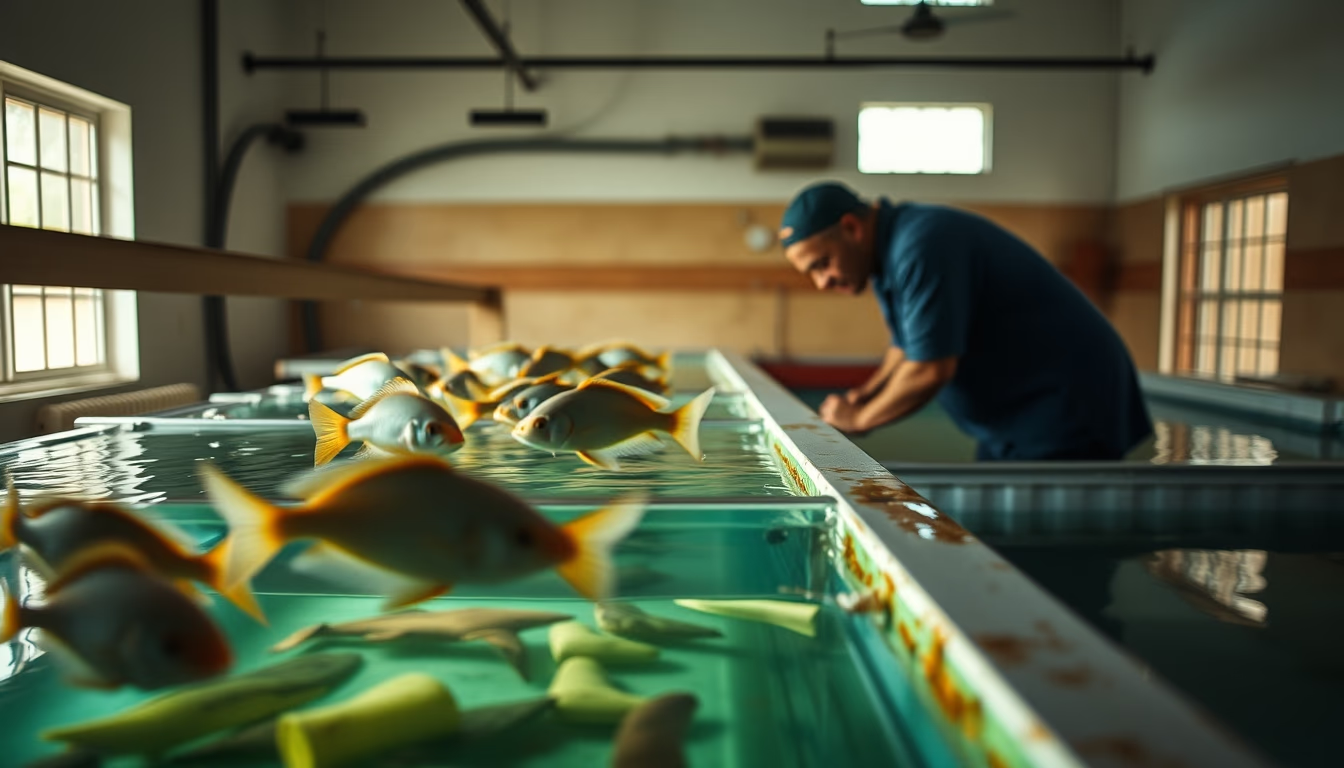
Raceways are rectangular channels used in intensive fish farming, featuring continuous water flow and high stocking densities.
About this subject
Raceways are intensive aquaculture systems widely used in modern fish farming. They consist of long, narrow channels, typically made of concrete or fiberglass, through which water flows continuously, ensuring constant renewal and waste removal. This method allows high stocking densities, up to 30, 50 kg of fish per cubic meter, depending on the species and management. Originally developed in Europe and the United States, raceways became popular for trout and salmon farming, but are now used for tilapia, sea bass, and other species.
One of the main advantages of raceways is precise control of environmental conditions such as temperature, dissolved oxygen, and pH. Continuous flow reduces ammonia buildup and improves fish health. However, the system requires a large volume of water and investment in pumps and aeration. In regions with abundant water resources, it is an efficient alternative for producing high-value animal protein.
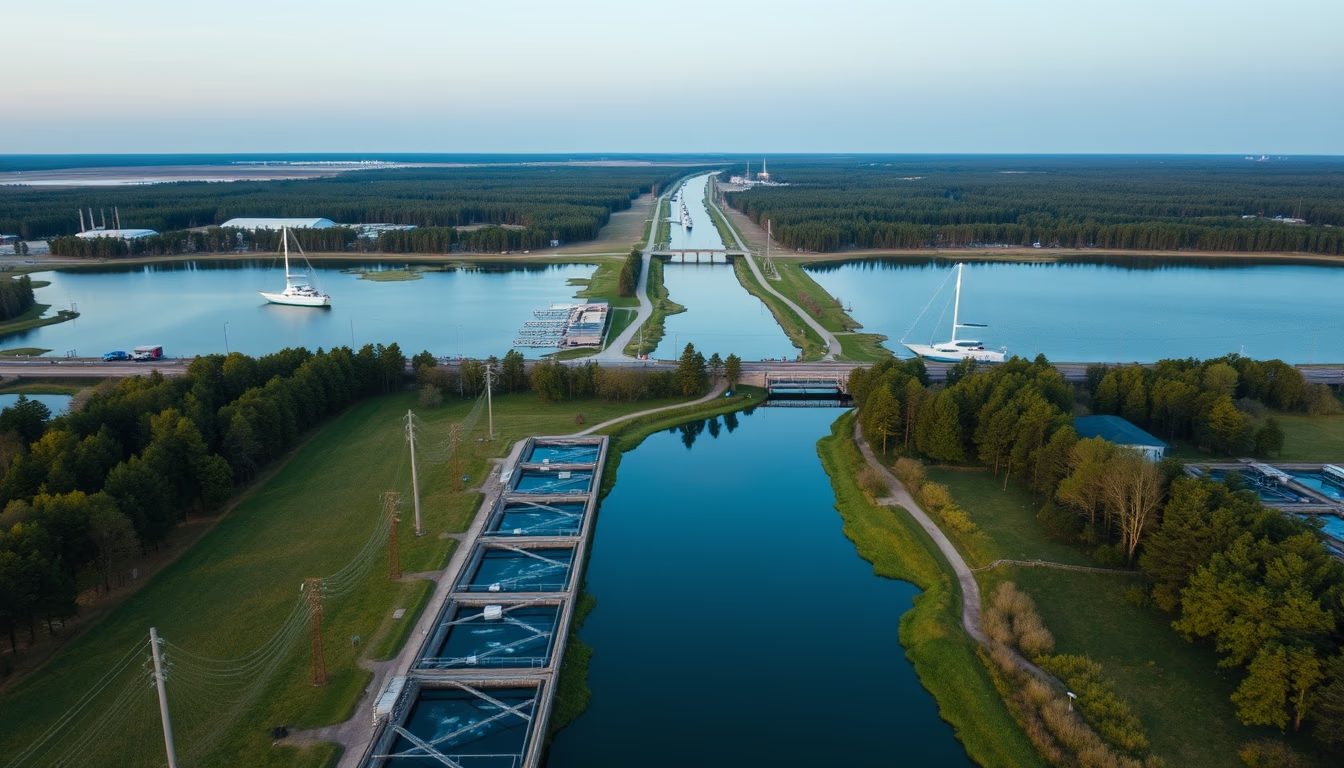
Sustainability of raceways depends on good management practices and effluent treatment. Many farms use sedimentation tanks and biofilters to minimize environmental impact. In Brazil, trout farming in raceways is traditional in the mountainous regions of Rio de Janeiro and Minas Gerais, taking advantage of cold, high-quality water. For tilapia culture, rectangular raceway systems are adapted to tropical climates.
Interestingly, raceways are also used for scientific research, vaccine trials, and fry production. The elongated shape facilitates size sorting and data collection. Although less flexible than cage systems, raceways offer greater control and productivity per area.
Frequently Asked Questions
What is the ideal stocking density in raceways?
Density varies by species and oxygenation, but typically ranges from 20 to 40 kg/m³ for trout, up to 50 kg/m³ in well-aerated systems.
How is feeding management done in raceways?
Feeding uses extruded feed, manually or automatically, adjusting quantity based on consumption and water temperature.
Which species are most commonly raised in raceways?
Rainbow trout, tilapia, sea bass, salmon, and some catfish species, with trout being the most traditional in cold water systems.
Direct URL
https://pub-c7d6a6ea828543ac903a74a341ccb2e1.r2.dev/imagens/fish-hatchery-raceways-magazine-editorial-fresh2.avifHow to credit
Include a visible link back to UtilizAí. Copy one of the snippets below:
<a href="https://xn--utiliza-eza.com/en/midia/imagens/fish-hatchery-raceways-magazine-editorial-fresh2">Fish hatchery raceways</a> by <a href="https://xn--utiliza-eza.com">UtilizAí</a>, licensed under <a href="https://creativecommons.org/licenses/by/4.0/">CC BY 4.0</a>.
[Fish hatchery raceways](https://xn--utiliza-eza.com/en/midia/imagens/fish-hatchery-raceways-magazine-editorial-fresh2) by [UtilizAí](https://xn--utiliza-eza.com), CC BY 4.0
License: CC-BY-4.0