Fish hatchery raceways
1344×768 · AVIF · CC BY 4.0
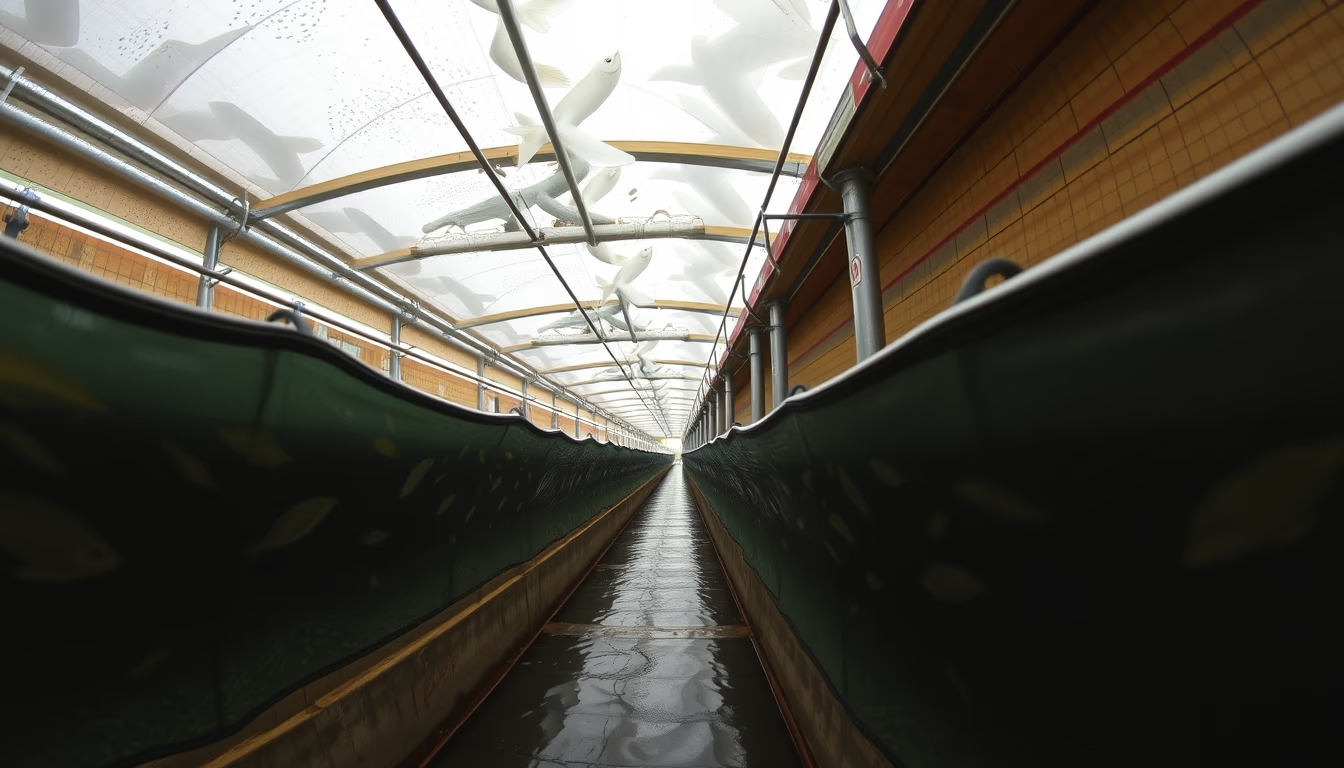
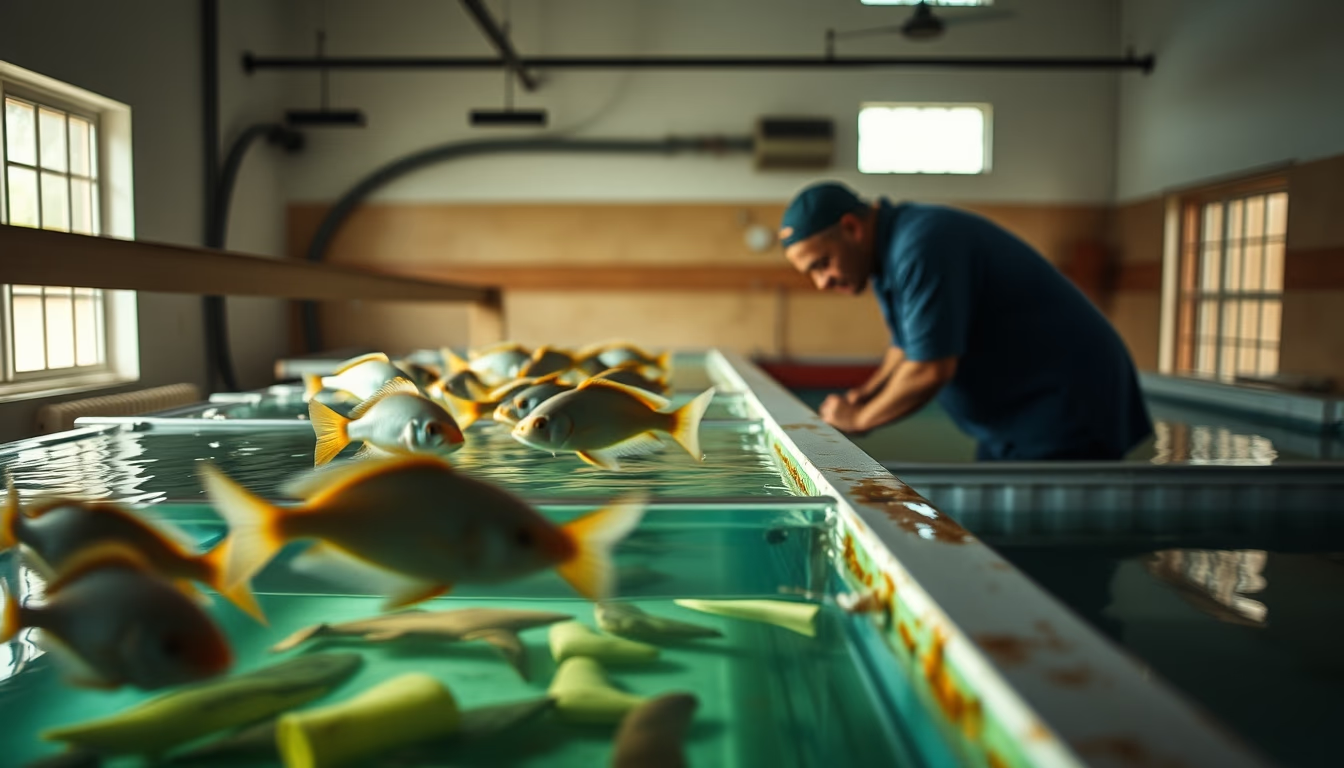
Fish hatchery raceways are rectangular flow-through channels widely used in global aquaculture for intensive rearing of trout and salmon.
About this subject
Raceways are elongated structures, typically made of concrete or fiberglass, with continuous water inflow and outflow designed to sustain high fish densities in a controlled environment. This system is predominant in trout and salmon farming, especially in temperate regions such as southern Chile, Norway, Canada, and the United States. Water flows by gravity, constantly replenishing oxygen and removing metabolic wastes, enabling growth rates superior to those in static tanks.
In raceways, fish are fed extruded feed and monitored for parameters like temperature, pH, and dissolved oxygen. The continuous flow mimics fast-flowing rivers, stimulating swimming and muscle development. Each channel can hold thousands of individuals, sorted by size and weight. Production efficiency reaches 30-50 kg/m³, far exceeding extensive systems.
Despite high productivity, raceways require large volumes of clean water, which can be limiting in water-scarce regions. Therefore, many modern operations incorporate partial recirculation (RAS) to reduce consumption. Interestingly, the term “raceway” derives from racetracks, alluding to the elongated shape and rapid flow. In Portuguese, they are called “tanques-berçário” or “canais de cultivo,” but the English borrowing “raceway” is widely used in Brazilian aquaculture, especially for tilapia and tambaqui production in adapted flow-through systems for tropical climates.
Frequently Asked Questions
What is the main advantage of raceways in aquaculture?
The main advantage is the high stocking density combined with continuous water flow, ensuring constant oxygenation and efficient waste removal, resulting in rapid growth and high productivity.
Which fish species are most common in raceway systems?
Rainbow trout, brown trout, and salmon are traditional species, but the system is adapted for tilapia, tambaqui, and other tropical species in Brazilian farms.
Do raceways consume a lot of water? How is this mitigated?
Yes, conventional raceways consume large water volumes (up to 100 L per kg of fish). To mitigate, recirculating aquaculture systems (RAS) treat and reuse water, reducing consumption by up to 90%.
Direct URL
https://pub-c7d6a6ea828543ac903a74a341ccb2e1.r2.dev/imagens/fish-hatchery-raceways-fish-eye-wide-angle-fresh12.avifHow to credit
Include a visible link back to UtilizAí. Copy one of the snippets below:
<a href="https://xn--utiliza-eza.com/en/midia/imagens/fish-hatchery-raceways-fish-eye-wide-angle-fresh12">Fish hatchery raceways</a> by <a href="https://xn--utiliza-eza.com">UtilizAí</a>, licensed under <a href="https://creativecommons.org/licenses/by/4.0/">CC BY 4.0</a>.
[Fish hatchery raceways](https://xn--utiliza-eza.com/en/midia/imagens/fish-hatchery-raceways-fish-eye-wide-angle-fresh12) by [UtilizAí](https://xn--utiliza-eza.com), CC BY 4.0
License: CC-BY-4.0