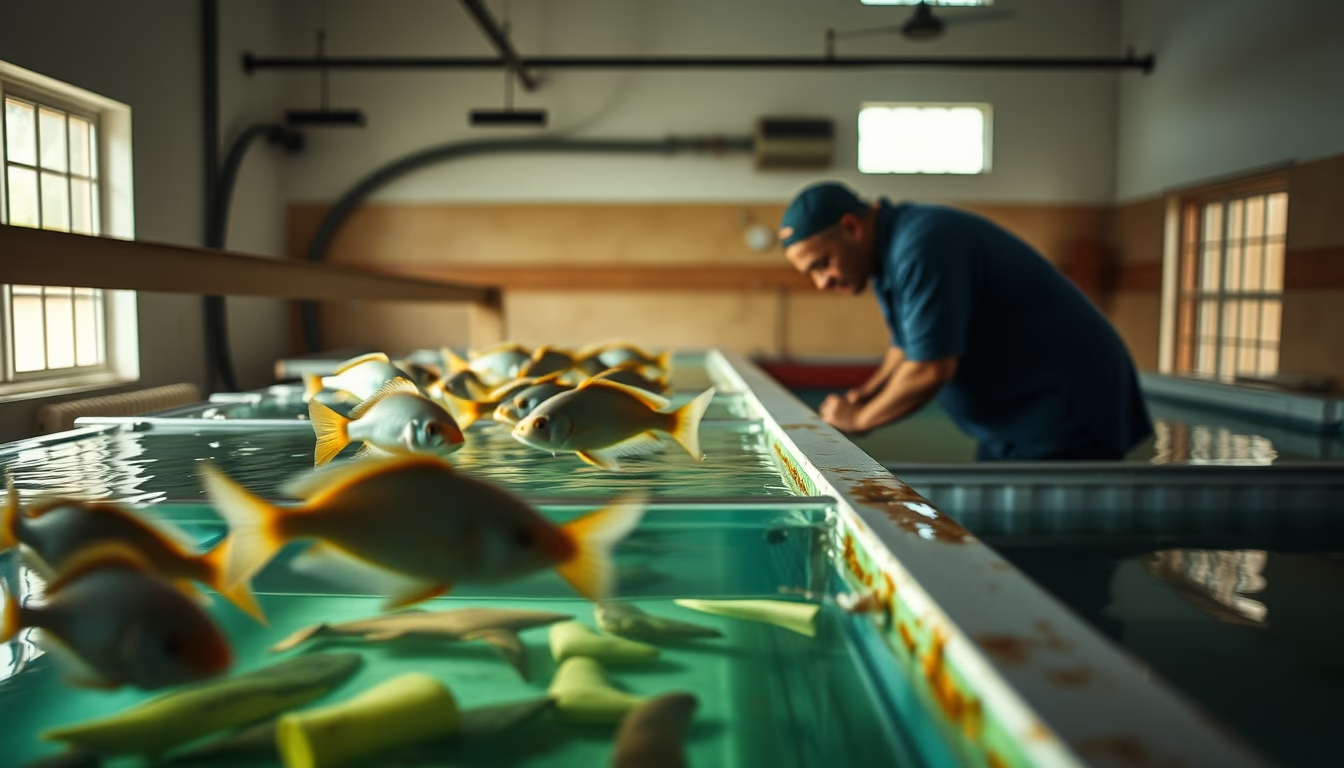
Fish hatchery raceways
1344×768 · AVIF · CC BY 4.0
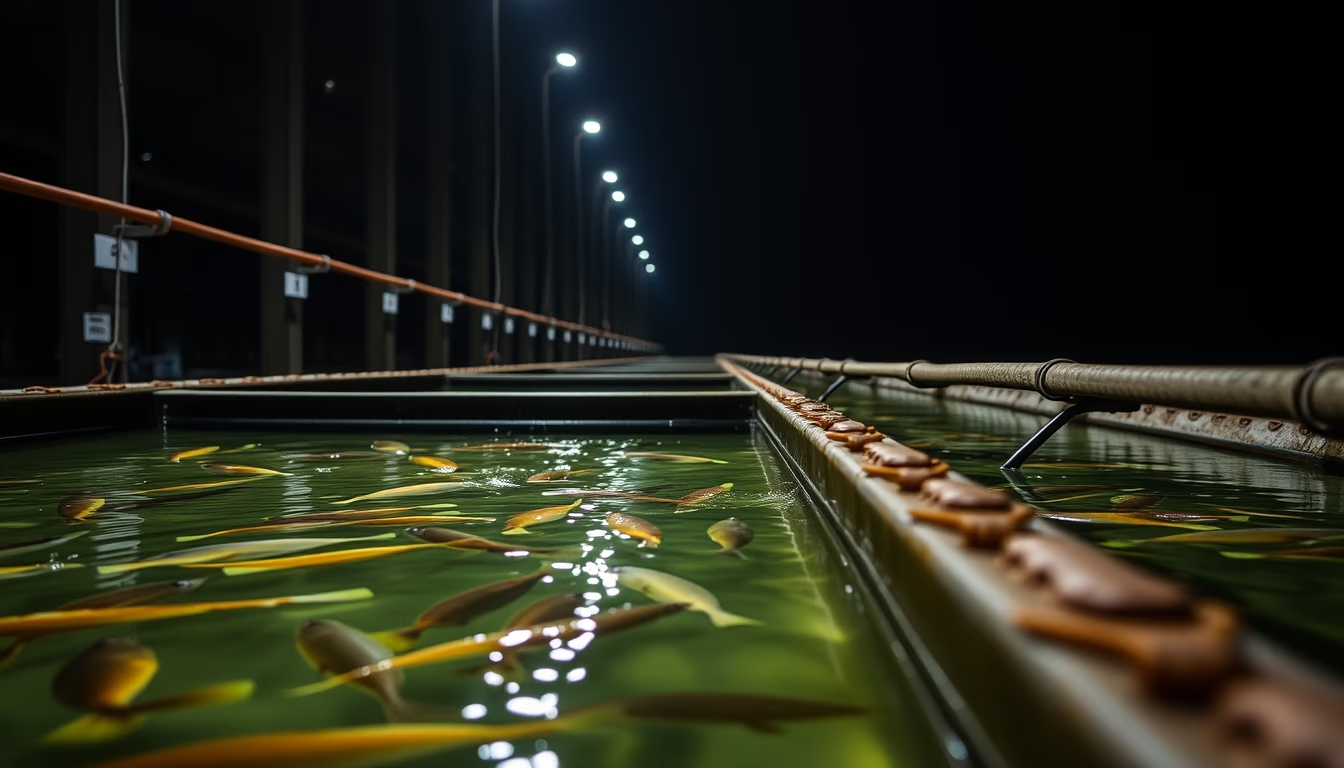
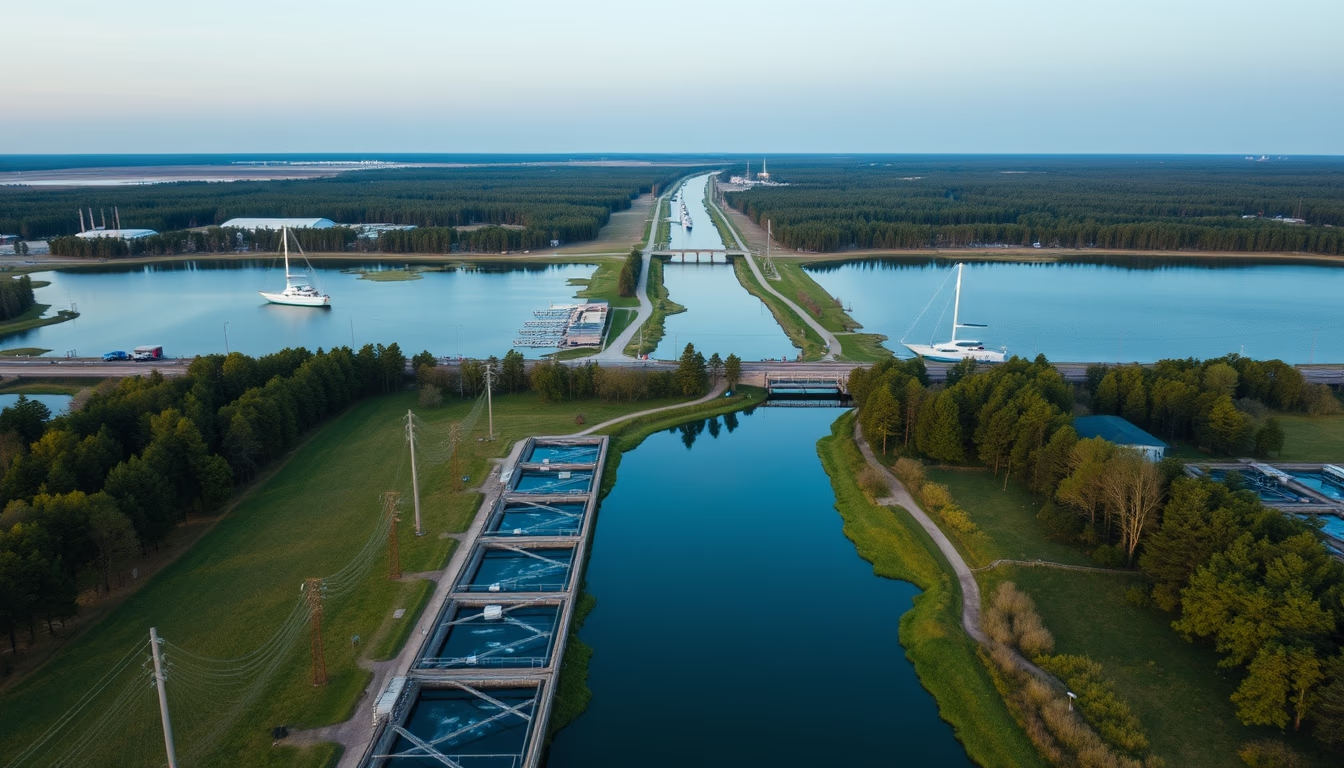
Fish hatchery raceways are continuous-flow channels for intensive fish farming, commonly used for trout and salmon.
About this subject
Fish hatchery raceways are an aquaculture production system characterized by rectangular or linear channels with continuous water flow. Typically built from concrete, fiberglass, or metal, these tanks allow high stocking densities and are widely used for rearing trout, salmon, and tilapia. The system originated in the early 20th century in the United States and Europe, driven by the demand for coldwater fish.
Raceway efficiency depends on constant water exchange to remove metabolic wastes and supply dissolved oxygen. Many designs incorporate baffles or plates to create plug flow, improving mixing and oxygenation. Typical flow rates range from 10 to 50 water exchanges per hour, depending on species and loading. Modern systems may include recirculating aquaculture systems (RAS) to reduce water consumption and effluent discharge.
Globally, raceways contribute significantly to rainbow trout (Oncorhynchus mykiss) and Atlantic salmon (Salmo salar) production. In Brazil, this system is mainly used in high-altitude regions such as Serra da Mantiqueira for trout farming. A notable fact: the term “raceway” comes from the word “race” due to the elongated shape resembling a racing track. Management includes automated feeding and size grading to optimize uniform growth.
Sustainability challenges for raceways include high water usage and nutrient-rich effluents containing nitrogen and phosphorus. Solutions such as biodigesters, constructed wetlands, and recirculation systems are being adopted to mitigate environmental impacts. Nevertheless, raceways remain a low-cost, easy-to-manage technology, especially in regions with abundant water resources.
Frequently Asked Questions
What are raceways in fish farming?
Raceways are fish rearing channels with continuous water flow, typically made of concrete or fiberglass. They allow high stocking densities and are common in trout and salmon farming.
Which species are most commonly raised in raceways?
The main species are rainbow trout (Oncorhynchus mykiss), Atlantic salmon (Salmo salar), and tilapia (Oreochromis niloticus). In Brazil, trout is the most frequent.
How does water flow work in a raceway system?
Water enters at one end and exits at the other, with flow rates managed to maintain dissolved oxygen and remove wastes. Baffles may be used to improve mixing and oxygen contact.
Direct URL
https://pub-c7d6a6ea828543ac903a74a341ccb2e1.r2.dev/imagens/fish-hatchery-raceways-fine-art-photography-fresh1.avifHow to credit
Include a visible link back to UtilizAí. Copy one of the snippets below:
<a href="https://xn--utiliza-eza.com/en/midia/imagens/fish-hatchery-raceways-fine-art-photography-fresh1">Fish hatchery raceways</a> by <a href="https://xn--utiliza-eza.com">UtilizAí</a>, licensed under <a href="https://creativecommons.org/licenses/by/4.0/">CC BY 4.0</a>.
[Fish hatchery raceways](https://xn--utiliza-eza.com/en/midia/imagens/fish-hatchery-raceways-fine-art-photography-fresh1) by [UtilizAí](https://xn--utiliza-eza.com), CC BY 4.0
License: CC-BY-4.0