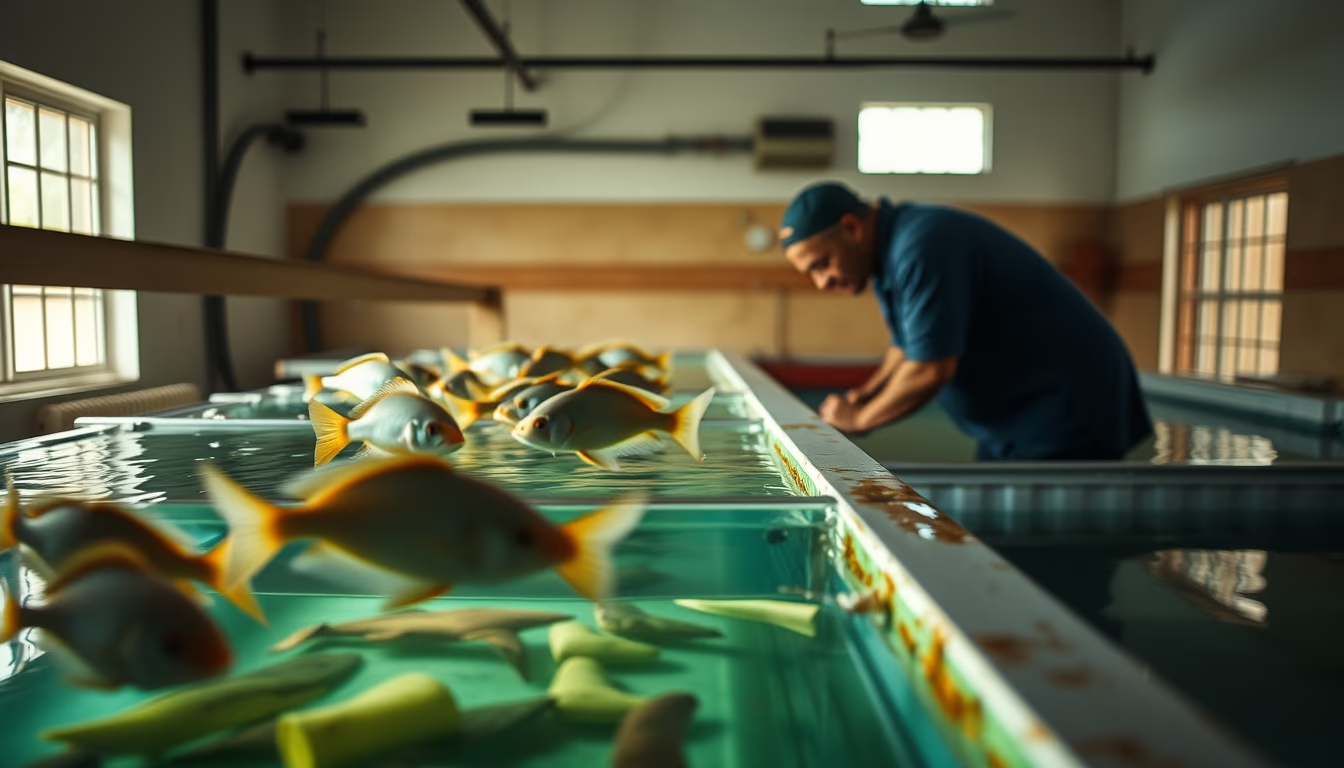
Fish hatchery raceways
1344×768 · AVIF · CC BY 4.0
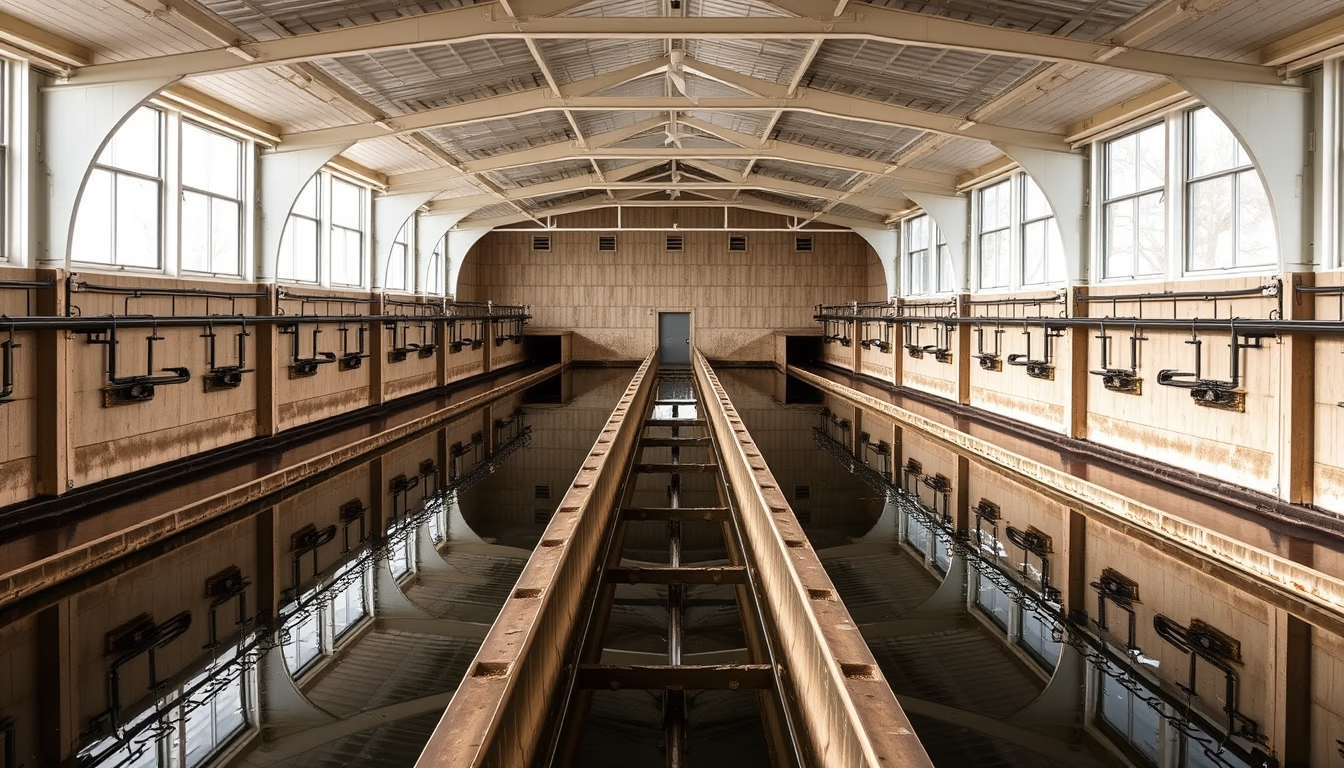
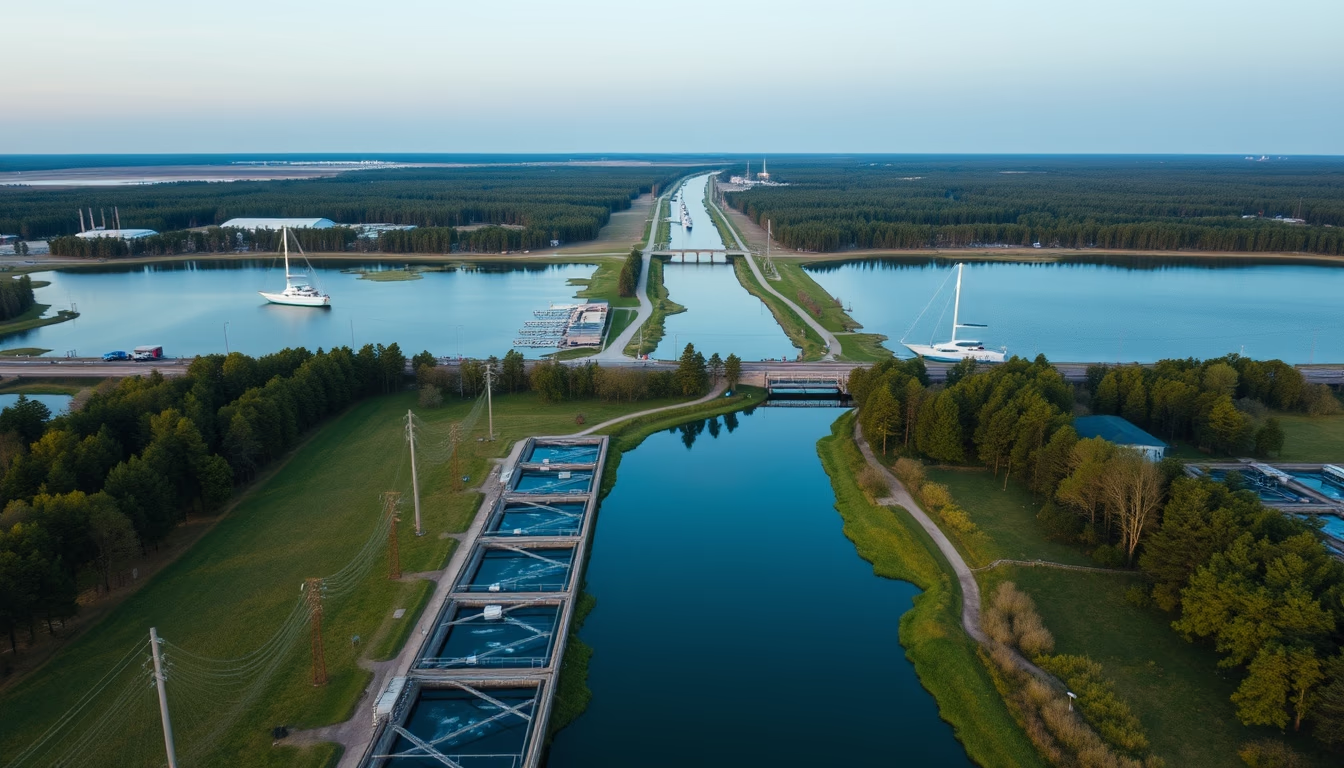
Raceways are rectangular channels used in intensive fish farming to raise fish in a continuous flow of water.
About this subject
Raceways are elongated, narrow channels designed for intensive fish farming. Originating in trout culture in the United States in the late 19th century, these systems consist of concrete, fiberglass, or metal canals with a continuous flow of water entering at one end and exiting at the opposite. The constant water movement ensures high oxygenation and removal of metabolic wastes, allowing high stocking densities.
In practice, water is often diverted from rivers or springs, passing through screens before entering raceways. Additional aeration may be provided by diffusers or cascades. Feeding is automated and monitored by systems that dispense feed on a schedule. Species such as rainbow trout, Atlantic salmon, tilapia, and channel catfish are commonly raised in these systems due to their adaptability to swift flow.
A key advantage of raceways is precise control of environmental parameters. Temperature, pH, and dissolved oxygen are adjusted to optimize growth. The linear design facilitates grading, harvesting, and inspection of fish. However, the main challenge is effluent treatment. Solid wastes (feces and uneaten feed) and dissolved nitrogen can impact receiving waters, requiring filtration systems and settling ponds.
Sustainability of raceways depends on water use efficiency and waste management. Modern systems incorporate recirculation (RAS) to reduce water consumption. In Brazil, raceway fish farming is mainly practiced in the South and Southeast regions, where topography favors gravity flow. Despite the high initial investment, productivity per square meter exceeds that of earthen ponds, justifying their adoption in commercial ventures.
Frequently Asked Questions
What is the difference between raceways and circular tanks?
Raceways are rectangular channels with linear water flow, ideal for species that prefer currents. Circular tanks have rotational flow and self-cleaning centers, more common in recirculating aquaculture systems (RAS).
Which species are most commonly raised in raceways?
Rainbow trout, salmon, tilapia, and channel catfish are the most common species. The choice depends on water temperature and adaptability to continuous flow.
What are the main environmental challenges of raceways?
The main challenge is the discharge of effluents rich in organic matter and nitrogen, which can cause eutrophication in receiving waters. Treatment systems such as biofilters and settling ponds are necessary.
Direct URL
https://pub-c7d6a6ea828543ac903a74a341ccb2e1.r2.dev/imagens/fish-hatchery-raceways-architectural-photography-fresh6.avifHow to credit
Include a visible link back to UtilizAí. Copy one of the snippets below:
<a href="https://xn--utiliza-eza.com/en/midia/imagens/fish-hatchery-raceways-architectural-photography-fresh6">Fish hatchery raceways</a> by <a href="https://xn--utiliza-eza.com">UtilizAí</a>, licensed under <a href="https://creativecommons.org/licenses/by/4.0/">CC BY 4.0</a>.
[Fish hatchery raceways](https://xn--utiliza-eza.com/en/midia/imagens/fish-hatchery-raceways-architectural-photography-fresh6) by [UtilizAí](https://xn--utiliza-eza.com), CC BY 4.0
License: CC-BY-4.0