Ferry crossing strait
1344×768 · AVIF · CC BY 4.0
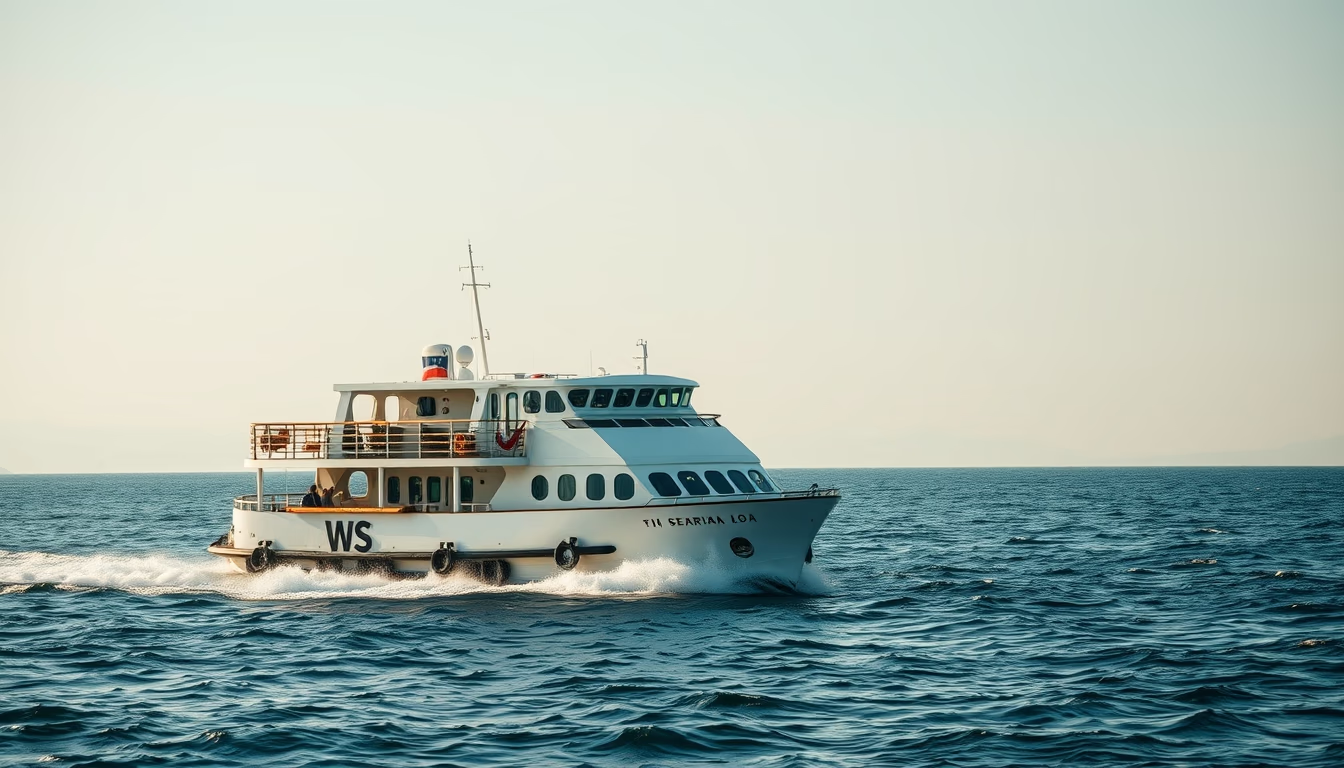
Ferry crossing a maritime strait, connecting two shores via essential water transport for coastal communities.
About this subject
Ferries are vessels designed to transport passengers and vehicles across bodies of water, especially maritime straits. These straits, such as the Strait of Gibraltar (linking Europe and Africa) or the Bosphorus Strait (in Istanbul), often host heavily used ferry routes that shorten distances and overcome natural barriers. Globally, ferries serve as vital transportation links, connecting islands to mainland or crossing wide rivers and bays.
Technically, ferries can be classified into types like roll-on/roll-off (Ro-Ro), which allow direct vehicle boarding, and passenger-only ferries for short crossings. Modern ferries employ diesel or hybrid propulsion systems to reduce emissions. Capacities vary from small vessels carrying around 20 cars to gigantic ferries that transport hundreds of vehicles and thousands of passengers, such as those crossing the English Channel.
The cultural and economic importance of ferry routes is enormous. In many places, they are the only viable connection between islands and the mainland, or between shores of broad rivers and bays. Examples include routes in Greece (Aegean islands), Indonesia (between Java and Sumatra), and Washington state (Seattle). Ferry services also attract tourism, offering panoramic views and a unique maritime experience. However, they face challenges such as adverse weather conditions and the need for constant maintenance.
A fun fact: the world's largest ferry system by passenger numbers is in Hong Kong, carrying millions of people daily. The famous Staten Island Ferry in New York is free and moves around 22 million passengers annually. The future of ferries points toward electric and autonomous vessels, with pilot projects already underway in Norway and other countries, aiming for greater sustainability.
Frequently Asked Questions
What is the difference between a ferry and a barge?
A ferry is a vessel designed to carry passengers and vehicles across water, often on scheduled routes. A barge is a flat-bottomed boat used primarily for carrying heavy cargo, often towed or pushed by another vessel. Ferries are self-propelled and built for speed and passenger comfort.
Which are the busiest straits for ferry services?
The busiest straits include the Bosphorus Strait (Turkey), the Strait of Gibraltar (between Spain and Morocco), the Palk Strait (India/Sri Lanka), and the English Channel (England/France). The Torres Strait (Australia/Papua New Guinea) also sees significant traffic.
Are ferries safe in adverse weather conditions?
Yes, modern ferries are built with stabilization systems and follow strict safety protocols. However, high waves and storms can cause delays or cancellations. Maritime authorities monitor conditions and guide vessels to ensure safety.
Direct URL
https://pub-c7d6a6ea828543ac903a74a341ccb2e1.r2.dev/imagens/ferry-crossing-strait-magazine-editorial-p8.avifHow to credit
Include a visible link back to UtilizAí. Copy one of the snippets below:
<a href="https://xn--utiliza-eza.com/en/midia/imagens/ferry-crossing-strait-magazine-editorial-p8">Ferry crossing strait</a> by <a href="https://xn--utiliza-eza.com">UtilizAí</a>, licensed under <a href="https://creativecommons.org/licenses/by/4.0/">CC BY 4.0</a>.
[Ferry crossing strait](https://xn--utiliza-eza.com/en/midia/imagens/ferry-crossing-strait-magazine-editorial-p8) by [UtilizAí](https://xn--utiliza-eza.com), CC BY 4.0
License: CC-BY-4.0