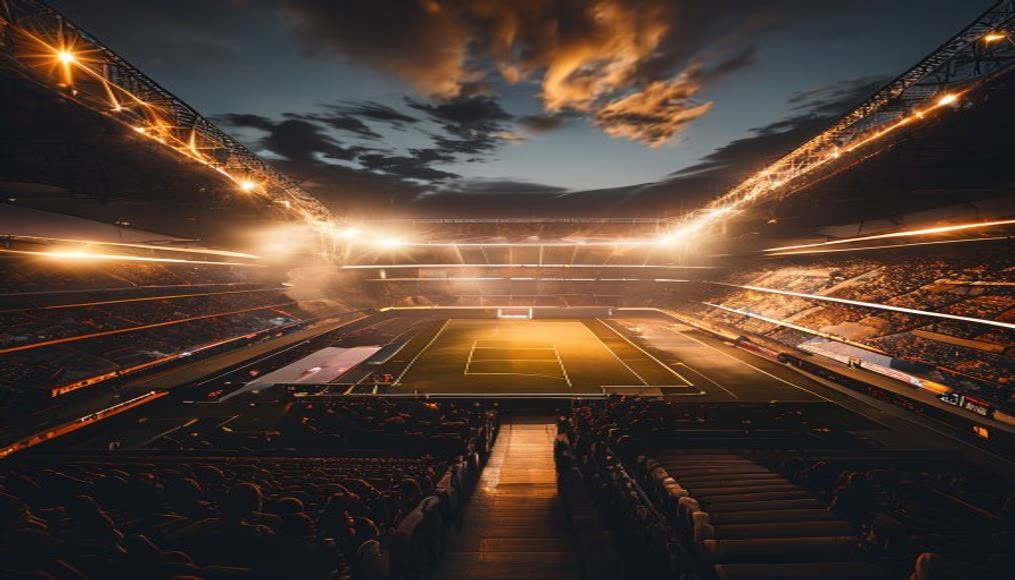
Esports stadium dark
1344×768 · AVIF · CC BY 4.0

Estádios de esports são arenas modernas projetadas para competições de jogos eletrônicos, com capacidade para milhares de espectadores e tecnologia de ponta.
Sobre o tema
Os estádios de esports representam a evolução dos espaços de entretenimento digital, surgindo da crescente popularidade dos torneios de jogos eletrônicos. Diferente de arenas tradicionais, esses locais são otimizados para transmissão ao vivo e experiência do público, com iluminação cênica, telões de LED de alta resolução e sistemas de som imersivos. Exemplos notáveis incluem a Esports Stadium Arlington, no Texas, que é a maior arena independente dos Estados Unidos, com capacidade para 2.500 pessoas, e o Seoul World Cup Stadium, na Coreia do Sul, que já sediou finais de campeonatos mundiais como o League of Legends World Championship.
A arquitetura desses estádios frequentemente incorpora elementos de design que lembram cenários de jogos, com iluminação dinâmica e layouts modulares que permitem adaptação para diferentes tipos de competições. A infraestrutura técnica é crucial: conexões de internet de alta velocidade, sistemas de backup de energia e cabines de transmissão equipadas com câmeras robóticas e realidade aumentada. O investimento em estádios de esports reflete o crescimento econômico do setor, que segundo a Newzoo, deve ultrapassar US$ 1,8 bilhão em receitas globais em 2025.
Além de competições, esses espaços são usados para eventos de cultura pop, como lançamentos de jogos, shows e convenções. A Coreia do Sul lidera na adoção desses estádios, com o LoL Park em Seul sendo um centro dedicado exclusivamente ao League of Legends. No Brasil, o cenário ainda é emergente, mas já existem iniciativas como a Arena Carioca, no Rio de Janeiro, que recebeu etapas do Campeonato Brasileiro de League of Legends. A experiência do espectador é pensada para ser imersiva, com assentos ergonômicos, telas individuais e serviços de streaming ao vivo integrados.
Perguntas frequentes
Qual é o maior estádio de esports do mundo?
Atualmente, o maior estádio de esports dedicado é a Esports Stadium Arlington, em Arlington, Texas, com capacidade para 2.500 pessoas. No entanto, arenas multiuso como o Seoul World Cup Stadium podem receber mais de 60.000 espectadores para eventos de esports.
O que diferencia um estádio de esports de uma arena tradicional?
Estádios de esports são projetados com foco em transmissão ao vivo, incluindo iluminação cênica, telões de LED, sistemas de som imersivos, conexões de internet de alta velocidade e layouts modulares para diferentes jogos.
Existem estádios de esports no Brasil?
Sim, o Brasil possui arenas como a Arena Carioca, no Rio de Janeiro, que já sediou etapas do Campeonato Brasileiro de League of Legends. O cenário ainda é emergente, mas há potencial de crescimento.
URL direta
https://pub-c7d6a6ea828543ac903a74a341ccb2e1.r2.dev/imagens/esports-stadium-dark-cinematic-wide-shot-v2.avifComo creditar
Inclua um link visível de volta pro UtilizAí. Copie um dos snippets abaixo:
<a href="https://xn--utiliza-eza.com/midia/imagens/esports-stadium-dark-cinematic-wide-shot-v2">Esports stadium dark</a> by <a href="https://xn--utiliza-eza.com">UtilizAí</a>, licensed under <a href="https://creativecommons.org/licenses/by/4.0/">CC BY 4.0</a>.
[Esports stadium dark](https://xn--utiliza-eza.com/midia/imagens/esports-stadium-dark-cinematic-wide-shot-v2) by [UtilizAí](https://xn--utiliza-eza.com), CC BY 4.0
Licença: CC-BY-4.0