Esports stadium dark
1344×768 · AVIF · CC BY 4.0
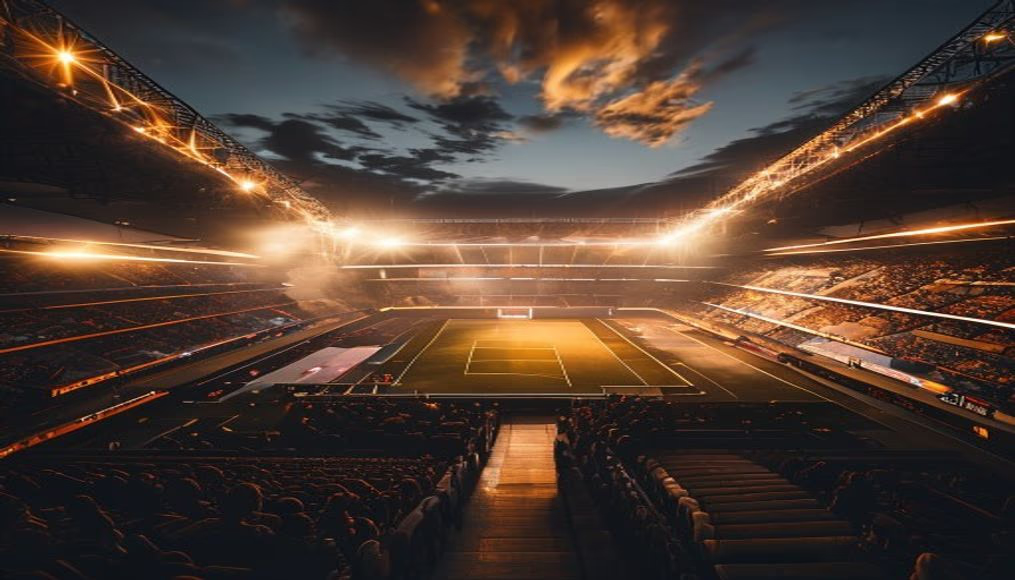
Esports stadiums are purpose-built arenas for competitive gaming, combining cutting-edge technology and immersive architecture to host thousands of fans.
About this subject
Esports stadiums are a recent architectural and cultural phenomenon, driven by the explosive growth of competitive gaming. Unlike traditional sports venues, these arenas are designed with ultra-fast network connectivity, state-of-the-art audio and video systems, and seating that provides unobstructed views of massive screens. The first dedicated esports stadium was the e-Stadium in Seoul, South Korea, opened in 2014 with a capacity of 500 spectators. Since then, much larger structures have emerged, such as the Esports Stadium Arlington in Texas, spanning 100,000 square feet. China hosts some of the largest: the Wuhan Esports Stadium with 5,000 seats, and the Shanghai Oriental Sports Center, which has hosted League of Legends World Championship finals. The architecture emphasizes the experience of both live and remote audiences, with central stages surrounded by curved LED screens and stage lighting that transforms the venue into an immersive spectacle. The COVID-19 pandemic accelerated innovations like virtual reality live streams and socially distanced seating. Today, the global esports market moves billions of dollars, and these stadiums host not only competitions but also concerts, conventions, and cosplay events, solidifying their role as modern digital culture hubs.
Frequently Asked Questions
What is the largest esports stadium in the world?
The largest esports stadium by capacity is the Shanghai Oriental Sports Center in China, which can hold up to 18,000 spectators. Other large venues include Esports Stadium Arlington (USA) and Wuhan Esports Stadium (China).
Which games are primarily played in esports stadiums?
Games like League of Legends, Dota 2, Counter-Strike 2, Valorant, and Overwatch 2 dominate major events. Each game has its own tournaments, such as Worlds (LoL) and The International (Dota 2).
How did the pandemic affect esports stadiums?
The pandemic forced remote broadcasts and events without live audiences. Many stadiums invested in virtual reality technology and improved streaming infrastructure to maintain global viewership.
Direct URL
https://pub-c7d6a6ea828543ac903a74a341ccb2e1.r2.dev/imagens/esports-stadium-dark-travel-photography-v10.avifHow to credit
Include a visible link back to UtilizAí. Copy one of the snippets below:
<a href="https://xn--utiliza-eza.com/en/midia/imagens/esports-stadium-dark-travel-photography-v10">Esports stadium dark</a> by <a href="https://xn--utiliza-eza.com">UtilizAí</a>, licensed under <a href="https://creativecommons.org/licenses/by/4.0/">CC BY 4.0</a>.
[Esports stadium dark](https://xn--utiliza-eza.com/en/midia/imagens/esports-stadium-dark-travel-photography-v10) by [UtilizAí](https://xn--utiliza-eza.com), CC BY 4.0
License: CC-BY-4.0